


Reading philosophy has absolutely transformed my life in ways that I could have never imagined.
It has given me a level of intellectual self-confidence and self-reliance that has allowed me to approach any philosophical text, no matter how difficult, and reach my own conclusions.
It has also helped me communicate those ideas to others in a meaningful way and help them do the same.
But I also know that millions of people are passionately interested in philosophy, but struggle to unlock these life-changing benefits.
That’s why I am writing this article.
I want to teach you everything that I have learned over the last seventeen years about how to read difficult philosophical texts effectively.
Now, obviously, I can’t fit everything into a single article, but what I will do is provide an overview of my best insights and advice so that you can get started in the right direction.
Ready?
The Importance Of Reading Difficult Books
If you want to understand philosophy, then at some point you need to learn how to read difficult books, develop your own interpretation of them, and discuss them effectively with other people.
This is the primary way philosophy has been learned and practiced for over 2,500+ years. Yes, there are some exceptions, but even Socrates bought and read philosophy books in ancient Athens.
Most social media accounts will try to convince you that spending thousands of hours watching Youtube videos, Instagram reels, or downloading gamified philosophy education apps will help you learn easier and faster.
But the harsh truth is that people who actually want to become better at thinking deeply, having intellectual conversations, and finding meaningful answers to their life’s biggest questions end up remaining stuck and wasting precious time avoiding real learning.
I want to be blunt because I have seen this happen to so many people, and I don’t want you to end up full of regret after realizing that you have spent 5,000 hours doing everything other than the actual thing you originally wanted to do — real philosophy.
If you spend 2.5 hours per day wasted on consuming content that doesn’t actually lead to anything, that ends up being around 1,000 hours per year.
That is time you can never get back.
I am here to help you use that time in a more meaningful way if that’s something you want to do. Since you’re still reading this, I assume that you want to learn how to deepen your intellectual life, social life, and relationship to reality.
Reading philosophy can help you do this.
Even though it is notoriously difficult, the truth is that philosophy is like anything else.
The way you get better at it is by actually doing the activities that it is comprised of on a regular basis — making it is part of who you are and how you live.
The way you get better at playing an instrument isn’t by watching videos, but by playing an instrument and becoming a philharmoniker.
(A philharmoniker is a music lover. The first lesson in reading hard books is that you have to get used to looking up words rather than skipping them. It is worth it in the long run).
The way you gain muscle is by going to the gym regularly and slowly increasing the difficulty.
At the end of the day, the way you do anything hard and meaningful is simply just doing it regularly and with intention. Anyone who tries to sell you a fancy gadget that will magically solve your problems is exploiting the human tendency to avoid doing the actual thing that will lead to real growth.
So, it’s true that philosophy is hard.
And it is especially hard at first.
But pretty much everything worth doing is hard and that’s what makes it valuable. We should embrace that truth rather than try to avoid it in subtle ways.
The rewards are immeasurable.
Developing the ability to read difficult books well has been the single greatest joy in my life outside of personal relationships.
(By the way, sometimes I will talk about reading difficult books in general because most of what I say doesn’t just apply to philosophy. It’s also worth mentioning that it’s generally true that if you can read philosophy you can read almost anything. It’s like training on hard mode).
Real vs. Fake Education
The current state of philosophy “edutainment” online genuinely pisses me off because the truth is that a lot of it is just wasting people’s time.
Why?
Because if those very same people had spent the same amount of time reading and discussing the same ideas, but in a real learning environment, then they would make incredible amounts of intellectual progress (and have more fun doing because they would be doing it with other people as well).
I want to be clear that I am not blaming individuals for being lazy or fearful.
I actually think the majority of the problem has to do with the environment of online philosophy education itself.
If you are over 22 years old and looking to continue your education into adulthood, you basically have nowhere to go to learn and practice real philosophy with others. Chances are that you aren’t going to be going to a university and spending tens of thousands of dollars to explore your interest in philosophy.
That seems especially crazy since there is so much free content online.
Your only real option, then, is social media.
The problem is that it is incredibly difficult for a novice or beginner to be able to distinguish between what will actually help them and what will not.
Social media is a horrible minefield of a learning environment, since all platforms are specifically designed to promote engagement.
It’s all a big trick.
Making hard things feel easy is the easiest way to capture people’s attention and money.
What’s worse, there is a stigma around online courses, since many of them are just half-baked video lectures.
People are tried of passive consumption.
Wait, but Paul, are you using social media platforms to teach philosophy?
Well, yes I am. But I am trying to use them in a way that guides people through a genuine transformation. The platforms are not inherently toxic to learning, but they do require care and intention given the incentive structures.
That is why I created The Micro-University.
The Micro-University is an online philosophy school designed to make a real philosophy education feasible for anyone in the world.
I wanted to create a community in which people who are desperate for the real thing can band together and challenge themselves in a way that leads to deep transformation (without having to spend $100,000 on a philosophy degree).

By the way, you can join for free by clicking this link.
A core part of my vision for this online school is to teach to more than just teach “What did this dead person think?”.
Don’t get me wrong, I love reading about what dead people thought. But I also want to teach people the fundamental skills that unlock deeper levels of understanding and enjoyment.
Why Reading Feels Impossible Today
There are many core philosophical skills such as analytical writing, discussion, logical thinking, and so on.
Lately I have become intensely focused on teaching people how to read philosophy well. Learning how to read well is pretty much unavoidable if one wants to unlock deeper levels of philosophical understanding. In my experience, reading is also he biggest obstacle that prevents people from enjoying philosophy as much as they would like to.
And this is not just true for philosophy, it is true in general.
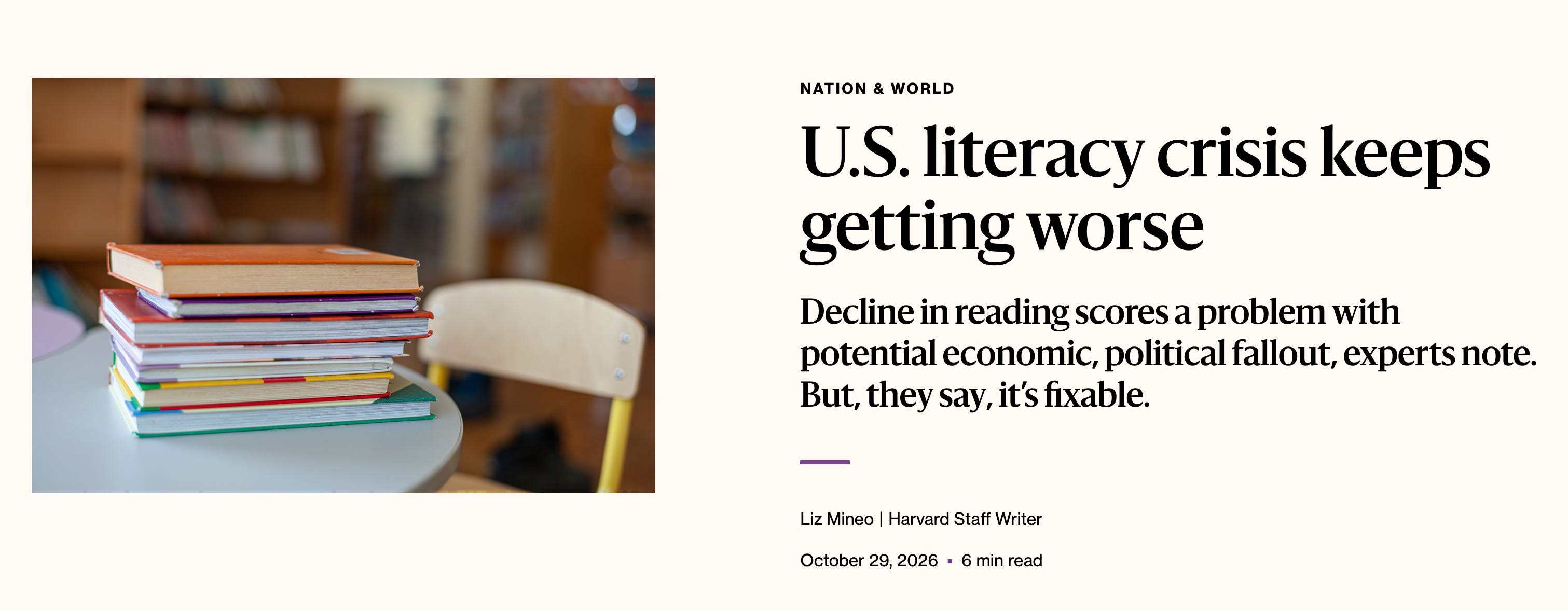
While there are some people on Reddit or in the comments sections who will say “Just read it bro” or “If you can’t read it on your own, you shouldn’t study philosophy”, I think that reading education has systematically fallen apart, and it’s unreasonable to think people can “just read” difficult texts.
Also, everybody has realized that world has become increasingly optimized to make activities like slow reading nearly impossible.
One of the main causes of this is advertising.
How are you going to be advertised to when you are spending four hours offline with your nose in a book!?
It was already hard enough to perform these activities in the past, but now when I talk to most people they tell me that it feels impossible. Sure, there are some people who can figure things out on their own, but just because some people can do that doesn’t mean everyone should.
Also, it isn’t as fun or beneficial to always have to figure things out on your own.
Most great philosophers throughout history dedicate their lives to sharing their ideas with likeminded individuals and challenge themselves and others.
Personally, I have been trying to learn guitar for years, and I am simply not talented enough to “just play it Bro”. When “Master of Puppets” by Metallica comes on, sadly I can’t shred like Eddie Munson in Stranger Things.
But what I have done is take many lessons over the years because I recognized I needed real help. Not only have I improved a ton, but I really enjoy playing now. I can play things I always wanted to play and it was all worth it.
The goal with any hard skill is either to reach a point where you can really enjoy doing it or, for those rare individuals, push oneself to absolute mastery and freedom of expression.
When it comes to philosophy, I genuinely believe that it is possible for any average adult to develop the ability to read advanced philosophical texts with consistent guidance and practice.
In fact, in one of my Substack courses I lead a random group of people through the entirety of Heidegger’s Being and Time, which is one of the hardest philosophical texts ever written. After the first few weeks of getting used to what was going on and dealing with some initial obstacles and questions, our discussions became incredibly fluid and rich.
By the end we were having 90 minute conversations about incredibly deep and complex topics like death, time, authenticity, and morality.
And…we finished the darn book!
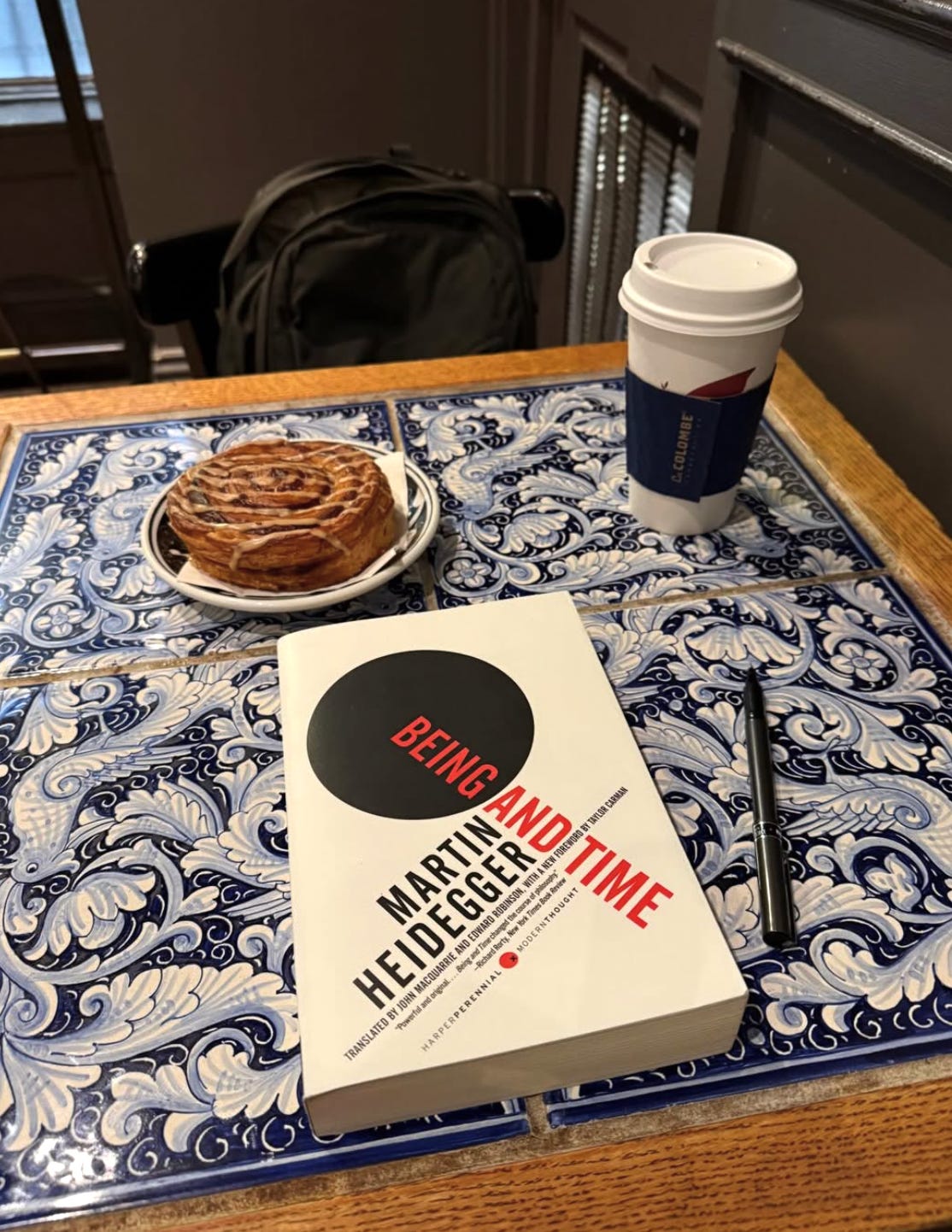
What’s crazy is that I were to put a number on it, I would say that less than 50% of Philosophy PhD’s have ever finished Being and Time.
And yet, a random group of strangers on the internet were able to come together and conquer this famously challenging text.
That same group has continued to develop their ideas and read multiple texts together forming the core of The Micro-University.
We are currently working through Hegel’s Phenomenology of Spirit every other Saturday in my Advanced Live Seminar.

Is Anyone Teaching Reading?
I am always surprised at how difficult it is to find anyone teaching the actual skill of reading whether online or in universities.
Reading is almost always just taken for granted or skipped over.
A lot of this has to do with a simple misunderstanding of the different levels of reading.
At the bare minimum is what’s called elementary reading, which is really just being able to read and understand normal texts (think 6th grade reading level).
But elementary reading only gets you so far.
And it is certainly not enough to read Heidegger or Hegel.
This is why students will say things like “I read it … but I didn’t understand anything and can’t remember what it said”.
You may even know 90% of words in a philosophy book and still miss the meaning completely.
Reading is more than just being able to read individual words.
It is about interpretation and thinking for oneself.
Very often a professor or advanced reader might forget that most people don’t yet know how to do this or even realize that they should be doing it.
Professors and advanced readers are usually people who figured out how to do these things on their own after years and years of practice. They become so intuitive that it doesn’t even occur to them to explain all of the obvious things that they are naturally doing and skipping over. For example, one of the biggest challenges of reading philosophy is that there are so many technical terms that have multiple meanings. The more philosophy you read the more you get a feel for what these words mean, but beginners might just misuse a word entirely without realizing it and read the whole text incorrectly.
Is anyone reaching intermediate to advanced reading? Additionally, is anyone teaching subject specific reading skills?
One example I have found on Substack is Adam Walker who has been doing for poetry what I am doing for philosophy. Adam’s community Versed is dedicated to teaching the close reading of poetry as a skill and ethos.
I highly recommend Versed for anyone who is interested in poetry and literature.
I just joined after seeing the reading list for 2027, and I support Adam’s vision for the future of humanities education.
With poetry, I think this direct approach naturally makes sense since it isn’t presumed that one can “just read it”.
And while it’s valuable for someone to explain or summarize a poem to you, everyone understands that something is lost in this process.
What baffles me is why philosophy treated differently.
Like poetry, philosophy requires the same careful attention to language, genre, style, rhetoric, form, and context to make sense of what is happening.
One of the main reasons I think philosophy is treated differently than poetry is the pernicious (yet common) view that philosophy is just about the extraction of purified ideas or arguments. Reading a Platonic dialogue, then, becomes a matter of picking out Plato’s “theory” or Socrates argument, and holding it up for logical scrutiny. This is often how philosophy is taught in the English speaking world as a result of the overwhelming influence of Analytic philosophy on pedagogy.
The careful identification and extraction of arguments from a text is a valuable skill, but I don’t think it should have precedence over developing complete students to be complete readers of texts. If you try to read Nietzsche this way, you will end up concluding, like one of my friends did in grad school, that Nietzsche is simply not a philosopher because he has no identifiable position or argument that can be extracted.
Suffice it to say that you will entirely miss the point.
Reading is a skill like anything else.
The problem is that very few people are actually teaching it. It is often treated as something we already know how to do, or an afterthought that will just naturally improve.
After teaching several courses through Substack, I have become convinced that one thing the philosophy space is missing is explicit reading education. There are plenty of book clubs and reading guides, but teaching people how to read philosophy directly is very different from asking them to read a big book and explaining it to them.
In the rest of this article, I want to share with you the approach to reading philosophy that has allowed me to go from someone who did not read any books in high school to being able to confidently open any philosophy book and not only understand it, but enjoy it. Since I can’t fit everything there is to say in this article (it’s already long enough), what I will do is provide my 7 biggest tips for reading philosophy that I have had to learn the hard way. Eventually I plan to expand these tips into a full book to help people read philosophy, but that will take some time to develop.
Most people think this is impossible because they convince themselves that they aren’t smart enough, can’t focus, or that this isn’t really necessary or worth it because you can just watch a video or listen to a podcast.
There is simply no substitute for reading real philosophical texts if your goal is to understand philosophy and learn how to think for yourself about it’s deepest questions.
This also applies to more than just philosophy. What’s cool about learning how to read philosophy, though, is that it puts you in a powerful position to read almost anything else. Reading philosophy provides vigorous training for one’s mind such that other genre’s often feel incredibly easy after some time.
6 Powerful Tips To Go From Wanting To Read Philosophy To Loving Reading Philosophy
The ability to read and enjoy difficult books requires skill, effort, and persistence.
Trust me when I tell you this.
I have lived through it every day for half of my life.
I did not finish an entire book until I was 17 years old and I decided to start trying in school.
Seventeen years later, I have now developed the ability to crack open any philosophy book on any subject and confidently understand it. I couldn’t have imagined this being possible when I started reading seriously as a teenager.
It was so incredibly difficult.
But it did get easier after a year or two.
It did not only get easier, but deeply more enjoyable, intellectually rewarding, and transformative.
I would not be able to do any of the work that I am doing today if I did not invest in developing my reading muscles.
The hidden gift of this personal investment is that eventually you reach the point where you can help others do the same.
I get just as much joy from doing that as reading the texts myself. This also creates a positive feedback loop that motivates me to continue improving as a reader and teacher.
Before I share my 7 hard-earned tips with you, I want to establish one non-negotiable rule.
The single biggest reason that people struggle to make progress developing their intellectual self-confidence and self-sufficiency is simply not reading at all.
What’s called “adherence” in weight training (showing up) is simply a non-negotiable.
(And you will be amazed at how much you can progress by just showing up consistently even if your technique isn’t optimal).
This isn’t a “tip” but a requirement.
You need to read challenging texts regularly.
If you want more detailed and hands-on instruction, I am offering a 4-week reading intensive course designed for beginners. We will be reading Jean-Paul Sartre’s famous short book Existentialism Is A Humanism. We will read the entire book, but the focus of this course will be on how to read philosophy. I will make everything explicit and provide step by step guidance.
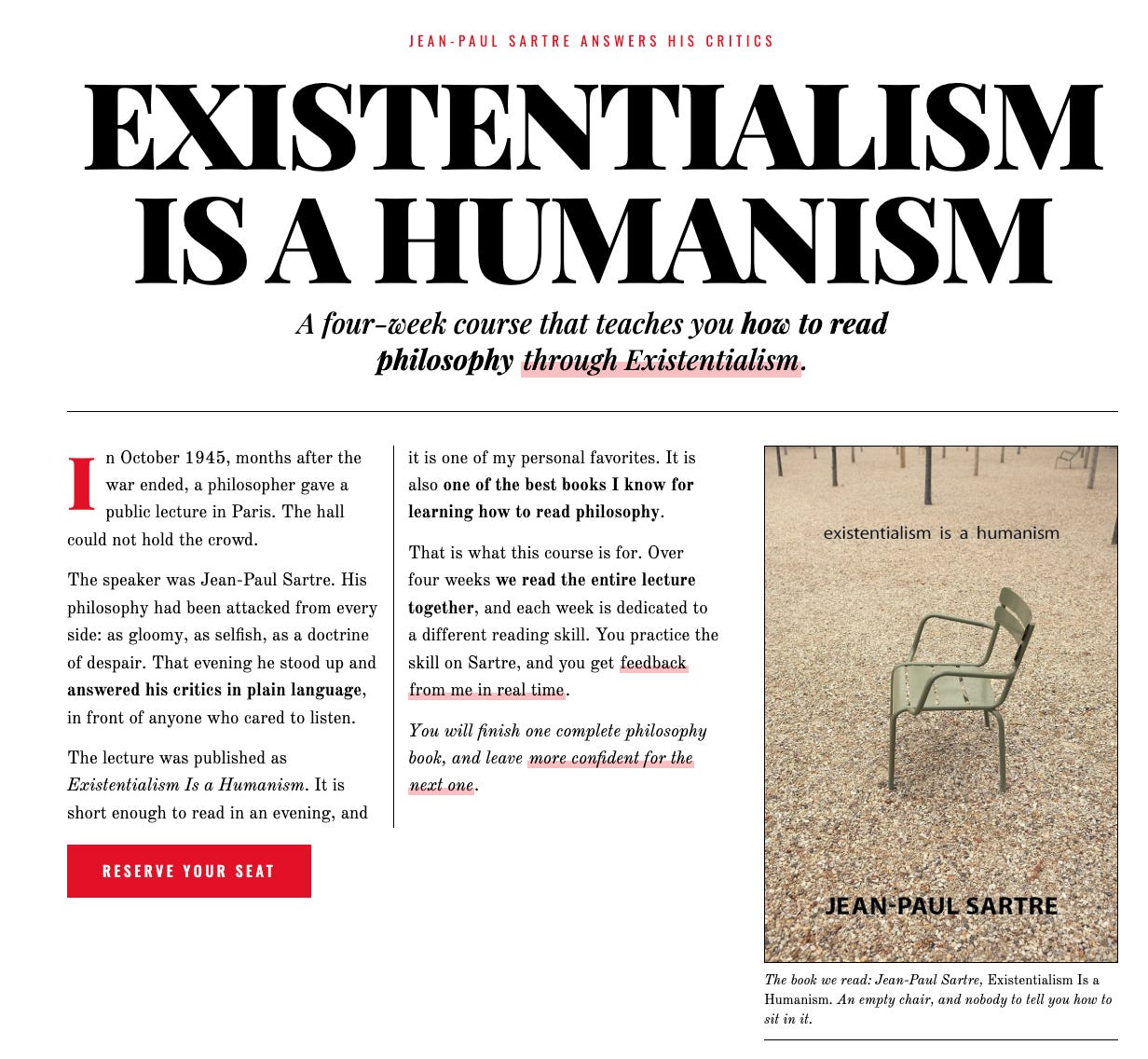
You can read more about the upcoming course here. It begins on November 28th, and it is already filling up. I am currently running a 50% discount off the first month.
The button below will bring you to the page where you can upgrade to a paid subscription and claim the discount.
Tip #1: Developing The Right Mindset
Philosophy is hard.
There is no way around that. But if you think about it, that is also the exact reason that it is worth reading. If reading philosophy was like reading the newspaper, it wouldn’t be valuable. Many of the most difficult and interesting ideas in philosophy simply could not be expressed in the writing style found in a newspaper.
Think about poetry.
Poetry is also hard. I struggle with poetry (but I also haven’t put the time into reading it). But poetry is hard for all of the right reasons. It is hard because it is using language in a highly stylized way that makes it possible to express ideas, feelings, and imagery that could not be expressed any more easily. That’s the point.
So, you should expect philosophy to be hard and approach it with the excitement in knowing that you are choosing to do something intellectually challenging. You are choosing to read and think about the some of the most complex expressions of ideas that human beings have ever produced.
I think that is pretty amazing and exciting.
You also should not take the difficulty of philosophy too personally.
It is not difficult because you are dumb, it is difficult because it is difficult.
It’s not about you.
It’s about the ideas and language.
Whenever someone starts to convince themselves that they are good at philosophy and tries to show off how smart they are, just remember that there is always some book, or question that even the brightest minds would struggle with.
This leads to another important point.
Philosophy should be approached with an attitude of intellectual humility and respect.
To read philosophy well requires much more than smarts. Personally, I think it requires a holistic transformation of one’s entire character.
It is not like a math competition.
The point is to transform your soul in a way that positions you to understand deeper truths about your existence.
That’s why it is beneficial.
Tip #2: Become A Serious Pre-Reader
I rarely meet someone who invests more than 5 minutes into pre-reading strategies.
By pre-reading strategies I don’t mean reading the marketing materials that are designed to get you to purchase the book, such as the cover and the blurb on the back (although this is useful information). What I am referring to is what Mortimer J. Adler and Charles Van Doren discuss at length in their classic text How To Read A Book.
Pre-reading involves learning how to use the book’s title, subtitle, table of contents, index, and other material that frames the contents of the book to improve your understanding of the book before you even start reading it. You want to become an intelligent skimmer who can get a sense of the book’s organizational structure, ambitions, and big ideas before you start getting lost in its content.
For philosophy specifically, there are a few additional things to consider that you wouldn’t have to consider when reading a novel or biography.
For example, you want to consider whether the author is part of a philosophical tradition in which they are responding to certain historical events or debates of a certain time period. You also want to think about whether the book was originally written in a different language. A lot of philosophy comes to us in translation and that can matter significantly in certain cases.
Fianlly, you want to consider the genre of the book.
Is it a philosophical treatise meant to make an extended argument or a collection of notes? Is it a dialogue, a play? Is it a work of fiction or non-fiction?
All of these things (and more) are relevant to having the right approach to the text.
If you try to read someone’s unpublished notes in the same way you would read a modern New York Times Bestseller, you are likely to run into difficulties.
The general rule I recommend is to dedicate at least 15 minutes to pre-reading the book before you start journeying into its main content.
It is incredibly helpful to have a general sense of where it is going before you begin.
Tip #3: Take Your Time
I remember when I was an undergraduate and my Aristotle professor told us at the beginning of the semester that we should spend 4 hours on ten pages of Aristotle!
I was shocked. Four hours!?
It turns out he was right.
That semester I noticed that whenever I would try to read at a “normal” pace, my eyes would move over the page, but I couldn’t have any sense of what the meaning of the passage even was. Even thought “I read” the material, I had nothing to say about it during class.
I had to slow down.
I would spend several minutes on a single sentence and ask myself questions about what each word means, or how the ideas are connected to what came before.
The irony was that the slower I went, the more progress I made.
I love to explain philosophy through musical analogies.
It may take you an hour to listen to a Beethoven symphony, and you might not even “get it” the first time, so you have to listen to it again, and again.
But what’s wrong with that? That’s the point.
The point is to invest ourselves into things that elevate our spirits and enrich our lives.
The kinds of things that do that always have a quality of perpetual elusiveness. They are always just beyond our grasp and the more we understand them the more there is to learn and appreciate.
They have depth.
When you read deep texts slowly, you get significantly more out of them than when you read them quickly (even if you read far fewer pages). The reason is that when you read a deep text, every single page contains significant meaning and value. If you can read just one page of a great book well, it will be worth more than 50 pages read poorly.
By the way, if you want some more nuts and bolts reading advice, I wrote this article breaking down my personal reading system. It is part of a series that I plan to finish in 2027 where I break down every aspect of reading difficult texts and provide practice examples.
How To Actually Read Hard Books

The real reason that so many people fail to read hard books isn’t because they are dumb, it’s because they don’t know what to do when they get stuck.
Tip #4: Learn Key Terms
Reading philosophy is almost like learning another language.
But it is a bit weird because you really need to learn key terms from various languages.
If you want to read Western philosophy, you should start investing some time into learning several key terms that you will see again and again in various philosophical texts. These terms often come from four main languages (ranked in the order that I take to be most important):
Ancient Greek
German
Latin
French
Almost any weird philosophical term that you see will come from one of these four sources.
Now, there is a whole other tradition of philosophy which we can roughly call “Eastern philosophy” where you will also encounter untranslated terms. If you are interested in learning about Buddhism, for example, you will see terms in:
Pali
Sanskrit
The moral of the story is this, instead of freaking out when you see an untranslated word, view it as an opportunity to start building up your philosophical fluency.
These terms are left untranslated because they are important.
If they are important, you are going to see them again and again in other books and philosophical discussions.
It is worth investing the time to learn them.
If you avoid taking them seriously, you are just delaying an unavoidable problem.
Do you need to learn these languages to study philosophy seriously?
No, not at all. Many books today offer high quality translations and supplemental materials to help you overcome and problems of translation you may encounter. If you want to study philosophy at an advanced or professional level, however, it may become important to start learning a particular language (especially if you want to publish research on a given thinker’s work).
Tip #5: Learn How To Identify Arguments
Almost every philosophical text is argumentative.
What this means is that it is trying to offer reasons or justifications of certain philosophical conclusions. This also means that the text will often be responding to the arguments of previous thinkers as well as developing new ones.
It is therefore important to begin getting good at identifying and thinking about philosophical arguments.
What is an argument? (The video below provides a clear definition).
Philosophical arguments almost always contain a clear conclusion which is signaled by words like “therefore”, “thus”, or “hence” in the text. Additionally, every conclusion requires supporting claims (called premises) which often follow words like “for” and “because”.
Here is an example of a real philosophical argument that appears in the opening lines of Aristotle’s famous book Nicomachean Ethics:
“Every art and every inquiry, and similarly every action and pursuit, is thought to aim at some good; and for this reason the good has rightly been declared to be that at which all things aim”.
Aristotle, Nicomachean Ethics, Book I
Practice Exercise
What do you think Aristotle’s conclusion is in this passage? What about his premises that support the conclusion?
You may be wondering whether you need to stop and analyze every philosophers argument in extreme detail.
If you study philosophy at a university, you will likely learn how to rigorously analyze arguments and criticize their logic and assumptions.
While this is a valuable skill, it is also not necessary to stop and analyze every argument a philosopher makes. Sometimes it is good to just understand what they are trying to communicate and why and maybe pause and think about it for a minute before moving on.
Eventually, though, you should aim to become a reader that is able to break down arguments even if you choose not to while reading.
This is a very valuable skill for reading and thinking clearly.
Tip #6: Talk About What You Read With Others
There is no better way to see whether you are understanding what you read than talking about it with others.
If you ask almost any PhD student in philosophy where they learned the most during graduate school, I would wager that 90% of them would say that it was through the informal conversations with their fellow graduate students and friends. The intellectual community of a PhD program is often a rich informal learning environment where people who are deeply passionate about a topic can share their insights and progress.
When you talk about philosophy with others, you quickly realize whether you are able to explain complex ideas in a way that makes sense to other people.
This is also a great way to make reading philosophy more fun because you are able to share the fruits of your labor with others and enjoy good conversations about the ideas. When you have fun talking about the things you read, it is more likely that you will continue to maintain your reading habits and make progress.
I know that it is difficult to find a good community of people to talk philosophy with. Again, this is one of the main reasons I created The Micro-University. We are always talking philosophy every week and it’s been an absolute blast to be a part of it.
Conclusion
Reading is like playing music for the intellectual.
Someone who just listens to content is like someone who listens to a bunch of jazz records and then wonders why they can’t perform jazz.
Reading is a performance and a skill.
The majority of your intellectual work as a philosopher consists in reading and thinking about what you read. Learning how to understand and play with other people’s ideas is like learning how to play someone else’s songs.
Eventually, you want to be able to develop your own interpretation of those songs and, in some cases, create your own.
Writing philosophy is like writing your own songs.
When great musicians write their own music, though, they don’t just come up with music out of thin air. They draw on their influences and their own unique voice to create something new.
It’s a wonderful thing.
Anyways, these are the biggest tips I could think of for now.
I probably left some out. There really is so much to say about this which is why I want to eventually turn it into a book on reading. I have spent 17 years reading consistently and making every beginner’s mistake you can imagine.
I hope I can help you avoid the unnecessary one’s and not waste as much time as I did!
Would you be interested in a longer guide to reading philosophy, or a book-length treatment?
Finally, if you have any questions or feedback, I have an open-door policy so don’t hesitate to send me a direct message. I would love to hear from you.
-Paul