


A micro-philosophy is not a timeless theory of everything.
It is a personal philosophy for life.
But “life” is not something that can be “solved” with the correct system of beliefs.
The mystery of life isn’t a problem to solve, but a reality to experience.
A process cannot be understood by stopping it.
Understanding must move with the flow of the process, must join it and flow with it.
- Frank Herbert, Dune, 1965
In this article, I explain why creating a personal micro-philosophy is essential to becoming a high agency individual and living a more authentic life.
No One Can Choose How To Live For You
The Micro-Philosopher Substack was created to help people build their own philosophy of life so that they can choose for themselves how to experience reality and flow with it more naturally.
The Stoics called it “living in agreement with nature”, or having a “smooth flow of life”.
Flow is the key word here.
Life is not a static thing, it is an ever-changing, ever-flowing stream.
If life is not a static thing, then your personal micro-philosophy needs to be flexible enough to change and bend with it, otherwise your life will not flow smoothly.
This creates a problem.
On the one hand, there are few things more important than creating a stable system of beliefs for yourself that serves as the rock-solid foundation of your life, guiding your thoughts, feelings, and decisions.
But on the other hand, life is so unpredictable, so complex, that it seems like there will never be a single unchanging system that can be used to navigate all of life’s challenges smoothly.
For thousands of years, philosophers have been trying to provide us with THE answer to life’s biggest questions.
Hinduism, Buddhism, Platonism, Aristotelianism, Stoicism, Epicureanism, Christianity, Islam, the list goes on.
Are any of these belief systems able to provide a complete and unchanging guide for living in 2026 and beyond?
The answer is “no”.
Why?
It’s not because Christianity, Buddhism, Hinduism, or Aristotelianism are false philosophies (I am neutral in this article about the truth of any of these systems).
This way of thinking about different philosophies is too simplistic.
What does it even mean for an entire philosophical tradition, system, or way of life to be false?
None of these systems have THE answer to all of life’s problems because the idea that there can be a single answer to all of life’s problems is a mistake. It is not possible for any general system of beliefs to completely eliminate the need for human beings to exercise agency in the form of judgment and choice.
Life is simply too complex to be fully captured by any system of rules or principles.
Take Hedonism as an example.
Some forms of Hedonism are incredibly simple because they reduce all choices down to a single principle:
For every action or decision, maximize pleasure.
It may appear that this universal rule can eliminate all decision-making from ethical life, but even this simple philosophy is unable to do this.
The problem is obvious.
How do we determine whether an action or decision in a particular situation maximizes pleasure or not?
We always have to exercise our judgment and reasoning to interpret the world in accordance with the master principle of Hedonism.
The point is that in order for any philosophy to be lived, we must figure out how it applies to the complex circumstances of our lives, and this is a never ending, dynamic interplay that requires the continual exercise of human agency.
Even when we believe in something so deeply that it appears to be a fixed background assumption of our lives, such as belief in the basic tenets of Christianity, we must continue to figure out how to live as a Christian in various contexts.
What does it mean to live as a Christian in 2026 in the United States? In what ways is this the same as life in ancient Judaea? In what ways is it different?
It is naive to think that the answers to these questions are straightforward.
Jewish scholars debate the Talmud endlessly in order to figure out what it means to live an ethical life in an ever-changing world.
This project will never end, unless the world ends.
What’s interesting is that millions of people can share the same fundamental metaphysical beliefs or worldview, but still be at a loss with how to answer complex practical questions.
This is what leads to the creation of different sects and philosophical traditions.
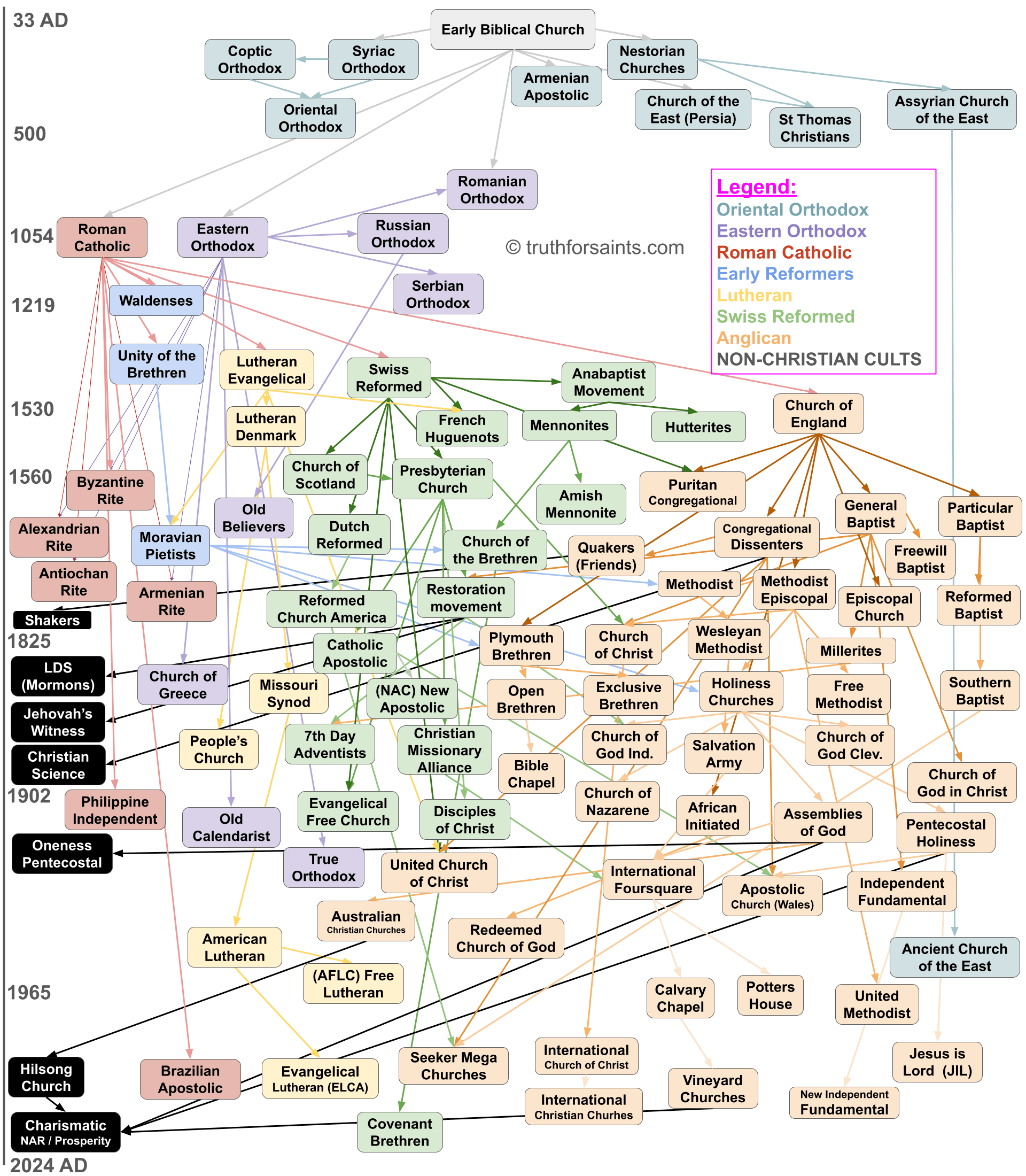
As macro-philosophies become entrenched, individuals begin to apply them to the unique circumstances of their lives and develop increasingly complex interpretations.
Individual human beings then begin to organize themselves into distinct sub-groups, typically through the influence of a leader, or by creating one themselves, and identify with a general macro-philosophy (Christianity) as well as with a specific version or interpretation (Jehovah’s Witnesses).
We all find ourselves in nested layers of belief systems, groups, sub-groups, and individuals.
But at the very center is you.
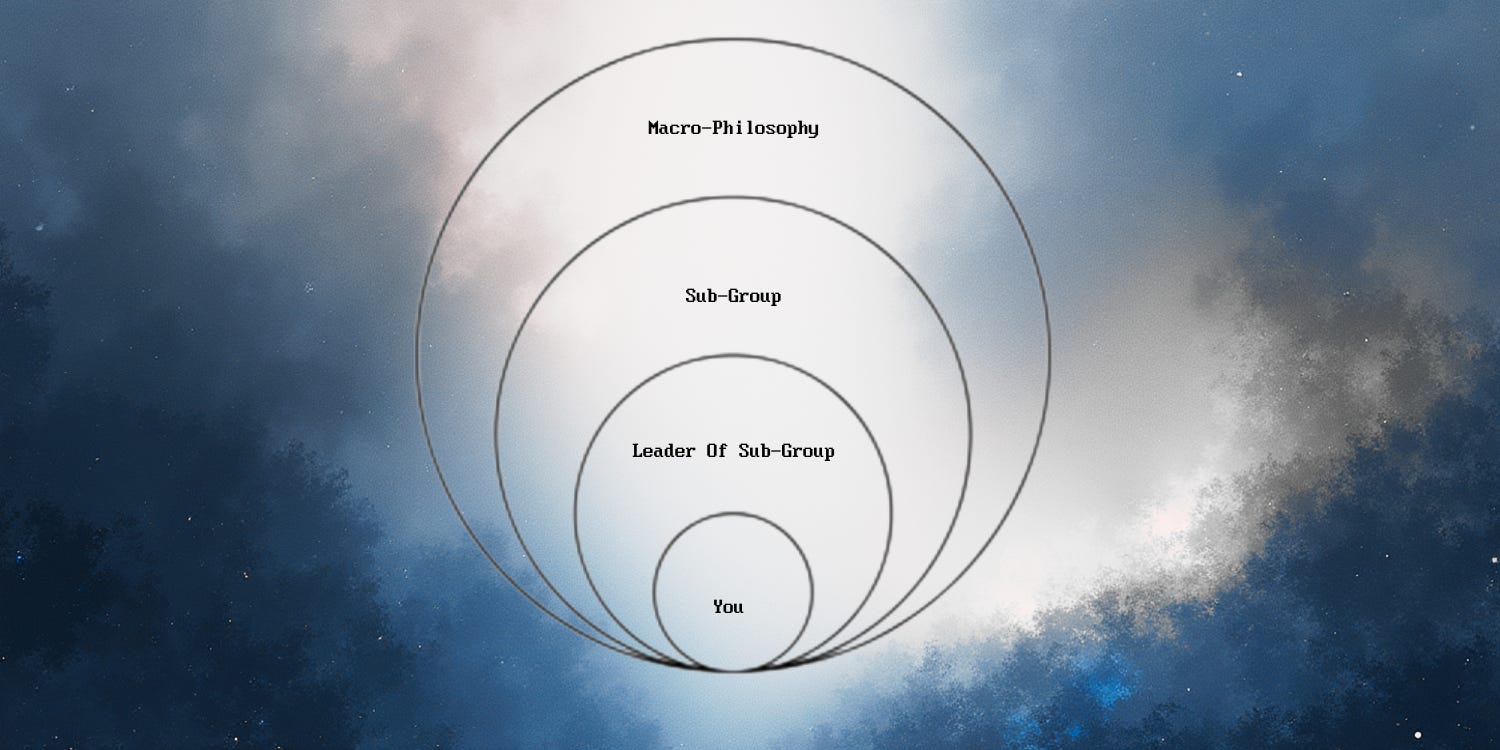
I believe that a personal micro-philosophy can be used as a way for human beings to connect macro-philosophies to the unique circumstances of their lives.
In other words, a micro-philosophy can serve as a bridge.
My rule of thumb is that every impersonal philosophy needs a corresponding personal philosophy to make it livable.
Even when a macro-philosophy, such as Christianity, is broken down into different denominations and interpretations which provide increasingly specific and actionable answers to practical questions, we are still forced, at some point, to decide for ourselves how we want to relate to these external belief systems.
At the simplest level, we all must decide how we want to relate to other people.
Do you want to do what they do, or do something different?
Do you want to live like someone else, or live like no one else?
Other people embodied philosophies which we constantly interact with, judge, criticize, and mirror.
Freedom And Bad Faith
We are not able to outsource our personal philosophy without living in what the philosopher Jean-Paul Sartre called “bad faith” — the tendency of human beings to avoid the responsibility of choosing that comes with human freedom, thereby causing us to live inauthentically.
Outsourcing your way of living to an external belief system is like voluntarily letting another person decide your life for you.
It is shirking your responsibility to choose for yourself as a free being.
And yet, while plenty of people seem happy to outsource their beliefs to organized religion, or social norms, I have never met anyone who is happy with letting another person choose how to live for them.
Many people are willing to die or kill in order to protect their freedom when other people try to infringe upon it.
Either way, whether we are giving up our freedom to an actual person or a set of written doctrines, we are giving up our freedom to choose for ourselves.
At the end of the day, there is no one else that can truly choose for you.
As Sartre famously said:
“That is what I mean when I say that man is condemned to be free.
Condemned, because he did not create himself, yet is nevertheless at liberty, and from the moment that he is thrown into this world he is responsible for everything he does”
Sartre, Existentialism Is A Humanism, 1946
The reason that I am so passionate about teaching people how to build their own philosophy is because I believe it is one of the few things that will truly help people learn the skill of choosing their beliefs for themselves.
In short, it will teach people how to exercise their human agency, thereby increasing their freedom and understanding of themselves and life in general.
If you couldn’t tell, Freedom is one of the core values of my own micro-philosophy.
It is a sad truth that we live in a world where human beings can live a complete life without ever truly making a free choice, or having any original thoughts. A world where millions of human beings are forced to follow pre-determined scripts that undermine their uniqueness.
The Micro-Philosopher Substack is the headquarters of a philosophical resistance movement aimed at increasing human freedom through teaching people how to make the pre-existing belief systems of the world conform to them, rather than the other way around.
If you were interested in being a part of this movement and joining a community of free thinkers interested in learning how to build their own philosophies of life, leave a comment below letting me know and I will send you a free course to help you get started.
-Paul
The Micro-Philosopher
Why You Need A Micro-Philosophy (If You Want To Become An Independent Thinker)

The Importance Of Independent Thinking
How To Make Life Interesting Again And Escape The Dopamine Economy
Recently I have felt a renewed zest for life.
I’m interested, thank you in advance!
Great read! How do I create my own micro philosophy?