


Dear micro-philosophers,
A lot has been happening over here at The Micro-University.
For those who aren’t aware, The Micro-University is the paid-tier of The Micro-Philosopher Substack where I teach live philosophy courses and provide a real philosophy education to individuals all around the world.
In this newsletter, I provide some updates about the learning opportunities available for my subscribers. In the next few weeks, there will be several major developments and changes happening to my course offerings, so I figured it would be helpful to put everything into a single newsletter to give people a clear idea of what is available and what is coming soon.
Live Courses Ending Soon
There are two live courses ending soon, but anyone who is a member of The Micro-University will be able to access all of the course materials, resources, and recordings after the live sessions officially conclude.
PHIL 1: Introduction To Philosophy
This 8-Week introduction to philosophy course was designed to provide complete beginners or advanced beginners with an overview of the core thinkers and texts in the tradition of Greek/European philosophy.

This course is part of a bigger program I launched a few months ago that is designed to provide the equivalent of a bachelor’s degree in philosophy through a series of courses that unfold over the course of two years. Here is the current plan:
Phil 1: Introduction to Philosophy
Phil 2: Introduction to Thinking (starting October 10)
Phil 3: Introduction to Greek Philosophy (starting Jan 2027)
Phil 4: Introduction to Modern Philosophy (starting March 2027)
Phil 5: Introduction to Contemporary Philosophy (starting May 2027)
If you are bummed that you missed the live version of PHIL 1, there are two things you should know:
I anticipate that I will offer a live version of it again to help latecomers “catch up” with the curriculum outlined above (but I haven’t solidified when yet).
You have access to the entire course and recordings for self-study through The Micro-University and can ask me or other community members questions anytime if you need help.
Heidegger’s Being and Time
Today is the last official day of what has been the most incredible shared intellectual experience of my life.
For the past 26 weeks, a dedicated group of subscribers have been reading through and discussing Heidegger’s masterpiece Being and Time every Sunday. Being and Time is widely considered one of the most difficult philosophy books of all-time and our group has proven that it is not only possible to read difficult books with others through the internet, but it is possible to actually understand them in a way that is deeply transformative.

This live session will be turning into an ongoing Sunday Seminars program which is primarily focused on reading incredibly hard philosophical texts with the help of a dedicated group of readers.
Everyone who completed the Being and Time seminar would agree that it would have been near impossible to get through it alone.
Sunday Seminars are designed to solve that.
Like with PHIL 1, all of the previous guides and resources are available for personal use and study. Given the difficulty of Being and Time, though, I would recommend reaching out to me first and getting some guidance before committing yourself to tackling this alone.
Upcoming
PHIL 2: Intro To Thinking
Thinking is way more difficult than we think. It is not something which can be taken for granted, especially in the modern world.
I have noticed that it is incredibly difficult for those interested in studying philosophy online to find any courses or content that teaches them the actual skills that someone would learn as a philosophy major or graduate student.
Instead of just feed you more information to memorize, this course is meant to fill that gap by directly teaching fundamental skills.
This course is the successor to PHIL 1: Introduction to Philosophy (although I recommend this as preparation, it is not required to benefit from PHIL 2).
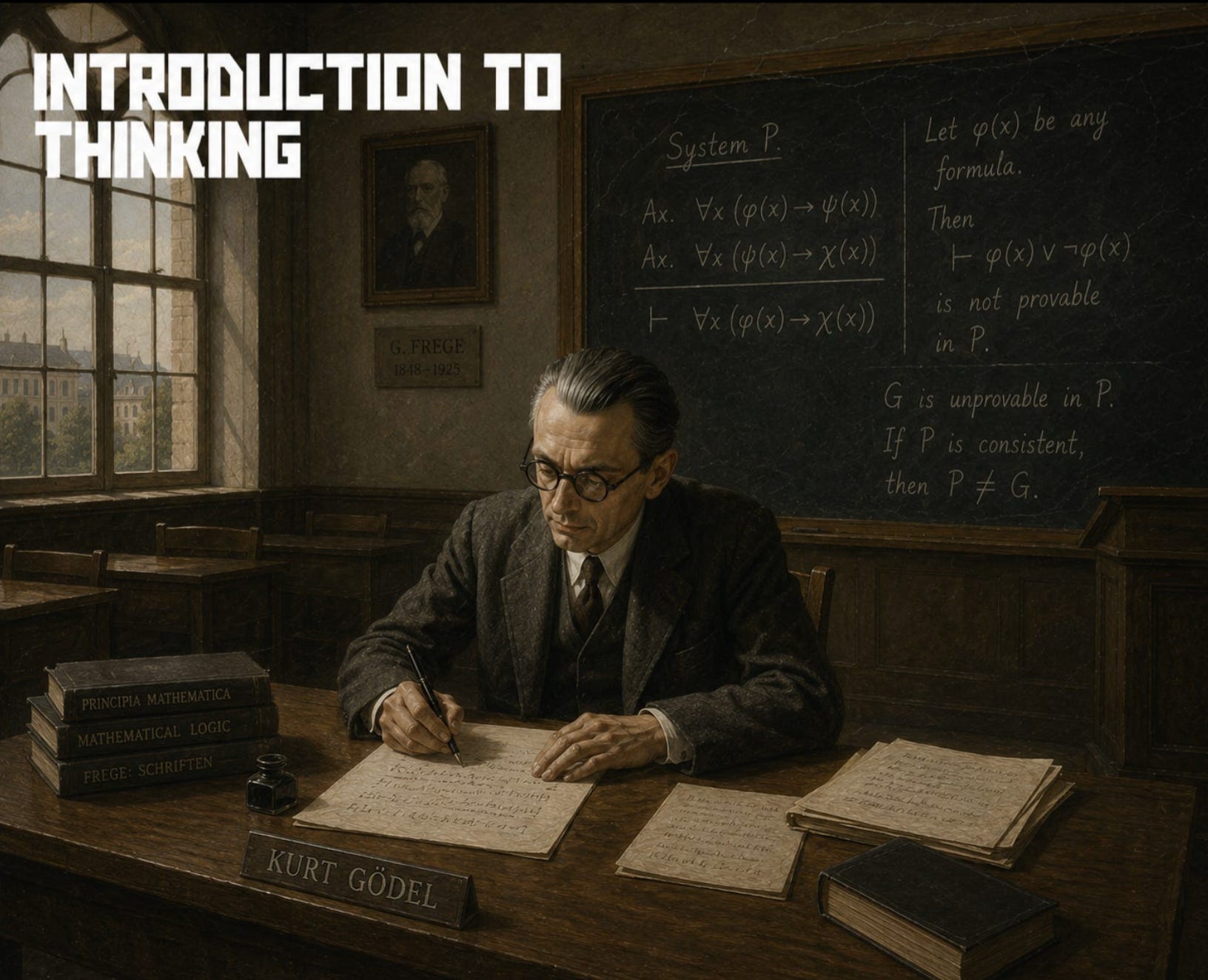
PHIL 2 is designed to provide the core analytical and critical thinking skills that will empower you to think for yourself and elevate your intellectual self-sufficiency. Topics covered include the following:
The difference between real thinking and fake thinking
The basics of Formal and Informal Logic
How to construct and identify arguments
How to evaluate arguments
How to identify and diagnose logical fallacies
How to provided good justification for one’s beliefs
How to use reading to think more effectively
How to use writing to think more effectively
I have become convinced over the past two years that we are in the midst of a thinking crisis. While I know everyone is constantly saying that the sky is falling, it is undeniable that thinking is dying. This course is how I am using education as a form of resistance to the movement to outsource thinking to machines, institutions, and other people.
Micro-Philosophy Foundations September Live Cohort
This is my flagship “build your own philosophy” course that I designed from the ground up.
After noticing that no one teaches how to create your own philosophy online (in fact, some actively resist the idea that this is even worth doing), I decided to make a course where people can learn how to think about their life from the inside out. In other words, rather than study other people’s lives and philosophies, the idea was to teach you how to think from your own and work your way outwards towards alternative ways of living and thinking.
So far, there have been two live cohorts of Micro-Philosophy Foundations and both were incredibly fun and interesting. Participants not only analyzed their pre-existing beliefs and worldview (some didn’t even realize that they had a worldview prior to the course!), but actively shaped what they envision for their life moving forward.
I recently sent a few emails with information about how to sign-up.
We will be starting soon, so if you were interested in doing practical exercises that help you articulate your vision of your life, this is the course for you.
Ongoing
The following two programs are ones that I expect to run indefinitely.
Sunday Seminars
As I mentioned above, the Being and Time seminar will be converting to a more general study of incredibly difficult and interesting philosophical texts. What we read is determined mostly by what the group is interested in. These seminars are meant to challenge participants intellectually and are best suited for those who want “the real deal” philosophy.
At some point with this group we will be reading several of the most notoriously difficult texts such as:
Kant, The Critique of Pure Reason
Hegel, The Phenomenology of Spirit
Wittgenstein, Philosophical Investigations
Sartre, Being and Nothingness
James, The Philosophy of Psychology
Schopenhauer, The World As Will and Representation
Baudrillard, Simulacra and Simulation
To name a few…
The Inner Citadel
Lastly, there is my intensive private coaching program focused on Marcus Aurelius’ Meditations.
In this 5-week program, participants complete daily journaling exercises that are rooted in specific passages of Meditations in order to learn how to integrate Stoic ideas with their personal life. This program is very personal and intensive and is best suited for those who are looking to radically change how they think, feel, and show up in the world.
If you have been interested in Stoicism but feel stuck, this is a great way to make the ideas come alive.
If you were interested in this program, I only accept two clients at a time because of how involved it is, so it would be best to directly message me to see if it is right for you. Or, if you would like to read about it on your own, you can read about it here.
As you can tell, there is a ton of exciting philosophy happening right here. If you are looking for ways into this deep, difficult, and life-changing field of study, feel free to reach out to me with any questions. I truly enjoy helping people navigate the challenges of studying philosophy. I would be happy to help.
Finally, if you are feeling “fomo” about any of these courses, it’s important to remember that even if I am not currently offering a “live” version of the course, you can still work through the material on your own and reach out to me for help. For example, there is an entire course on Nietzsche’s Beyond Good and Evil available here).
Thank you for making all of this possible!
-Paul Musso