


If you are tired of learning by yourself and want a real philosophy education, you’re going to want to read this…
Over the next 12+ months, I’m sharing everything I have learned from dedicating 6 years of my life to completing a PhD in Philosophy, and 3 years additional years to teaching philosophy at various elite universities.
Why?
Because there are millions of curious, intelligent, and open-minded individuals who are dying to learn and discuss big ideas with others, but have very few places to go outside of traditional universities, disappointing “book clubs”, and annoying discussion boards.
I love introducing 18-22 year olds to philosophy for a living, but it drives me insane that a real philosophy education is pretty much inaccessible to anyone who is older than this, can’t afford to go to university, or both. There is no reason that people who want to learn, discuss ideas, and transform their lives cannot easily access the education they need to do this.
Eventually, I got tired of this and decided to do something crazy here on Substack.
I started my own philosophy school.

It’s called The Micro-University, and for the past few months I have been spending several hours a week leading a group of mature, thoughtful, motivated, and curious adults through some of the most exciting ideas a human being could possibly think about.
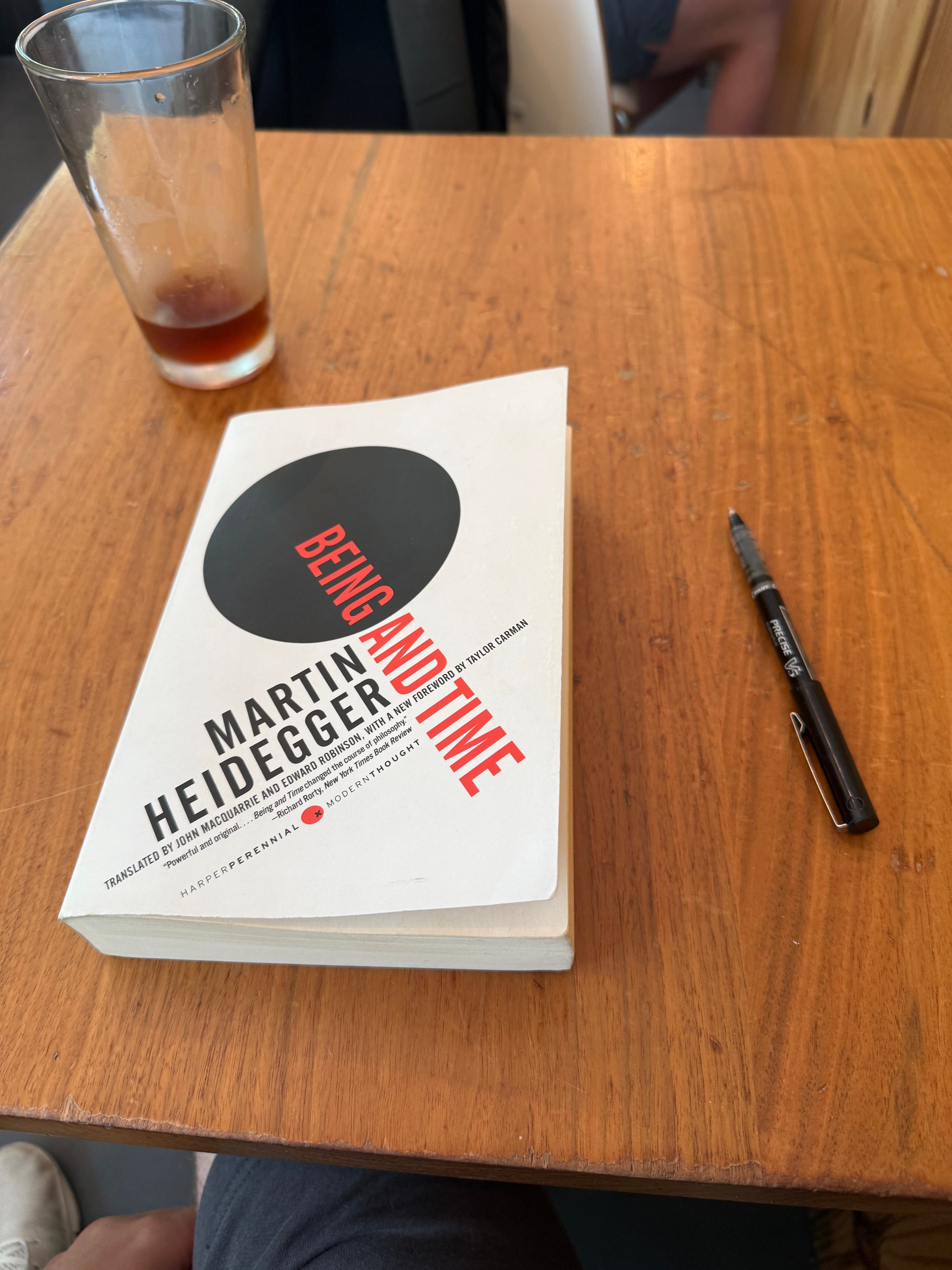
This past week, our group has finished reading and discussing Division One of Martin Heidegger’s Being and Time.
For those who aren’t aware, Being and Time is one of the hardest (and most interesting) philosophy books ever written. Most philosophy majors never make it through the book. But for the past 15 weeks, our group has met for two hours every Sunday and carefully worked through 300 pages of the text.
The room has been buzzing lately.
At this point, I can confidently say that we have not only read the book, but actually understand it enough to apply the big ideas to everyone’s unique interests through free-flowing discussion.
I was so overjoyed that our group was able to reach this milestone together, that I decided to give everyone who went on this journey with me a yearly paid subscription to The Micro-University so that they could continue learning with me for free (congrats to Jared Hastings Matt Caron sanjayvb Gabi Berkelmann Joanna Sedgwick Ed Worthington Kenton Brede Bill Mathis).
I probably should also mention that this same group also read Nietzsche’s Beyond Good and Evil cover to cover while working through the Heidegger.
Amazing.
I initially thought it was crazy to teach a book like this to a random group of strangers on the internet. In the university, most people would have scoffed at the very idea.
But I couldn’t have been more wrong.
This experience has completely changed my life and the way I view the future of online humanities education.
It has shown me that traditional educational institutions have failed to serve adults after they stop paying for their degrees. It has shown me that there is a burning desire for a real humanities education which is being massively underserved. It has shown me that it’s possible to deliver an Ivy-League philosophy education through the internet and reach more thousands of more people than I can in my 25 student, gate-kept university classes.
It has made me commit the next few years of my life to developing The Micro-University into a complete philosophy program where someone can begin their philosophy journey at 35, 50, or 70+ years-old, and receive the equivalent of a B.A. in philosophy for a fraction of the cost.
I love the idea of starting to learn philosophy at 40, or 80.
It only takes 2-3 years to completely transform your mind.
I am awestruck by the potential impact that’s possible thanks to platforms like Substack. I randomly posted this note the other day, which has more than confirmed the burning desire online for serious intellectual spaces.
So if this sort of thing sounds appealing, and you want to enjoy a real philosophy education, follow a well-crafted plan, and learn with a group of mature minds, then consider reading the section below.
Your 12-Month Learning Plan
There are three major issues with learning online.
First, there is the passive consumption of thousands of hours of content without any sharp direction or feedback. Learning requires some direction and structure in order for real progress to occur. Otherwise, people consume endless amounts of “edutainment” content without going anywhere.
Second, although the internet has made information more accessible than at any point in human history, everything is scattered. This is intentional. All major platforms send their users on a wild goose chat to figure out how to organize the information that’s available to them so that they spend more time using the platform. Real learning requires guidance about where to go next, in order to develop a coherent narrative that progresses from idea to idea.
Third, and most important, is that most people have no intellectual community. This is problem goes way deeper than philosophy. This is a real human problem. People don’t just lack intellectual community, but community itself. What’s the point of learning if you have no one to talk to who cares about things that are actually interesting?
For these reasons, I have decided that the next evolution of The Micro-University is to offer a complete educational experience where subscribers can go through an entire series of courses that deliver the equivalent of a year in the philosophy major at university.
The idea is that after spending a year on the internet in our community, you will not just have a bunch of quotes from Marcus Aurelius, but the confidence that you have learned philosophy the right way, with expert guidance and a group of people to support you. The confidence that you don’t have major gaps in your knowledge, or misunderstand the basics. The confidence that you can progress from introductory courses to intermediate and advanced topics.
Here is the plan to help you do that.
Over the next 12 months, I will be offering five 8-week beginner courses that mirror the progression of a real philosophy degree:
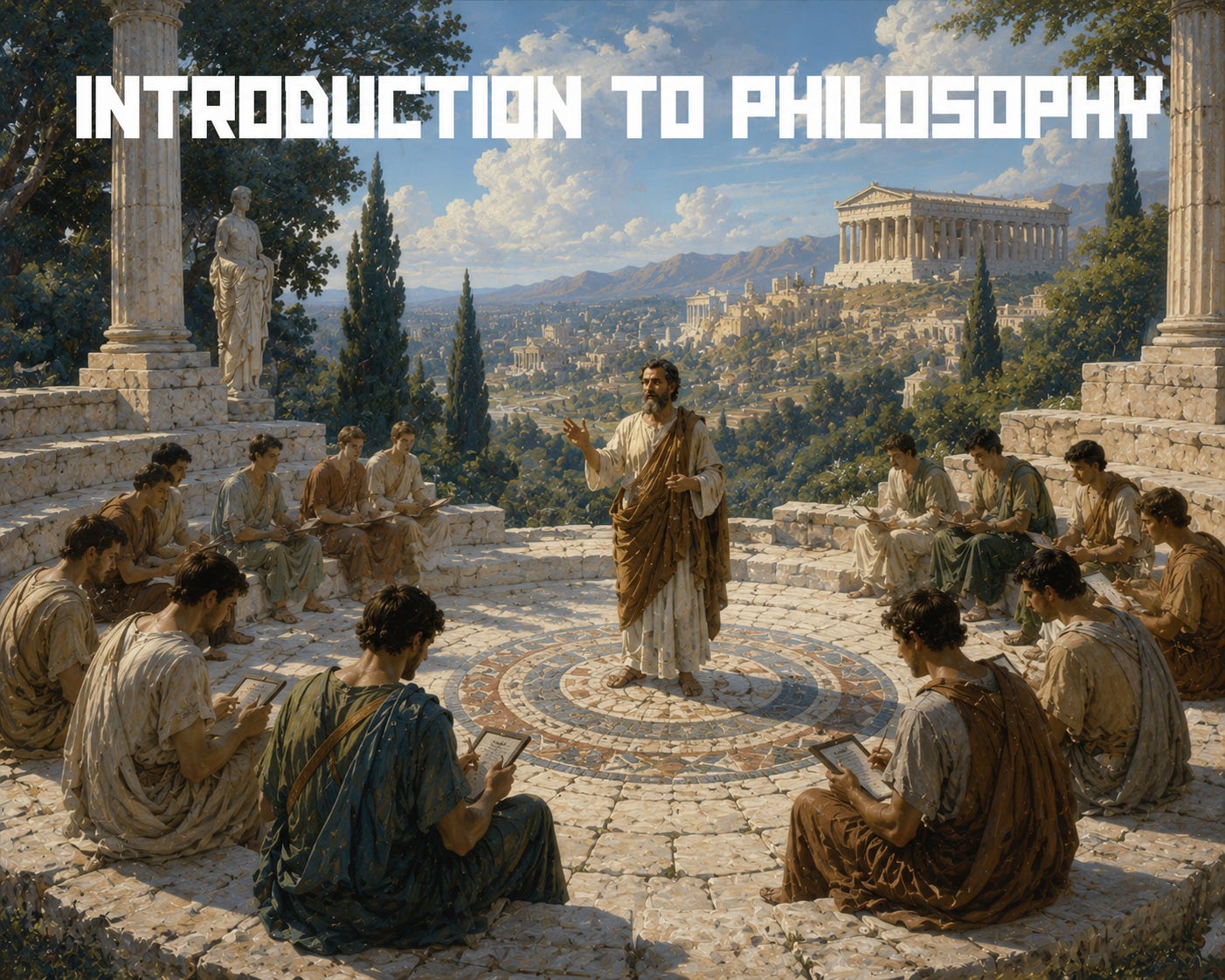
PHIL 1: Introduction to Philosophy
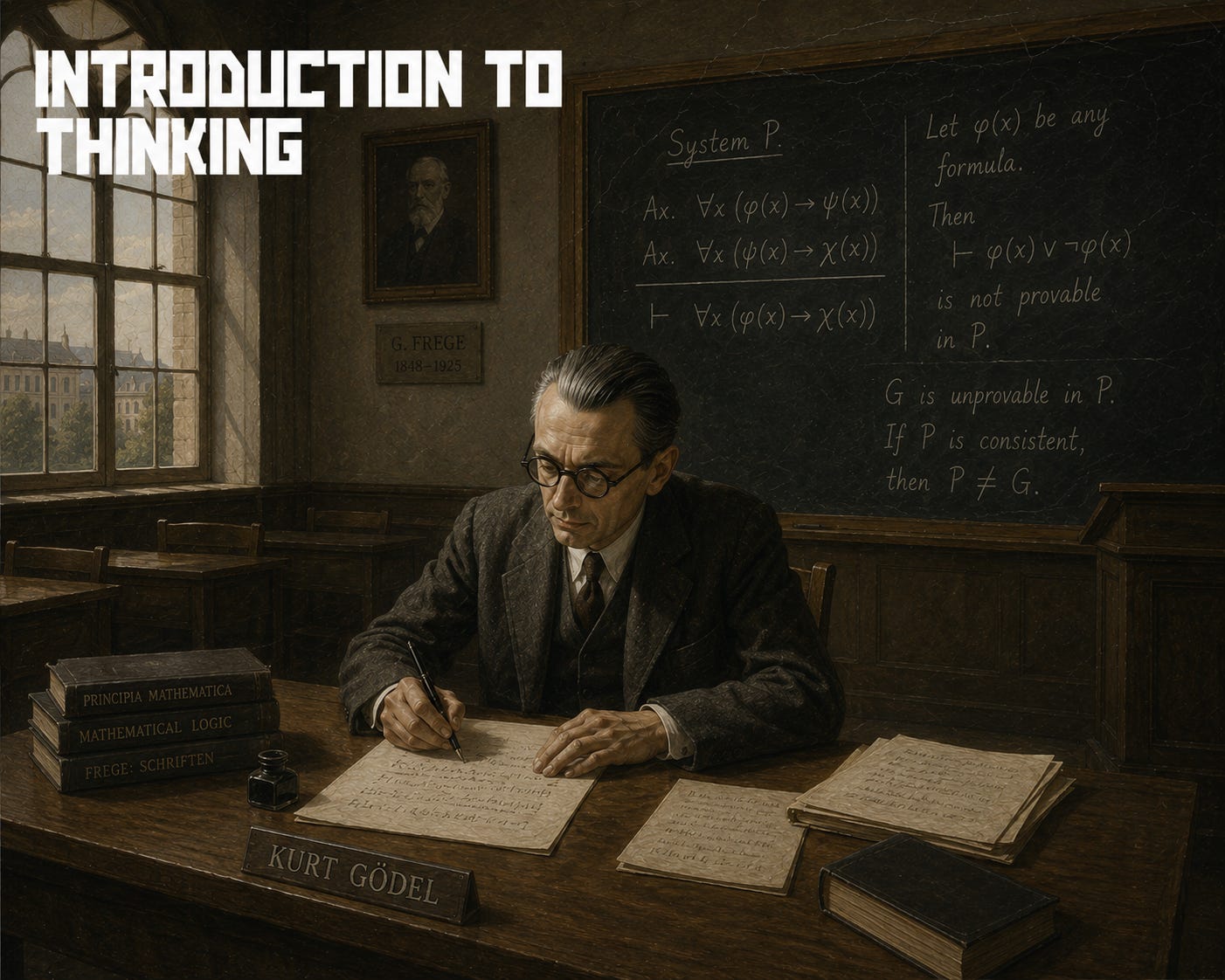
PHIL 2: Introduction to Thinking
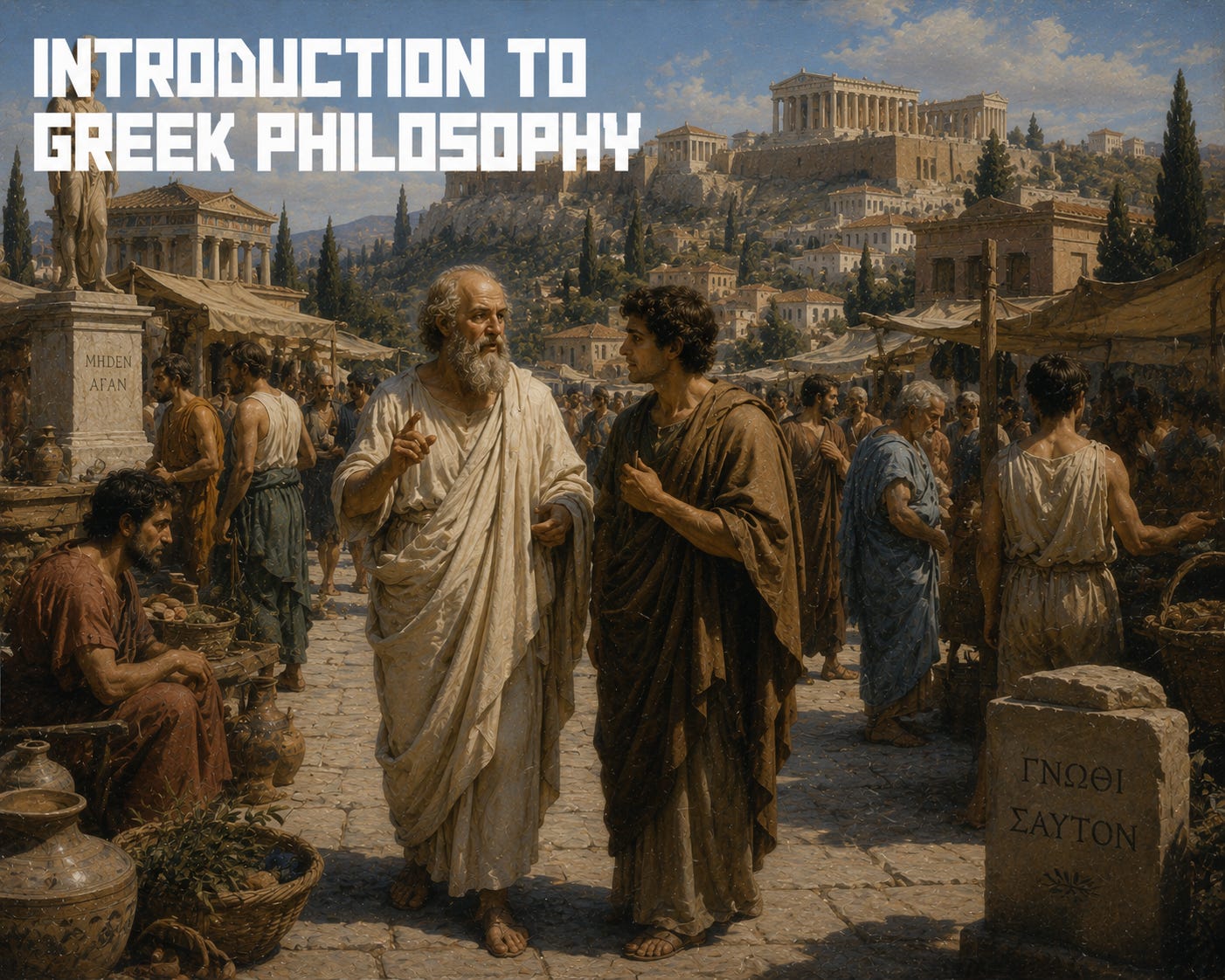
PHIL 3: Introduction To Greek Philosophy
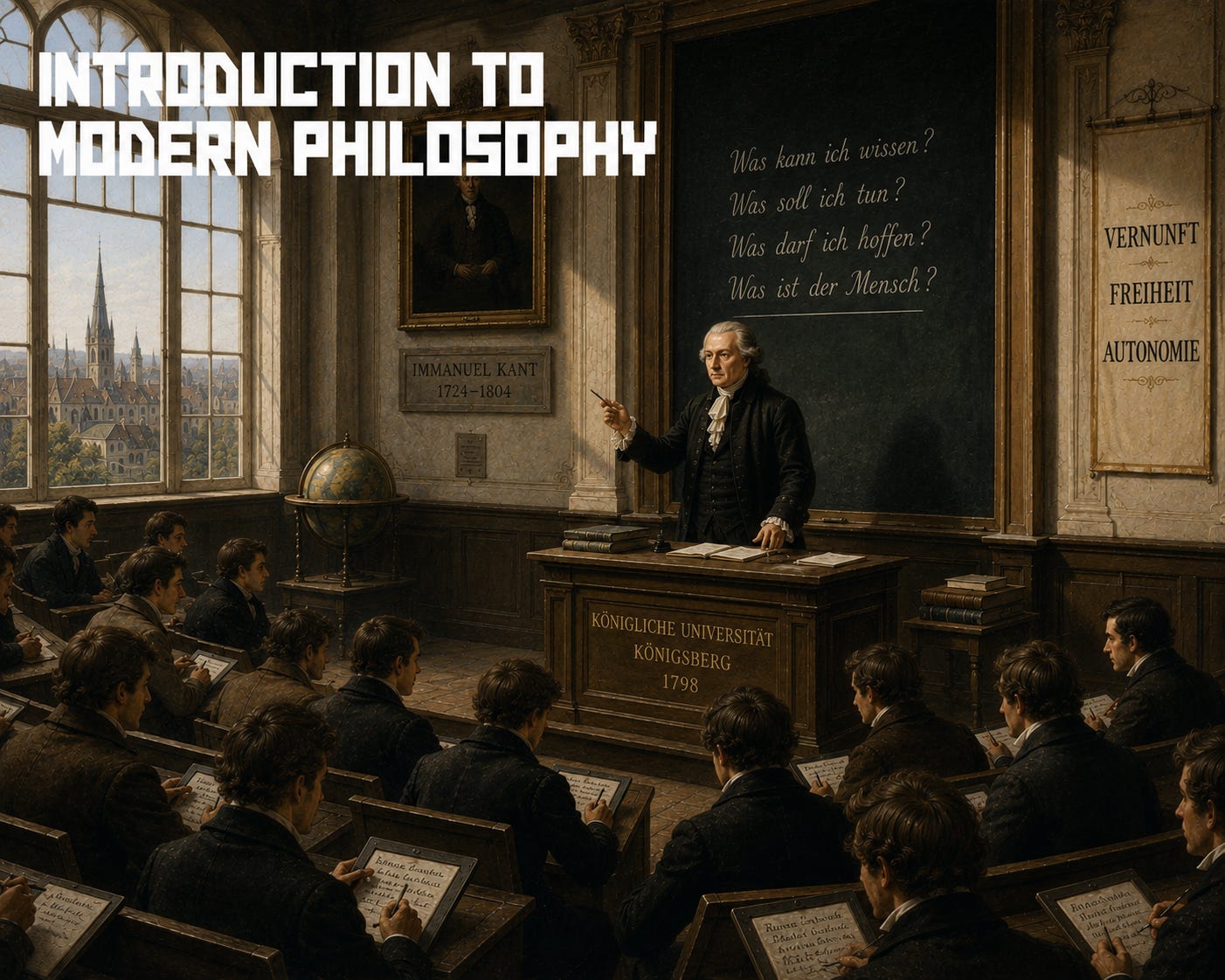
PHIL 4: Introduction To Modern Philosophy
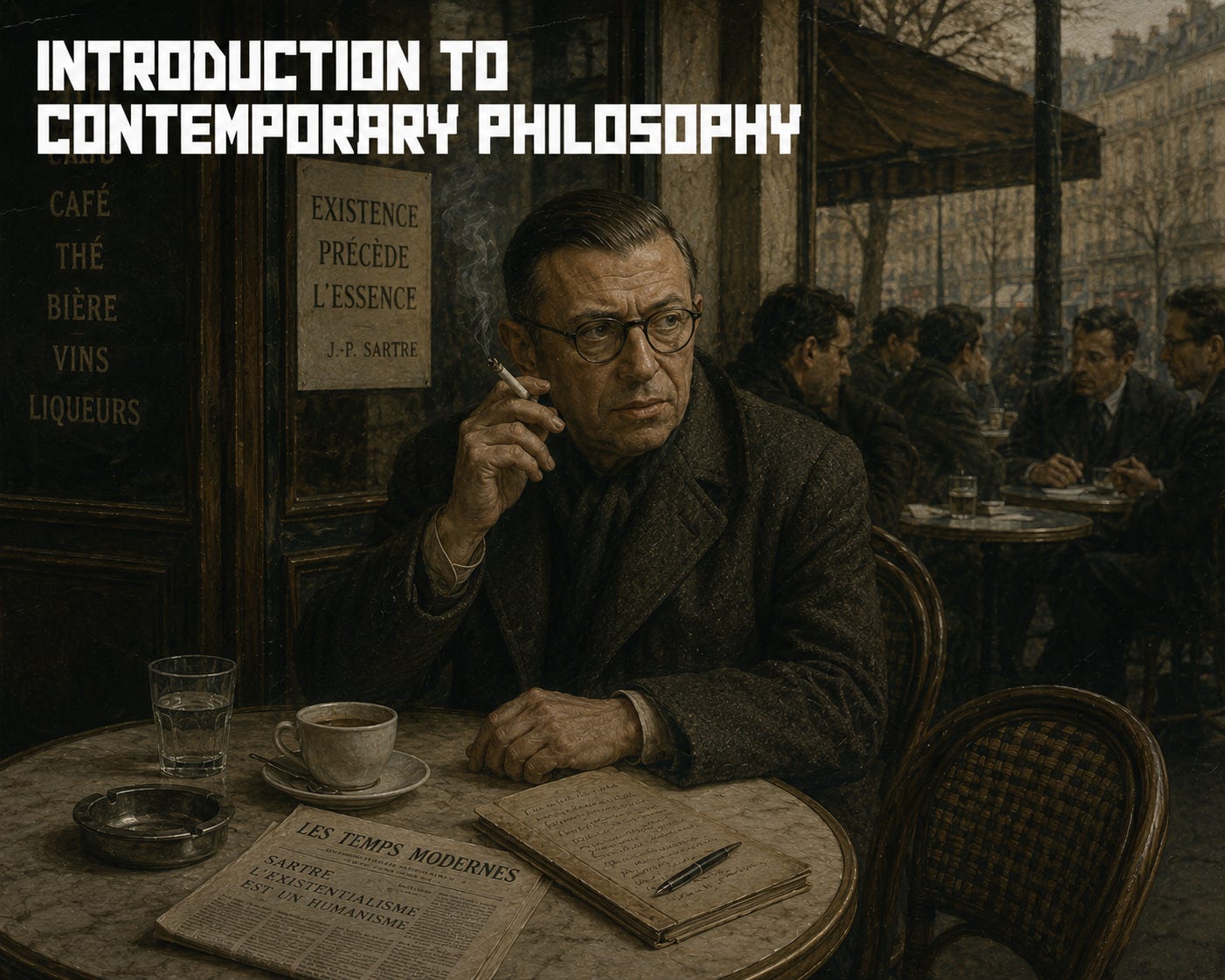
PHIL 5: Introduction To Contemporary Philosophy
PHIL 1: Introduction To Philosophy
PHIL 2: Introduction To Thinking
PHIL 3: Introduction To Greek Philosophy
PHIL 4: Introduction To Modern Philosophy
PHIL 5: Introduction To Contemporary Philosophy
These courses will serve as the foundation of The Micro-University for years to come.
A few notes about this plan.
First off, the Introduction To Philosophy course, PHIL 1, is set to begin on July 25. You can read more about that at the bottom of this article if you are interested in joining.
It begins with a captivating general introduction to the field as a whole that motivates learners to continue deeper into the world of philosophy. After this, the focus is on developing the fundamental skills of independent thinking in PHIL 2. This includes logic, argument, and critical thinking. These skills that sharpen one’s mind for more advanced study and transform a learner’s sensitivity to language, logic, and bad arguments. This is absolutely critical, since few people online teach the actual skills of philosophy online.
The next three courses consist of detailed surveys of the major historical periods:
Greek Philosophy (8th century BCE - 1 AD): Pre-Socratics, Socrates, Cynicism, Plato, Aristotle, The Old Stoa, Epicurus, etc.
Modern Philosophy (1600 AD - 1920 AD): Bacon, Descartes, Hume, Kant, Hegel, Nietzsche, Marx
Contemporary (1920 AD - Present Day): Heidegger, Wittgenstein, Carnap, Fanon, De Beauvoir, Sartre, Foucault, Quine, Rawls
Each of these courses will cover the major historical figures and movements so that learners are walk away feeling “at home” in the tradition of Western philosophy and can confidently pick up almost any philosophy book and understand what’s going on. That was always one of my major goals in studying philosophy. I wanted to eventually be able to pick up any book, no matter how hard, and understand it on my own.
I should point out that the choice to take a historical approach to learning philosophy is significant and comes with trade-offs. In truth, any approach requires making significant trade-offs. It’s just a matter of which trade-offs you want.
If you teach the philosophical questions and issues directly without a proper historical understanding, students often feel like they are missing something or don’t understand key terms and background context. The benefit, though, is that you can jump right into a question without having to learn much about where it came from or how people have tried to answer it. But if you go too deep into history, it can detract from the liveliness of the questions themselves and focus too much on the figures and schools of thought.
Personally, I have always found that having a good background context helps me understand the philosophical issues better and I have a historical mind, which is why I am choosing this approach here. I have also always found it fascinating to trace the develop of the history of ideas so that I can identify the hidden patterns that drive human history and shape our worldview. The historical approach is good for those who want to grow a deep understanding over a longer time-scale. Additionally, since I have a strong passion for history it will simply lead to better teaching. It’s natural for me.
Alright, that’s the plan. My promise to you is that if you study philosophy with me, you will become a more confident independent thinker who is knowledgeable about the history of ideas, but also develops the flexible thinking skills to tackle novel problems.
If you want to jump on board this train, it’s about to depart soon.
The first course, PHIL 1: Introduction To Philosophy, is set to begin on July 25th and 30 people have already joined the waitlist. You can read more about the course by clicking the article linked below, or join now by upgrading to a paid subscription if you already know that you are ready.
In just a few weeks, we will be reading the very earliest written texts in the history of Western philosophy — Pre-Socratic fragments from Heraclitus and Parmenides. I can’t wait to see you in there.

FAQ
Q1: How Do I Join?
You can join by upgrading to a paid subscription to The Micro-University. This gives you complete access to all current and past courses, a thriving private community, helpful learning resources, and direct messaging with me whenever you need help. You can also cancel anytime.
Q2: Can I still join if I miss the first course?
Yes! You can join at any point, since all previous classes will be recorded and made available to you through The Micro-University. Since these are 8-Week courses, it is also not difficult to catch up. Additionally, although these courses build on each other, they are also designed to make sense on their own, you just will have a richer experience by following the narrative as it develops.
Q3: How much time per week?
You should expect to dedicate around 1-1.5 hrs throughout the week to doing the reading, and then 1.5-2 hrs for the live meetings. You are not required to do anything, but if you want to have the best experience, that is what I recommend. If you want to learn at your own pace, the recordings will be available as well.
Q4: Am I required to do anything if I join?
Your level of participation is completely up to you. Joining gives you access to the content and spaces, but how much or how little you choose to engage with it is your choice. This is not military training.
Q5: Are there any pre-requisites?
You will need to be fluent in English and also be a human being. That’s all. Actually, one more thing — don’t be an a**hole.
Q6: Are The Readings Provided?
Yes. Everything will be provided through a private Google Drive folder. I will also give you recommended resources for further learning.
If you have any questions, feel free to reach out to me directly.
Thanks for reading.
-Paul
Structure has been perfect too, in case anyone was wondering. It’s a great blend of analyzing the text while also connecting the ideas to the modern world. Excited to continue the journey!
It's been a wild ride Paul! Just echoing what Matt said - the course structure has been excellent, and I love how you've flexed the sessions and allowed us to explore and meander from the technicalities of the text to the real world implications and modern context, in particular AI. On which point, I was a bit disappointed at this last bit "and also be a human being." - I'd quite like to get the AI bot's insight, maybe you can add that to the ideas list.
PS - I think my friends are going to get fed up of me somehow bringing philosophy into every discussion these days. Might need new friends. Totally worth it.