


I have been studying philosophy for 17 years and I have never felt more passionate about learning, teaching, and discussing it with others.
But it wasn’t always this way.
I used to hate school, struggled to read, and lack confidence in articulating my ideas.
Even when I started to fall in love with philosophy, my relationship to it was full of struggles, doubts, moments of pure joy, and disappointments.
But I stuck with it and was eventually able to reach a point where many of those struggles have suddenly vanished, leaving me to thrive in the pure joy of the intellectual life and in a powerful position to help others do the same.
In the last year, I have develop a course that teaches people how to build their own philosophy (Micro-Philosophy: Foundations), started a one-person online philosophy university (The Micro-University), and I have developed the ability to teach philosophy in a way that my 17 year old self desperately needed — accessible, enjoyable, but also incredibly deep.
In order to help inspire others who might be struggling somewhere on their intellectual journey, I decided to share my story of how I fell in love with philosophy and, ultimately, with life.
I am sharing this story not to brag or receive praise, but to show people what they are capable of (even when they think something is wrong with them or their life).
I am sharing this because I still remember what it was like to walk into a bookstore like Barnes & Noble and head straight for the philosophy section, desperately wanting to access the insights and wisdom in these incredible works, and filled with awe and excitement about learning.
This is my intellectual auto-biography.
It is the story of how I went from an aimless and lazy kid who was obsessed with video games to someone who wakes up every morning excited to read hard books and teach them to others.
I hope you find it useful.
Part I: The Early Years (0-15)
I was born in 1992 in southern New Jersey, USA.
I was the youngest of four and spent the first 7 years of my life living at my grandmother’s house because my mom couldn’t afford to move out yet while raising four kids on a single income.
Being the youngest, I was protected from a lot of the typical hardships that low working-class families have to deal with.
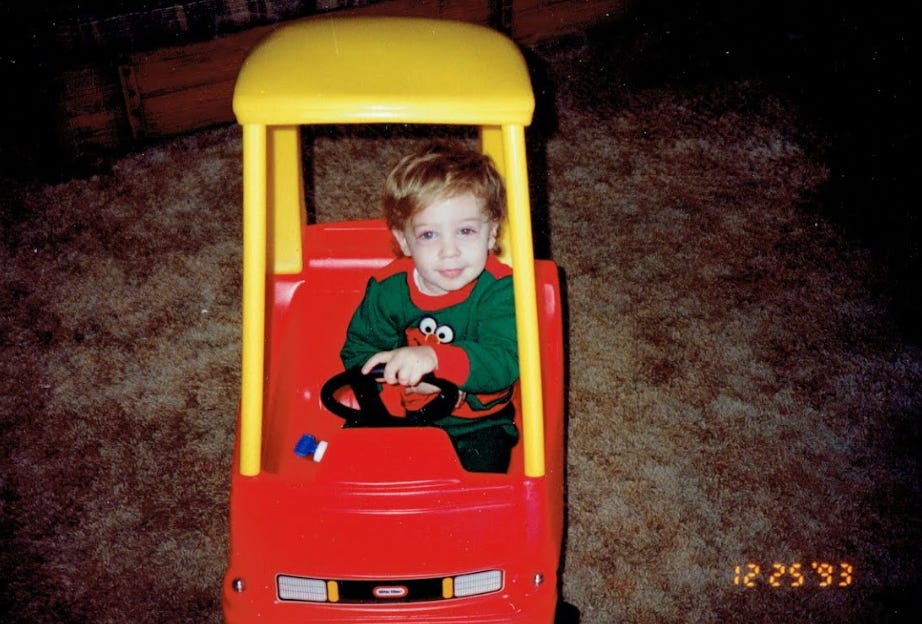
In hindsight, I am deeply grateful for the sacrifices my siblings and family members had to make so that I could have the freedom to be a kid and explore the world.
But this freedom, as I would learn later in life, also set me back in various ways.
Unlike some kids, I had no structure or discipline imposed on me.
I was allowed to make my own choices and pretty much do whatever I wanted as long as I didn’t hurt anyone.
This highly free and individualistic childhood has probably shaped my thinking and personality more than anything in my life.
But it had a cost.
As I started to get older, I would constantly seek out fun and enjoyment at the expense of doing some of the things I was supposed to do, and also at the expense of working hard towards specific goals.
I learned to constantly seek novelty which fueled my endless curiosity.
My main interest was, like most kids who are left alone to choose for themselves, video games.
While I did end up wasting what is likely 20,000+ hours playing video games as a kid, I do think that there was some benefit in this obsession (although it is hard to put my finger on exactly how it shaped my mind).
One tangible thing I can say is that, largely thanks to the influence of my older brothers, I grew interested in “mature” video games quite early in my life. Games such as Metal Gear Solid which introduced deep political and moral themes that I found fascinating but hard to understand. I also became interested in historical strategy games and learned quite a lot about world history through games like Civilization and Rome: Total War.
One thing I can say about the influence of video games on my life is that they trained me to seek novelty and pleasure (which is a dangerous pathway that I had to eventually overcome later in life), but they also fueled my curiosity and desire to play with reality as well as fictional worlds.
I still don’t feel like I have fully understood the depth to which my experience with video games has shaped me as a person (I think most gamers who have later gone on to become writers, educators, or content creators will understand what I getting at here).
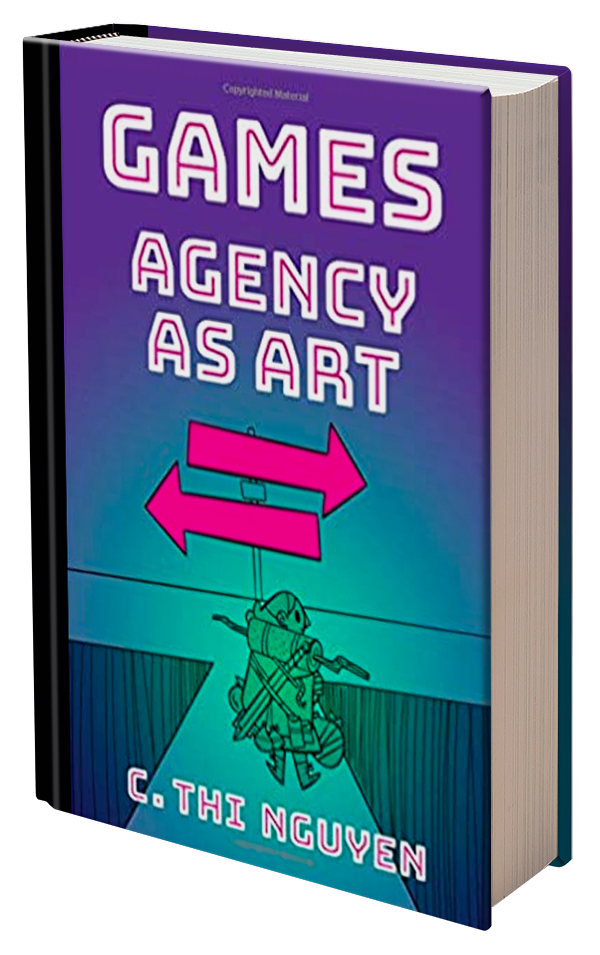
There is an excellent book by one of my favorite philosophers called Games: Agency as Art. In the book, C. Thi Nguyen argues that video games are an art form whose medium is human agency. The core thesis rings true in my life.
It is incredible to look back through your life and notice the subtle ways these experiences have shaped your taste and preferences.
Since these early years, I found myself perpetually interested in history, politics, morality, and (eventually) philosophy.
Children are some of the best philosophers in the world (even though most adults suppress their natural philosophical instincts).
They have endless wonder and curiosity.
We “educate” them to kill this part of themselves.
When I was eight years old, I underwent what I now understand to be a life-changing experience which protected my philosophical instinct from ever being crushed.
I watched The Matrix for the first time.
I still remember when we went to hang out at a family friend’s house on a Friday night (people did that sort of thing way more in the 90’s) and they had rented The Matrix on VHS from Blockbuster. Every time we would go to this house, my mom would spend a few hours talking to her adult friends in the kitchen, and my brothers and I would go upstairs to hang out with their son who I only remember as being a young and smart guy who had a sick computer and knew how to do all sorts of cool things on the internet.
The Matrix tapped into that sense of wonder about technology, the internet, and the future that existed in the late 90’s.
Most of all, it introduced me to philosophy.
I remember being blown away by the film in ways that I couldn’t even understand.
What stuck with me was the feeling that there was more to reality than I’ve been told.
I doubt that anything has influenced my life more than this experience.
For the rest of my early years, I would always be the kid who wanted to talk about space, history, and big ideas.
I desperately wanted to understand what adults were saying.
Although I would later come to realize most of it was simply just drunken banter at parties.
Part II: The Year When Everything Changed (16-17)
For most of my childhood and early teens, I was a pretty predictable sort of kid.
I loved video games, sports, and hanging out with my friends.
I did what most kids would do who did not have any life plan superimposed onto them and lacked supervision.
Eventually, though, this started to cause some problems in my life, especially when it came to school.
I mostly hated school as a kid.
I would not do most of the assignments, or just put in the absolute minimum effort so that I could go back to something which stimulated me (video games or sports).
I would never do any reading.
The only books I was even vaguely intersted in reading were books that dealt with military history.
Eventually these habits caught up to me as school started to get a bit harder.
I remember sitting in my English class during my sophomore year of high school and deeply feeling like a loser.
I actually liked the teacher (Mr. Lefevre) and he did a great job trying to make the class exciting for us.
I wanted to impress him (especially since I lacked a father figure in my life).
But I just felt like I couldn’t.
During that time I also started working at Dominos because I wanted to buy a Fender Stratocaster.
Why did I want to buy a Fender Strat?
Because I wanted to play heavy metal on the same guitar that my favorite guitarist from Iron Maiden used.
I had big plans in life, big plans…
So I did it.
I worked at Dominos. I started making some money. I bought my guitar, played video games, ate pizza, and blew off anything that felt even remotely challenging.
This went on for an entire school year.
That summer, however, everything changed…
I can’t say exactly what happened during the summer between my sophomore and junior year of high school, but here is what I think happened.
After working at Dominos for a while, I started to deeply hate it.
I hated having to go there (because I already got my guitar), I hated having no time to have fun because I had a job during high school, and I hated feeling like a loser in my classes.
I received a letter in the mail that summer from my school asking me to choose my classes for the upcoming year.
I remember standing outside of a school building, the summer shining directly on my face, and reading this letter.
I had the option, as a junior, to take what are called “advanced placement” courses for the first time. (If you did well on the national exams after taking these courses, you could receive college credit).
I remember in that moment asking myself a question which, in hindsight, was the question that would change my life forever:
What if?
I had always told myself secretly in my head that I could be good at school, I just didn’t feel like it (I was one of those kids).
I could get straight A’s but I don’t care.
Well, I asked myself in that moment “What if I started trying in school for the two years I had left? Am I really as good as I think I am?”
In hindsight, I was calling my own bluff.
I was testing myself to see what I am really made of. To see if I really could do what I always said I could do, but put no effort into doing.
I also remember thinking that I on my current path, I am not going to go to college anyways, so “what do I have to lose?”.
“If I fail then everything will be the same”.
So I did something which seemed crazy to me at the time.
I enrolled in two advanced placement courses — history and literature — even though I received a C+ in literature the previous year.
Those precious minutes in which I reflected on where I was going and who I wanted to be were the hinge upon which my entire life began to turn.
If you are someone who doesn’t believe that you can “change your entire life in 1 hour”, you are massively underestimating the power of a perfectly placed thought or question.
Part III: The Climb (17-32)
The hardest part about changing your life is that when a major shift occurs, you mostly feel the same as you did before, even though the axis upon which you live has tilted.
The secret is to never stop moving in the new direction no matter how long it takes.
After signing up for AP English, I was assigned a summer reading project — East of Eden, by John Steinbeck.
I had never done summer reading in my entire life.
I thought it was ridiculous that schoolteachers could infringe upon my right to a free summer.
So I showed up to AP English on the first day and everyone else had read the book except me.
My teacher, Dr. Bierman, started asking us questions about the book and I immediately felt like I did the previous year — a shameful loser who had to fake it to get through class.
After class ended, Dr. Bierman asked me to speak with him.
I was quite nervous, as he was a pretty serious man and also the first teacher I ever had with a PhD (I didn’t really know what that meant, but I knew it was a big deal).
He asked me directly “Why didn’t you read the book?”
I remember trying to give a defiant response — a philosophical argument about my right to a free summer — but I fumbled.
I felt exposed by this man.
He would not accept bullshit.
One of my favorite things about Dr. Bierman is that when students would ask him to go to the bathroom he would always snap back and say that you are capable of deciding whether you need to go to the bathroom yourself. Sometimes students would come in late and put some kind of “official school note” on his desk and he would say “don’t put trash on my desk”.
Finally, a serious man in my life who would not let me bullshit anymore.
It scared the shit out of me.
He told me that I would finish the entire book over the weekend and come back on Monday having done my summer reading.
I was shocked.
I had never finished an entire book in my life up to that point (I tried to read Harry Potter once and got bored after 10 pages).
How could it be possible for me to read the entire book (~350 pages) by Monday when other students had the whole summer to read it!?S
So I went home that weekend and bought the book (I didn’t even own it!), and told myself that I am going to stay home and read this book for as long as it takes me to finish it.
If I fail, then I fail.
That single conversation with Dr. Bierman helped me understand the sheer power of human will. So many of the problems we face in life are only there because of the limitations we place on ourselves.
Dr. Bierman looked at me as a bright young man who was capable of doing what he knew was possible, but what I thought was impossible.
Reading East of Eden was a struggle.
I probably read for 10 hours/day over that Labor Day Weekend.
But I got it done.
When I came back to class, I was a completely different person.
I felt proud of myself that I did the reading rather than ashamed. I started to find myself having things to say (even though I was scared to say them still). I started to realize that learning can be enjoyable and feel good too.
Thank you Dr. Bierman for not accepting my bullshit and giving me the gift of real learning (I will be in touch).
As the semester progressed, I continue to take the same approach that I did with East of Eden.
I began to devour the assigned novels through sheer force of will in order to make up for my lack of reading skill.
It was slow and painful, but I never felt more proud of anything in my life.
I read the first novel that moved me to tears — Frankenstein.
As the semester progressed, my grades began to improve across the board and I started getting A’s in every class.
I started to realize that school was actually easy this entire time, it was just me who made it difficult and unenjoyable.
As the year progressed, I remember going up to Dr. Bierman and telling him that I want to get a 5 out of 5 on the national advanced placement exam.
I wanted to try to achieve that goal.
So I started doing more than was required.
I started practicing vocab every day, learning about grammar, and working through different test prep books late into the night.
I remember having a whiteboard where I would write a word of the day and also a grammatical concept, quotes from Shakespeare, and anything I needed to advance my learning.
I actually am starting to remember through writing this essay that I wrote out an entire quote from Macbeth, which I loved.
Tomorrow, and tomorrow, and tomorrow,
Creeps in this petty pace from day to day,
To the last syllable of recorded time;
And all our yesterdays have lighted fools
The way to dusty death. Out, out, brief candle!
Life’s but a walking shadow, a poor player,
That struts and frets his hour upon the stage,
And then is heard no more. It is a tale
Told by an idiot, full of sound and fury,
Signifying nothing.
Shakespeare, The Tragedy Of Macbeth
If you do not have a daily writing practice or journaling practice, I am begging you to write.
What should you write about?
Write about your life.
There are so many incredible memories, ideas, and insights you will unlock through writing and working through the raw material of the self.
Just now these quotes and memories are flooding back to me because I am writing this.
(I wrote an entire essay about this which I recommend if you are interested. I wrote this entire essay you are reading in one sitting. It took me two hours, but I am telling you, there are few things that make you feel more alive and human than writing).
How To Write About Your Life So That You Are Not Forgotten (Even If You "Aren't A Writer")

Most people I know love the idea of writing a book about their life someday, but never actually do it.
When the AP exams came around, I entered them with as much momentum as I possible could.
I got a 5/5.
I cannot tell you just how powerful it is to see something through. Even if it is just once in your life, a single complete episode of achievement can propel you for years.
As high school progressed, I became more intellectually confident and found myself loving my classes.
I started talking ideas with teachers, friends and acquaintances.
I started learning about philosophy for the first time.
I maintained perfect grades throughout the end of high school.
In my final semester, I decided to enter a public speaking contest with a chance to become the graduation speaker for my high school (it was a position called the Ivy Orator).
I ended up giving that speech to a crowd of 5,000 people beating out a very nice kid who had perfect grades. I did not give that speech because I was valedictorian, I gave it because I wanted to overcome the fear more desperately than anyone in my school.
When I applied for colleges, I was incredibly stressed about money.
I had no money and I wanted to study philosophy.
I needed to find a way to pay for college, so I decided to look into joining the Navy, or going abroad (because I thought college in the UK would be way cheaper).
I ended up applying to a single university — Rutgers University.
Rutgers was one of the top philosophy schools in the world at the time.
But more importantly, I was able to get in-state tuition because my mom was living in New Jersey (I forgot to mention that while everything above was happening, I pretty much had an entire apartment to myself because my mom had to move back to New Jersey before our lease ended).
I got in to Rutgers and decided to major in philosophy as a freshman.
My years at Rutgers were great.
I knew exactly what I wanted to do and I set out to doing it.
I spent the next few years taking as much philosophy as I could and straining myself to improve my reading, thinking, speaking, and writing every single day.
I would often spend hours in the library, completely alone, wearing noise canceling earmuffs, to do anything I could to make it easier for me to focus.
This was the exact pair of earmuffs I would use. I looked like I worked on an aircraft carrier.

I would also bring with me a sheet of paper to track exactly how long I was able to study for each day.
I kept noticing that I would only be able to read deeply in 48 minute chunks.
So that’s what I did.
I stacked as many of those that I could into a single study day, taking coffee breaks in between sessions.
But it was not a linear path.
There were times where I really disliked the philosophy I was learning in my classes and I questioned whether I wanted to keep learning what is called “analytical philosophy”.
There were times where I would not hit my deep work goals and get distracted by video games.
It wasn’t until much later in life that I would fully understand how the inefficiencies in my life and work, the binging of work and play, the undisciplined boyish habits, were things that I was able to do at the expense of others.
So no, this was not a perfectly upward ascent.
It was a long and strenuous maturation process for a boy that was essentially addicted to novelty and pleasure, and had to learn how to become responsible for themselves and others.
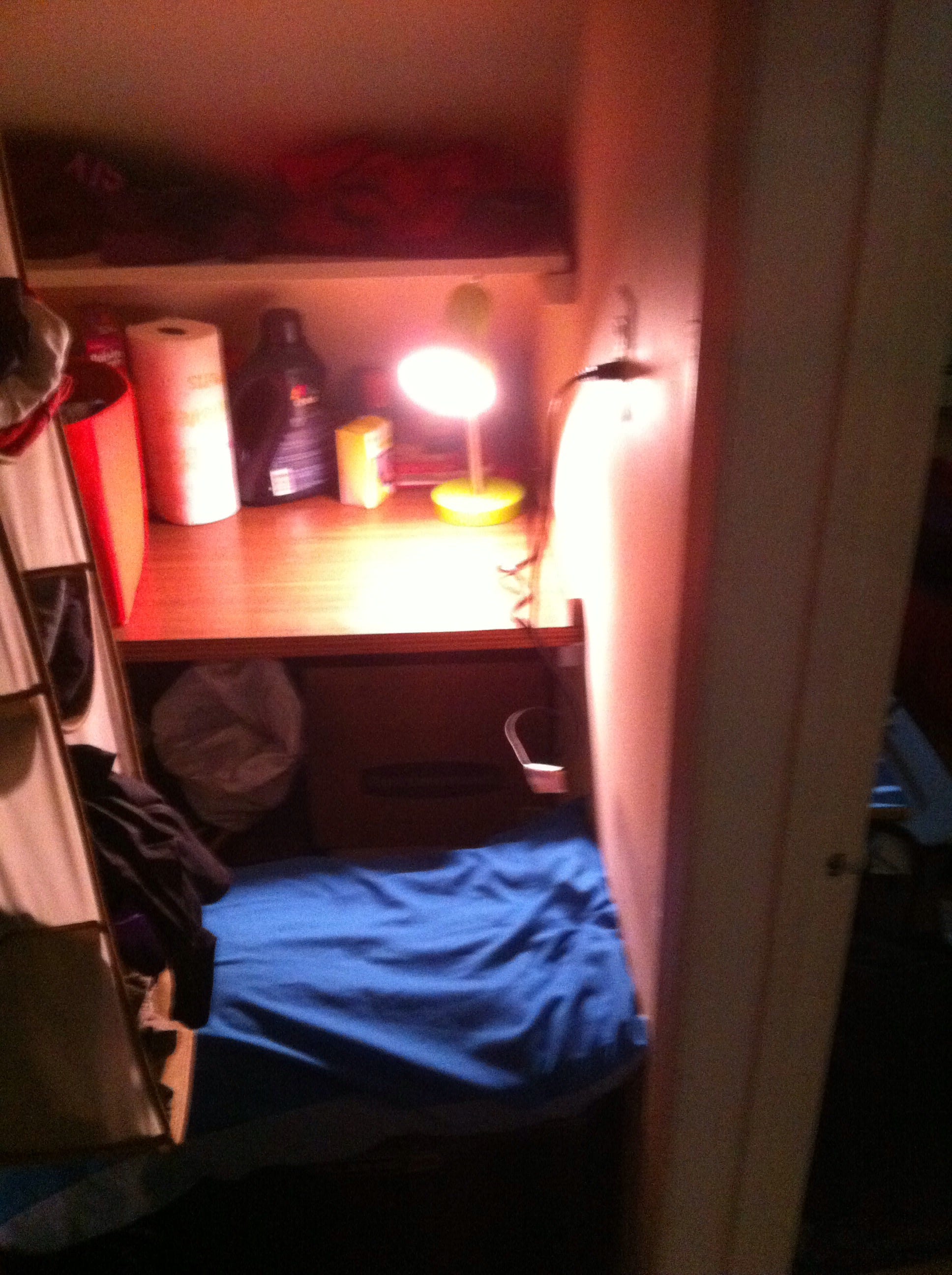
I once spent an entire summer working in an “office” I set up for myself in a closet underneath a staircase. The idea was to literally force my mind to focus on what I was reading, giving myself nothing else to look at.
This is where I first read Beyond Good & Evil as well as Reasons & Persons.
I continued to work inefficiently but in the service of an overarching goal for several years.
I eventually applied to several graduate programs in philosophy, which was my original goal as a freshman.
I ended up getting into two of the twenty programs I applied for after spending several thousand dollars that I didn’t have to pursue this dream (not to mention the $80,000 of undergraduate debt I accumulated through funding my entire education with government loans).
When I got into the University Of Pennsylvania with 5 years of guaranteed funding, a stipend, and health insurance, I thought that I had made it.
I thought I had reached the mountaintop.
It felt like the journey that began in Dr. Bierman’s class was now complete.
I was overjoyed.
It was one of the happiest periods of my life.
But I was in for a rude awakening when I arrived to my first semester of graduate school, the youngest PhD student in my cohort of 4.
In the first semester of a humanities PhD, students have to take a class called “Proseminar”.
Proseminar is a first-year intensive seminar that is meant to teach you how to be a professional academic and also dive deeply into some advanced topic.
It was the hardest class that I ever took.
I remember that for the first 2 months, I barely said anything.
I was struggling to adjust to graduate school and didn’t understand why the methods I had used before were no longer working.
I did the reading, I took the notes, but I found myself having nothing to say.
In hindsight, some of this was simply being too in my head and placing all sorts of expectations on myself that were preventing me from being present.
But it was actually hard too.
We were reading advanced papers from the history of Analytic philosophy and I was expected to have semi-original thoughts about them.
But I just couldn’t find the words.
So I would sit there, in a three hour class with 3 other graduate students, all of whom were in their mid-thirties, and my professor who was the smartest person I had ever met.
It was brutal.
Six years later, that very same professor would be my primary thesis advisor and biggest advocate beyond graduation.
When I defended my thesis in order to receive my PhD, I remember that it was actually fun. After six more years of working to constantly improve, I had reached a point where I not only had a lot to say, but it felt like I could enjoy talking about ideas with people who I used to be terrified of.
My dissertation defense. One of my friends put up a “D-Fence” sign on the chalkboard to lighten the mood. This was one of the most enjoyable days of my life.
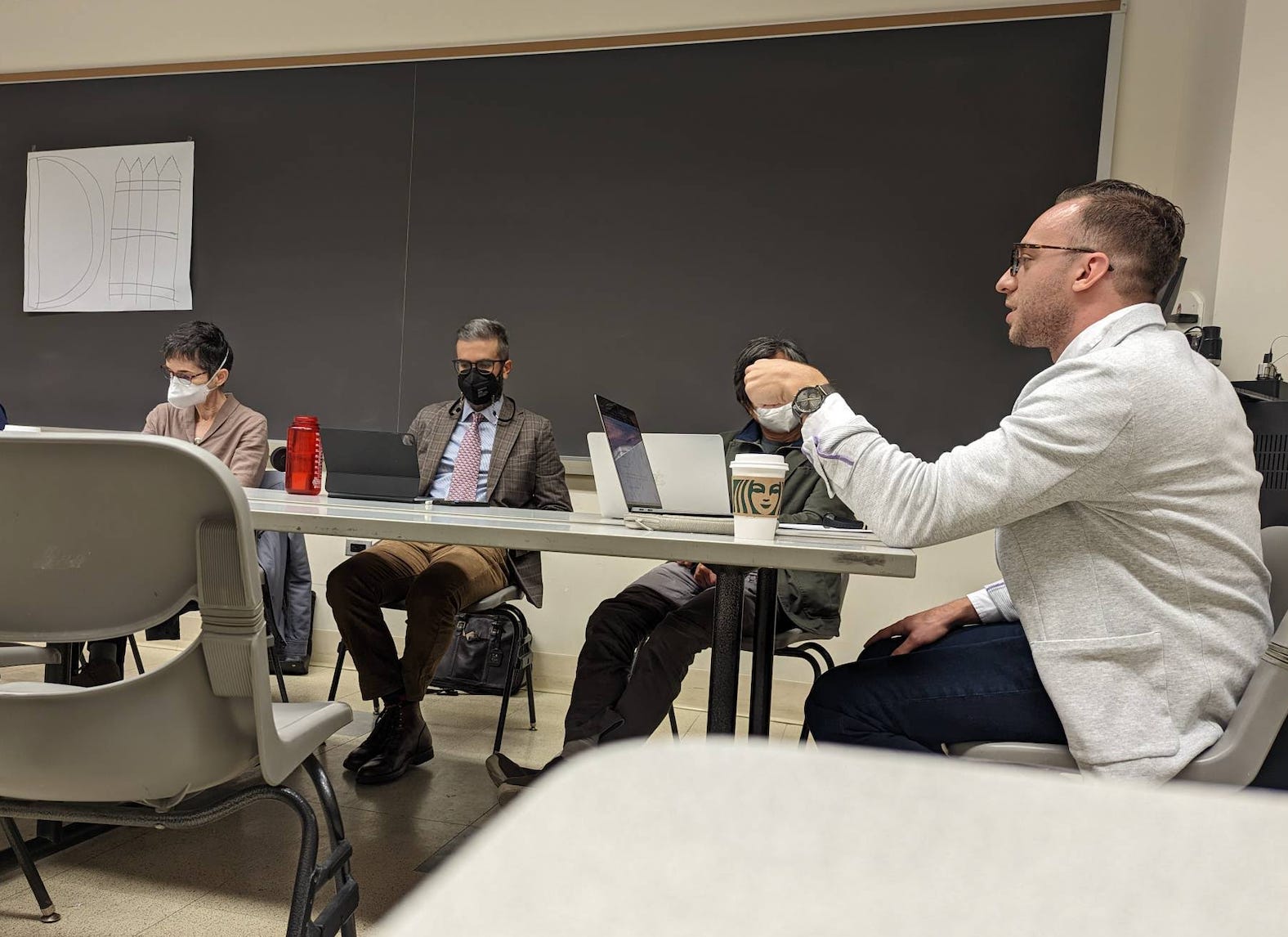
After I passed my defense, my advisor opened his speech with something along the lines of “To be honest, I wasn’t sure he was going to make it, but he did”.
When I think back to these cycles of struggle and growth, a few major themes emerge.
First, the pursuit of wisdom, knowledge, and truth never ends and you should never want it to end.
It is a lifelong commitment to personal growth and there will always be new and exciting challenges to overcome.
It will always be hard, incredible, rewarding, frustrating, and all of the above.
In short, it should make you feel alive.
Second, you need other people along the way to propel you forward.
People who inspire you, people who scare you, people who you desperately want to be like, and people who you desperately want to avoid.
I wouldn’t have been shaken out of my stupor if it wasn’t for a few people who truly cared and made me want to improve myself so that I could speak with them and learn from them.
Don’t go it alone.
Heck, reach out to me if you need help. I’m here for you.
Third, if you choose something that you genuinely care about, you can overcome anything.
I went $80,000 into debt and spent around 15 years in school to eventually be able to read and teach philosophy on a deep level.
I would have quite a long time ago if I didn’t truly want it.
Once you find this, commit to it with everything you have and falling as deeply in love with it as you can (this will get you through the hard times).
The human will is one of the most powerful forces in the entire universe.
Part IV: Joy (32-33)
I can now honestly say that for the past year I have reached a place of pure joy when it comes to philosophy.
What’s ironic is that this has actually been the hardest year of my life.
I took another Kierkegaardian “leap” and decided that, at 32 years old, I want to try to become a creator and eventually build something I had been dreaming about for years — an online school of philosophy that helps people like my 17 year old self learn how to fall in love with the subject and speak about ideas confidently.
I am proud to announce that on March 15th, I am launching this school after overcoming all of the challenges that led me to this point.
It’s called The Micro-University.
The Micro-University

What if you could receive a complete philosophy education for less than 1% of the cost of a bachelor’s degree? The Micro-University is a completely new online school of philosophy designed to provide exactly this.
I couldn’t be more excited to give back and lend a hand to those who need guidance on their own philosophical/leaning journey.
Not only has it been way harder than I ever imagined creating content online (I wrote for over a year with 25 subscribers, no likes, and no audience), but my personal life has involved new and unexpected challenges.
My journey on Substack began when I built this desk in August of 2024. This act of construction was another “leap of faith” into a terrifying and daring pursuit.
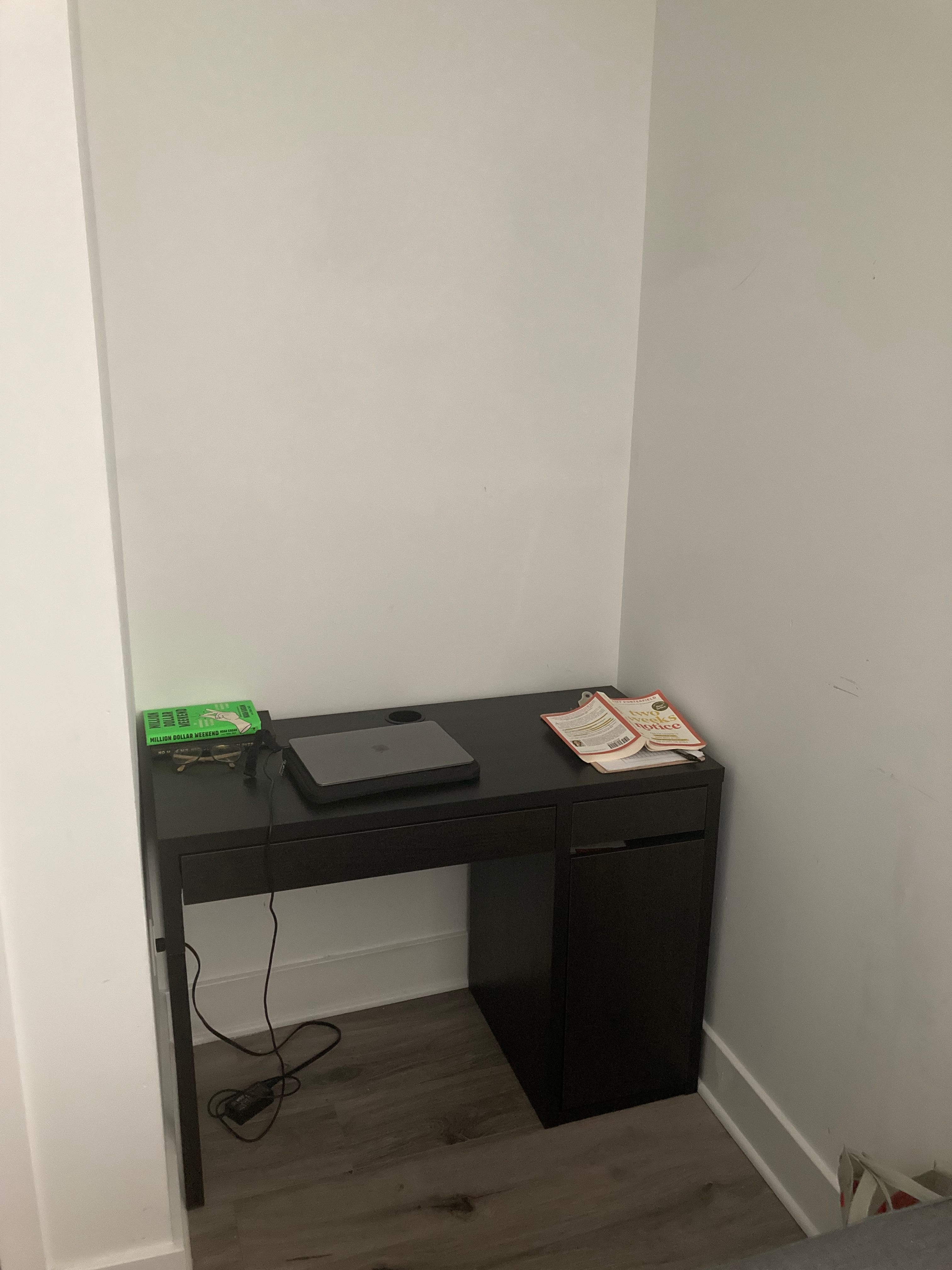
Everything I do here on Substack and elsewhere is being produced while I am also working a full-time job and trying to find time to visit my mother (who lives 9 hours away in New Hampshire and is battling stage-four breast cancer).
As long as you keep showing up, I will keep showing up for you.
What’s incredible is just how much we are capable of dealing with as human beings when we invest in ourselves.
I never thought that I would be able to create things that I am deeply passionate about and that help other people while also dealing with some of the greatest personal challenges of my life.
I owe so much of that resilience to what philosophy has taught me, but also, quite simply to love.
First and foremost to loving the people who have allowed me to reach a point where I can realize my dreams and help others.
But also to loving a subject so deeply that it makes life not only worth living, but exciting, interesting, and fascinating, even during it’s darkest moments.
All I can say to you at this point is to find your philosophy.
Whatever that thing is for you.
Find it and trust that if you love it completely, it will never fail to give you a reason to keep going.
-Paul
Paul Musso received his PhD in Philosophy from the University Of Pennsylvania in 2022. Since then, he has founded The Micro-Philosopher Substack and The Micro-University. He has also created a course and community dedicated to teaching people how to build their own philosophy called Micro-Philosophy: Foundations. Paul maintains an open-door policy and is open to direct messages and inquiries.
As a 70 year old, I am inspired by your story. The main takeaway for me is: the only thing holding me back is myself.
As a 19-year-old still trying to organize my dreams, I found your story very interesting and inspiring. Seeing people who have gone through the same things you're going through and have now achieved their goals is quite motivating. I loved the part "The secret is to never stop following the new direction, no matter how long it takes," because that's what goes through my head almost every day—that urge to give up because the goal will take too long or is too "unrealistic." Great writing, thank you for that! ✨