


I have finally have found a way to articulate a troubling feeling that’s been gnawing away at me for my entire life.
The feeling that something is missing in the world.
That something about existence is off.
It took me 15+ years struggling to find answers within philosophy to finally be able to articulate what has caused this feeling.
I even spent 6 years pursuing a PhD only to find myself now throwing out much of what I learned and starting over.
I found what I was looking for in Heidegger’s masterpiece Being and Time.
The thing is, I couldn’t understand this book for over a decade.
I wasn’t ready.
But all of a sudden, for reasons I am still trying to understand, everything suddenly clicked.
What I am sharing with you emerges from a moment of utter clarity and conviction years in the making.
If you are anything like me, I believe this will change your life forever and help you feel a little less lost and confused by the modern world.
It’s not your fault that you feel this way.
But in order to understand why, you need to trust me and go on a short and challenging journey.
The Loss Of The Depth-World (Remembrance Of Things Past)
Lately, I have had the increasing feeling that millions of people are worried about losing their humanity (or coming to realize that they already have) but don’t know what to do about it.
Put simply, people are lost in the world.
They are lost because the world that they remember growing up in — a world in which it was possible to have genuinely deep experiences with your friends and family and feel a sense of wonder or adventure — is quickly becoming a distant memory.
You might tell yourself that this is just what happens when you grow up and lose your youth. But this is just a way of avoiding the more disturbing fact — the world has fundamentally changed and is never coming back.
How have you grieved this loss? Or are you still coping?
I was born during the summer of 1992 — a decade that I consider to be the end of what I can only refer to as the depth-world.
The world before it was stripped of wonder, surprise, and adventure.
The world before everything became known, captured, and commented on.
It was a world in which people would spend time together.
It was a world in which you could go to the movies.
It was a world in which riding my bicycle around the neighborhood with friends felt like a real adventure in which anything could happen.
It was a world in which people were outside — like really outside.

The shocking success of Stranger Things is, in my opinion, a direct result of the mass nostalgia for this forgotten world. The show has been a massive hit even amongst those who were born after this world was already lost (they know something is missing).
I cried when the show ended because it reminded me of just how much has been lost.
The depth-world has been replaced by a flimsy world.
A world that is becoming increasingly inhuman and empty — despite the fact that it is more full than ever.
A world where you can buy a new house that is worse than an old one because it is made out of papier-mâché. A world where everyone is talking but only a few people are saying anything worth listening to, and you are too exhausted to figure out which is which.
There has been a lot written about how the world has changed over the last twenty years.
But even though I have kept up with most of the discussion, I always felt like there was something deeper going wrong that no one was able to fully articulate.
The conversations around social media ethics, algorithms, and responsible tech were insightful and needed to happen.
But I still felt like something was missing.
I still felt like there way a deep existential shift which no one was able to fully articulate or identify.
I certainly wasn’t able to.
I didn’t have the words or the expertise.
But I finally feel that, for the first time in my life, I have found the concepts I have always needed to fully articulate what’s been causing in me the feeling that I am “living” but no longer living.
The feeling that, even though life keeps moving forward, it feels like something has been lost.
It’s like the feeling of having forgotten something you wanted to say, or that something is missing in your pocket but you don’t can’t remember what it was you are looking for. It’s the feeling that modern human existence has been cheapened or thinned out just enough that it’s rarely the real thing.
It is the feeling of having no ground.
It’s the feeling of forgetting what holds up the world.
It’s an answer to the question of “why does everything feel so shallow?”
Why do so many people feel “lost” in the world even though they are materially better off than ever before?
I found the words I needed in an unlikely and strange place — in Martin Heidegger’s masterpiece Being and Time.
Why is this an unlikely place?
Mostly because despite the fact that Being and Time is widely considered the most important philosophical book of the twentieth-century, pretty much no one understands it.
It’s the sort of book that even professional philosophers avoid out of fear or disdain.
It’s a book I always wanted to understand, but was never able to.
But over the last few months, everything has changed.
For reasons I still haven’t full processed, this impenetrable masterpiece has finally clicked for me in the most profound way.
I feel like someone who has discovered that they used to speak a native tongue but spent years fumbling around in a second language.
The reason I am writing this essay is to share with you a way of seeing the world that can instigate a paradigm shift.
A way of thinking and making sense of our humanity that gets to the bottom of what’s really going on.
A way to think deeply about your humanity, technology, the world that was lost, and what to do about it.
What I am offering you is a philosophical tool — a lever.
A lever that I believe is long enough to shift your worldview and situate it on a completely new foudation.
“Give me a lever long enough and a fulcrum on which to place it, and I shall move the world”
-Archimedes
Before I hand you this tool, I must warn you.
When you begin to use it, there is a real chance that everything you have grown accustomed to thinking can be thrown into doubt.
The world will remain, but your orientation to it will fundamentally shift.
Are you ready to world-shift?
The Shift: Recognizing The Inexorable Fact That Our Default Mode Of Existence Pulls Us Towards Being Lost In The World
In his master-work Being and Time, the German philosopher Martin Heidegger argued that the default mode of human existence is inauthenticity.
By inauthenticity, Heidegger has in mind a kind of perpetual drifting or falling through life and towards death.
Sleepwalking.
Most discussions of authenticity online today are incredibly shallow and unhelpful.
It is often explained in terms of slogans like “be true to yourself”, “find yourself”, or “say what you really feel”. But these don’t actually help anybody figure out what it actually means to live an authentic life and in an increasingly flimsy world that is being overrun by technology and automation.
Heidegger’s account runs much deeper than our subjective self-conception or self-expression.
Heidegger believes that authenticity and inauthenticity are built into the very structure of human existence. It is a fundamental feature of being human that we live inauthentically for stretches of time.
We can’t always be authentic all of the time.
In many ways, this should provide us with some existential relief— it’s okay to just be a nobody on public transit or at the grocery store.
You are not automatically a “sheep” for doing so.
At the same time, if the default condition of human existence is inauthenticity, then this can quickly become dangerous.
Why?
Because if you fail to catch yourself inauthentically drifting or falling through life, then months or years of your life can suddenly pass by only to leave you feeling completely lost and having no sense of who or what you are even doing.
In the most extreme case, someone lives the majority or entirety of their life inauthentically only to be shaken by the sudden approach of death, but tragically unable to recover lost time.
In order to avoid an impending existential crisis caused by waking up too late, let’s take a journey together and venture deeper into Heidegger’s analysis of the fundamental nature of human existence in order see what we can learn to about how to avoid being lost in the world and live an authentic human life.
This journey will take us through an intricate web of concepts in Heidegger’s philosophy that few people are aware of or understand (some of which I will discuss in part two).
Concepts such as: “thrownness”, “falling”, “the They”, “idle talk”, “curiosity”, “ambiguity”, “anxiety”, “mood”, and, of course, “death”.1
I apologize in advance for throwing you into such deep philosophical waters, but don’t worry, I will guide you to shore.
Every Human Being Is Thrown Into Existence And Continues To Fall Until Death
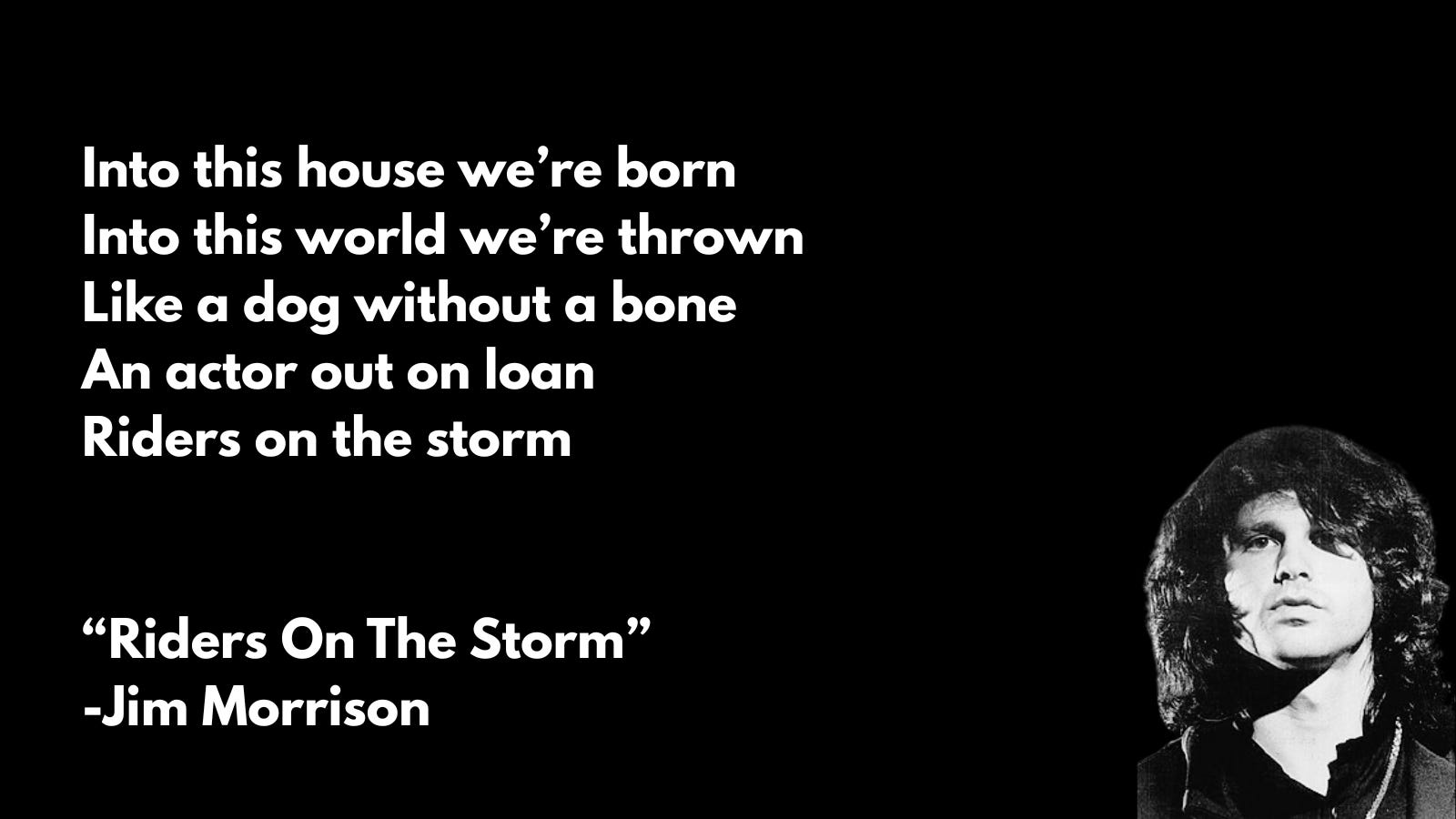
The fundamental pre-condition of human existence is, for Heidegger, that we are “thrown” into the world.
The term “thrownness” (Geworfenheit) is first used in Being and Time to refer to our passive coming into being — our existential birth, origin, or ground.2
We are thrown into a world.
A world that we did not choose or create, and that already exists prior to our existence.
We are thrown into a world of facts, a world of inauthenticity, and perpetually “falling” through it.
Your birth is always something that is past and that happened to you.
Some human lives began with the experience of a traumatic birth or “womb trauma” (strangulation, malnourishment, etc.). Many who have experienced this lived their entire lives without ever being aware of it. Such deep existential trauma can cause someone many problems later life, leaving them confused and unable to identify the root cause. Unfortunately, this can cause individuals to blame themselves when they cannot find anything else to point to. Recent breakthroughs in psychedelic therapy have allowed individuals to access their primordial birth experiences and uncover the hidden cause of their suffering.
Even though we are able to grasp the inexorable fact that we were thrown into the world, there is a deep sense in which this thrown condition also remains forever “hidden” to us according to Heidegger.
It is hidden in the sense that we don’t have an answer to the “why” or “where” from which we were thrown.
We just find out, throughout our lives, that we were thrown into existence from non-existence.
“I am, I exist”
- Descartes, Meditations on First Philosophy
The necessity of our thrownness is enigmatic because we cannot understand or explain the “why” behind it. If we are thrown, then there must be a point from which we were thrown — a ground of our existence.
Heidegger believed that this is hidden in darkness.
It is like the very real possibility that we can never see or know what was before the Big-Bang, since it is would be imperceptible and shrouded in darkness or nothingness.
We simply find ourselves existing and come to realize that we have been thrown.
In other words, the conditions into which we are thrown and begin to grow accustom to are not the result of our agency.
We did not, and could not, choose such a condition for ourselves.
This fundamental fact sets the background conditions of human life and constitutes one of the most important aspects of the human condition.
Plenty of people understand that they didn’t choose their family, or where they were born. They might even blame all of their problems on other people, or the society which they happened to grow up in.
But spending one’s entire life focusing on (and complaining about) these surface levels contingencies blinds and prevents someone from properly seeing and understanding the universal root causes of the human predicament.
The existential fact that we all find ourselves in the same condition of being thrown into existence is prior to any other contingencies which shape our life. Properly understanding this fact provides you with a lever and an Archimedean point upon which you can shift your entire view of the world.
It opens up the possibility of an existential paradigm-shift.
It is not just you that were unlucky to be born in the political, economic, or familial situation you found yourself in.
Everyone is thrown into the world and forced to live with a world they did not choose as long as they are alive.
This realization provides, in my opinion, a universal basis for human empathy.
Life is hard.
There is a sense in which we are all suffering in some way.
By truly appreciating and acting on the basis of this fact, I believe we will all be able better understand and, therefore, better help each other from a common existential ground that we all share.

Heidegger believed that because you are thrown and therefore stuck with existing as long as you exist, you are also stuck with the perpetual problem of learning how to be as yourself.
In other words, the problem of how to carry on being in this world.
So many people today understandably try to “find themselves” in empirical sciences such as Psychology, but end up still feeling like they don’t really know what it means to exist as themselves (even if they know all the latest theories of human development or personality types).
The reason is that the empirical sciences can never help you understand what it means to be you. They can help you understand some general features of what you are like and how you are similar to others in physical or material terms, but they cannot ever truly capture what it feels like to be you.
Such a task is beyond the scope of the empirical sciences (and rightly so).
But where can you find the answers if not there?
At this point, it’s natural to turn to Philosophy or Religion.
But I have come to believe that even within Philosophy or Religion, one can fall into the same trap of studying the major belief systems and thinkers, only to be left feeling unsure about how what you have learned really concerns you as an utterly unique individual.
I truly believe that what the world needs at this point is a new way of connecting philosophy with lived human experience.
What I am trying to do here on Substack is provide the conceptual framework that allows individuals to understand how to make philosophical and scientific ideas relevant to themselves in a meaningful way.
I have found that it is incredibly difficult to articulate the nature of the task, but through Heidegger’s existential phenomenology, I finally feel like the task is becoming clear.
The task is to help people use philosophy to recognize where they have come from and figure out where they are going in life.
The task is to help people who feel lost, overwhelmed, and unsure about how to own the responsibility of existing which has been thrown onto their shoulders to find a way forward for themselves.
Once you figure out where you have come from, then you need to decide where you are going.
If you don’t know where you are going, then you will become lost in the world.
This is what Heidegger means by living an inauthentic life.
It is a life in which you allow yourself to drown in the world that you were thrown into because you couldn’t decide which shore to swim towards.
If you have been drowning for a long time, don’t worry.
As long as you are alive you can reach the surface and choose where to go next. Once you start moving towards it, you will feel truly alive.
That is what I am here to help you do.
This is the ultimate purpose of philosophy.
By understanding the predicament we are in on a deep-level we achieve the perspective necessary to make a truly free choice (perhaps for the first time in our lives) in which we own the responsibility of existence.
The question then becomes:
Are you going to choose to live authentically in this world?
In Part Two, I will explain how to live authentically in a world you didn’t choose to exist in.
-Paul
This is only Part One of a two-part series. In the Part Two, I will explain the importance of properly orienting yourself towards your own death or finitude, and how this is necessary for living an authentic life. I will also explain what it means to live authentically in detail, and how to avoid becoming an inauthentic nobody who is controlled by fear.
The Quiet Death Of Human Thinking

The limit of your potential is determined by the quality of ideas which you are able to access.
These are all in quotes to signal that Heidegger has unique definitions and ways of explaining each of these terms.
The Cambridge Heidegger Lexicon (ed. Mark Wrathall), section 17, “Authenticity”, by Stephan Käufer.
There was a series about Heidegger in The Guardian a few years back. Google for: Being and Time, part 1: Why Heidegger matters
Simon Critchley
Interesting view. This Heidegger man you've been on about has really piqued my interest and I didn't even see him in my into to philosophy textbook we were given in college year 1. Anticipating part 2.