


Dear micro-philosopher,
I am excited to announce that I will be hosting a new live seminar for paid subscribers on Albert Camus’ famous text The Myth of Sisyphus that begins on October 17th.
We will meet for 4 consecutive Saturdays on Google Meet at 10am EST (New York).
All session recordings and transcripts will be made available.
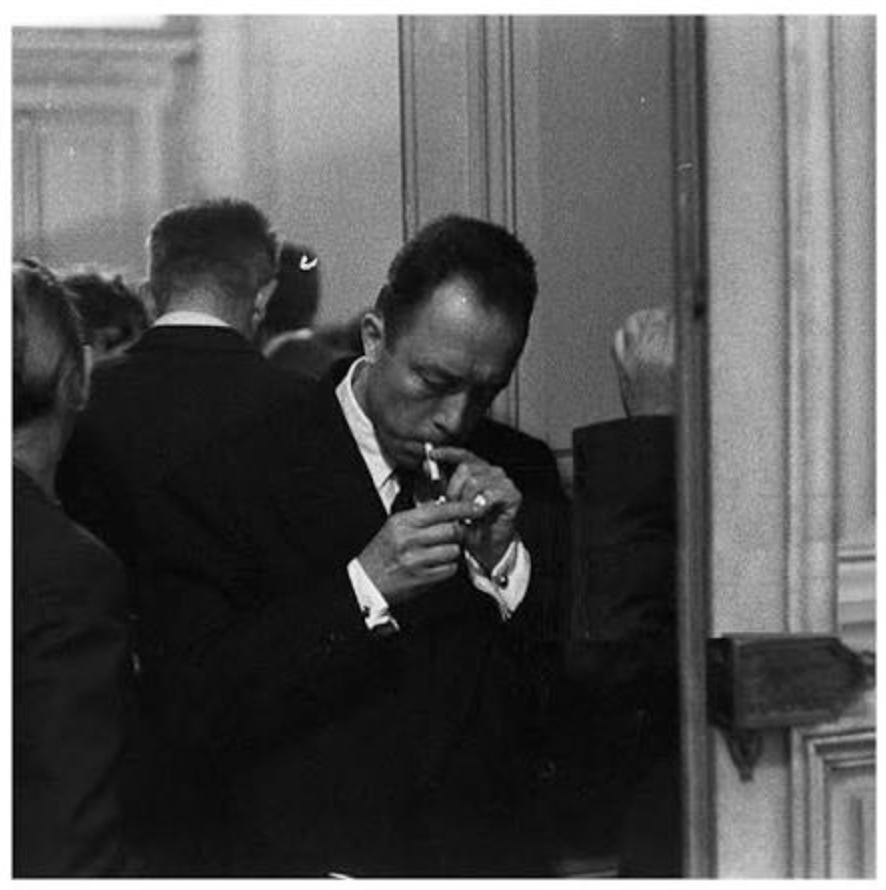
Course Description
“There is but one truly serious philosophical problem, and that is suicide”
With that opening line, Albert Camus begins one of the twentieth century’s most challenging books about how (and whether) to live.
Published in 1942 in occupied France, The Myth of Sisyphus asks what happens when our ceaseless hunger for meaning meets a universe that answers with silence, and whether we can live fully anyway.
Over four weeks, we’ll read the essay slowly and closely and engage in rich discussions. This is not a lecture series, but a seminar. What that means is that everyone actively participates in having a deep conversation with people who show up prepared and with something to say.
This course is for anyone who has looked at a routine (commute, work, dinner, sleep, repeat) and wondered what it all adds up to. No background in philosophy is required. To help with the difficulty of the text, I will provide 4 weekly reading guides that make it more accessible.
You’ll leave with a clear grasp of a modern classic and a thirst for more philosophy.
Week 1: The Absurd
Camus opens with what some consider to be the most difficult and important philosophical question that a human being can ask:
Is life worth living?
Week 1 Reading:
“Absurdity and Suicide”
“Absurd Walls”
Key ideas
Judging whether life is worth living comes before every other philosophical problem.
A mechanical routine runs smoothly until one day the “why” arises, and weariness turns into awareness.
The absurd lies neither in us nor in the world, but in the confrontation between our longing for clarity and the world’s unreasonable silence.
Science and philosophy promise unity but end in hypotheses and images; the mind constantly runs into its own limits.
Week 2: Escape or Revolt
Week 2 Reading:
“Philosophical Suicide”
“Absurd Freedom”
Key ideas
Jaspers, Chestov, and Kierkegaard leap from the absurd to God; Husserl leaps to timeless essences. All forms of escape.
The absurd exists only while both terms are held; to resolve it is to abolish it.
Ending one’s life is also a form of acceptance.
The three options are: revolt (constant confrontation), freedom (release from hope in tomorrow), and passion (the most living, not the best living).
Week 3: Living The Absurd
Week 3 Reading:
“The Absurd Man” (Don Juanism, Drama, Conquest)
Key ideas
He loves each time with the same fullness, seeking no single total love. His ethic is one of quantity, and he is not sad.
He lives many lives in a few hours on stage, knowing his glory will not last.
He chooses action in history over contemplation, aware that no victory is final.
Lucidity, no appeal to eternity, and intensity over duration.
Week 4: Imagine Sisyphus happy
Camus’s last two figures, the artist and Sisyphus, answer the opening question: life is worth living, consciously and without appeal.
Week 4 Reading:
“Absurd Creation”
“The Myth of Sisyphus.”
Optional: the appendix, “Hope and the Absurd in the Work of Franz Kafka.”
Key ideas
The artist describes rather than explains, and creates with no hope that the work will last.
Dostoevsky’s logical suicide in Demons ends in faith, which Camus counts as a leap.
Camus dwells on Sisyphus walking back down the hill, the hour when he is fully conscious of his fate and greater than it.
The struggle toward the heights is enough to fill a heart.
Requirements
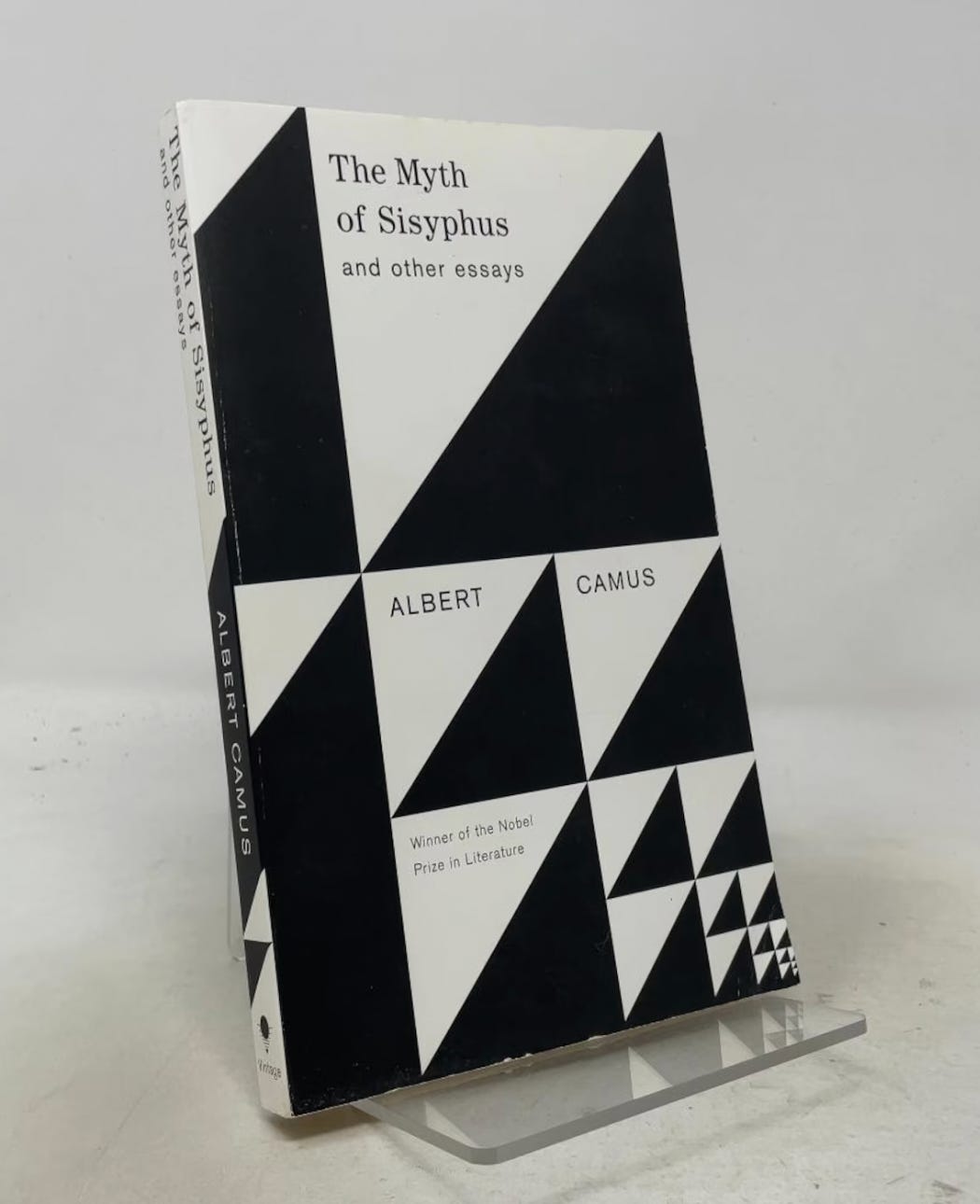
The one required book is The Myth of Sisyphus and Other Essays, trans. Justin O’Brien (Vintage International).
Here is an Amazon link.
I recommend buying a physical copy. This is a book you want to own and hold in your hands.
How To Join
My live seminars are restricted to paid subscribers.
You can upgrade to a paid subscription by clicking the button below. Cancel anytime.