


A lot of people struggle to get started with philosophy.
They try to do it alone.
They don’t know where to start or what to read.
They are constantly doubting whether they understand what they’ve learned, or are completely making a mess of it.
If you want to learn the basics of philosophy quickly and develop the ability to confidently articulate big ideas, think for yourself, and stop doing everything alone, then the simplest way to do that is to take a proper introduction to philosophy course with other people and actually do the work from start to finish.
Although you can learn pretty much anything on your own thanks to the internet, there are three problems with this:
The information is scattered and packaged into edutainment videos — not a real curriculum that delivers a complete narrative experience.
There are no feedback mechanisms to help you see whether you are getting it.
Learning without a community is way less fun and can be very lonely (people tell me this all of the time).
Autodidacticism is awesome, but it’s not for everyone. I think part of the reason its so popular is that there aren’t many places where people can go for real community learning. I am also tired of seeing people spend thousands of hours consuming content that isn’t really helping them develop as philosophers or independent thinkers. In that same time, you could read and understand real philosophy books and skip the shortcuts that are actually slowing you down.
To fix that, I decided to create my own Introduction To Philosophy course that is the exact same material I will be teaching to a group of Ivy-League students over the summer. It drives me crazy that this content is inaccessible to the average adult learner who is honestly more interested in the material than my students. Instead, it is locked behind the walls of the ivory tower, jacked up in price, and only made available to 18-21 year olds. My hope is that by bringing a real Introduction To Philosophy course to Substack, it can make a significant impact on people’s lives and help them actually learn rather than consume interesting information.
The main problem with internet education is that it is all input and very little output. It doesn’t matter if high-quality information goes into the system of your mind, it matters what you do with it. Most “courses” are just a series of videos. Input, input, input. But the key question is, “what do I do with this information?”. That is the gap I am trying to fill. To not only make philosophy accessible to you, but to help guide you in figuring out how to integrate it with your life so that it can actually make a difference.
Taking introduction to philosophy completely changed my life as a college freshman. It was the most incredible intellectual experience I have ever had. I remember sitting in the front of a large lecture hall at Rutgers University, absolutely awestruck by the words that were coming out of my professor’s mouth. I had never heard anyone speak like this man before. I wanted to understand what he was saying so badly. I have been trying to understand it for 15+ years since then, and it has been the greatest source of joy in my life. Also, we already have an awesome community here on Substack at The Micro-University. We have been having a blast meeting every week for months to discuss existentialism, and I would love for you to meet everyone.
If this sounds like something you would benefit from, the rest of this email contains everything you need to know about the course. If you have any questions, feel free to send me a message.
Introduction To Philosophy
An 8-Week Complete Introduction To Philosophy In The Greek And European Tradition offered through The Micro-University.
We begin on July 25, and meet every Saturday at 12pm (EST/EDT) for 8 weeks.
Course Description
Despite countless attempts, philosophy will never be reduced to a single definition or method. It is part of the essence of philosophy that it perpetually eludes us and pulls us into areas of thought that are fascinating, wondrous, uncertain, and free. In that way, philosophy is like love. It is infinite, never complete, and utterly compelling. This makes it incredibly difficult to introduce philosophy to beginners, since you are introducing them to an experience, attitude, or way of living more than anything else. Philosophy is not a regular academic discipline or body of knowledge. There are no established facts or theories. The methods are all up for debate. At the same time, philosophy is not arbitrary or merely subjective. Philosophy is the serious attempt to make sense of life’s most important and most difficult questions. It is the restless and exhilarating pursuit of wonder, curiosity, and meaning. In a sentence, it is the pursuit of ultimate truth. Like many of life’s most unique experiences, it is simply something that you can’t fully understand unless you get your hands dirty and experience it for yourself. Understanding philosophy, then, requires a kind of conversion or transformative experience.
If you were interested in participating in this experience, I recommend filling out this interest form by following this link.
In this course, I have taken a traditional approach to introducing philosophy for two reasons. First, it is what worked for me. When I read these thinkers, I was completely blown away and have not stopped thinking about them since. Even though there are many different ways to initiate newcomers to the world of philosophy, I figured it’s best to stick to what I know can work. But, it’s important to note that these thinkers will not resonate with everyone in the same way. For some, they will never resonate. For others, they will not resonate at this point in your life. I have often found myself finding renewed interest in thinkers who I previously dismissed. Your interests and assumptions will change as your life changes. Philosophy will become much easier and enjoyable once you recognize the value of radically changing your mind when presented with good reasons for doing so. That doesn’t make you a hypocrite, but wise. The second reason is that many people interested in philosophy are often held back in their progress by having an incomplete grasp on the tradition that they are either trying to learn, or to resist. Either way, if you hate it or love it, knowing the tradition at a general level is absolutely essential to avoid feeling stuck, perpetual self-doubt, and imposter syndrome as you progress deeper into the world of ideas. Even a basic familiarity with the giants of the field can help orient you regardless of what your interests are. For example, many people are interested in 20th and 21st century feminist philosophy. But if you go read the classics of feminist philosophy, you might get tripped up on their references to thinkers like Plato and Aristotle if you haven’t learned the basics of Greek philosophy. So if you really want to understand where certain foundational figures are coming from, it can often be very beneficial to have a sense of what they read and reacted to. To that end, this course provides a kind of “greatest hits” of philosophers in the Greek/European tradition.
It’s important to flag that even though this course is titled “Introduction To Philosophy”, it would be more accurate to title it “An Introduction To Philosophy”, since what it really is is an introduction to Western philosophy, or philosophy in the tradition that began in Greece and spread to Western Europe. There are many other traditions of philosophy that have been neglected or misrepresented for all sorts of stupid reasons. The world of philosophy is vast. My life’s purpose is to understand as much of it as I can and help others do the same. But the way that I can best do that is by introducing you to philosophy through the thinkers I have studied the most and know well before branching out into new areas (something I am constantly working on). So, in this course, you can expect to receive a general exposure to the giants of this particular tradition which has shaped the English speaking world more than any other.
In this course, you will read incredibly important and challenging texts from some of history’s most brilliant minds. I will provide video lectures that help orient you in this world of ideas and put you in a position to read the texts more intelligently on your own. I do not want to explain the texts for you, however. The goal is to create an environment and a framework in which you can train the muscles of philosophy yourself, and avoid basic misunderstandings or annoyances that make studying philosophy alone difficult. There will also be optional activities and exercises to check your comprehension and depth of understanding. Finally, during our live sessions, we have the opportunity to really dig into the details together and also engage in intellectual free play by entertaining unique questions and exploring the connections between our mutual bodies of knowledge and life experience. Some of the big questions we will explore in this course are:
What is knowledge? How should you live your life? What does it mean to be a good human being? What is the ultimate nature of reality? What does it mean to exist?
Prerequisites
Being a human being. Life experience. The English language. No prior philosophy or schooling required.
Course Learning Outcomes
By the end of this course, you will be able to:
Understand what distinguishes philosophy from other disciplines.
Explain major philosophical concepts, theories, and thinkers including ancient and modern, and compare their answers.
Interpret and critically evaluate philosophical texts attending to both their arguments and their practical implications for human life.
Situate philosophical views within their historical and cultural contexts, explaining how different conceptions of philosophy emerge in response to specific existential and social conditions.
Demonstrate philosophical self-reflection through writing, using philosophy as a tool for self-examination, clarification of values, and adopting a practical orientation toward life.
Discuss complex philosophical ideas with other people and engage in real dialogue.
Course Expectations
You will be expected to maintain a consistent reading habit and come to the live sessions prepared to engage in intellectually challenging and personally transformative activities.
This is not for someone looking to consume information for the sake of intellectual pleasure alone — there are plenty of Youtube videos optimized for that. If you give this course your full effort you are likely to remember it for the rest of their lives as one of the most impactful and transformative intellectual experiences you have ever had.
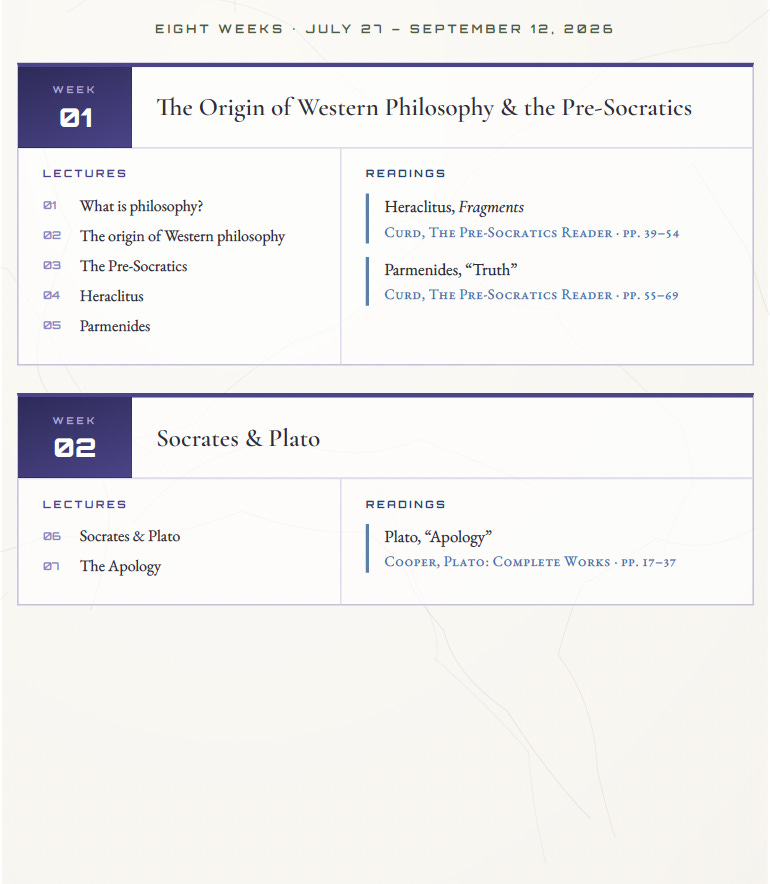
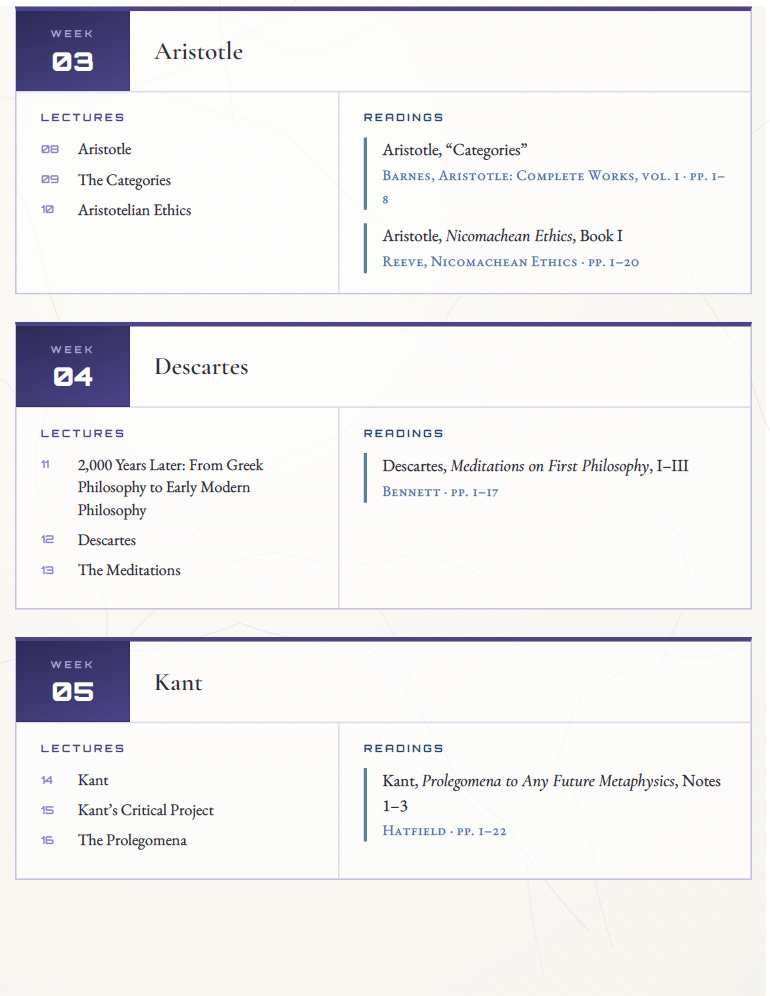
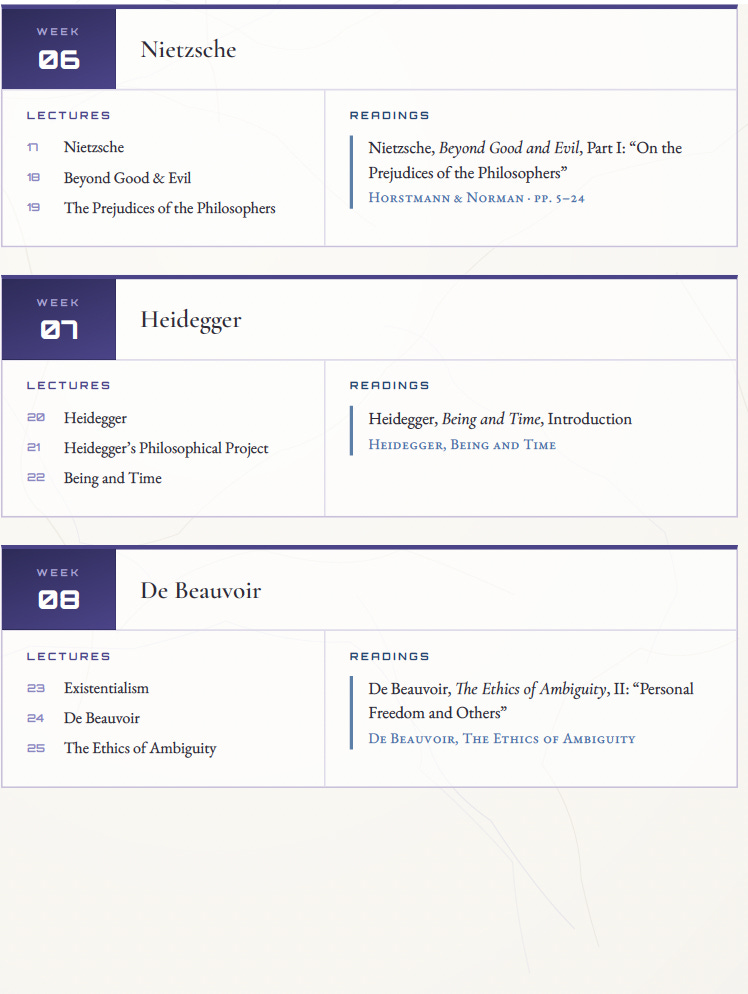
Course Schedule
How To Join
If you were interested in participating in this experience, the first step is to fill out the interest form by following this link.
I will get back to you once you fill that out.
Thanks for reading. I hope to see you soon.
-Paul
This made me wonder whether community isn't just helpful for learning, but essential to it. There are certain ideas we can only understand once they're challenged, refined, and expanded through dialogue with others.
"Autodidacticism is awesome, but it’s not for everyone. I think part of the reason its so popular is that there aren’t many places where people can go for real community learning...."
I did this type of learning, into understanding. This process began at age 15 - discovery/discovering Soul Touch connection/communication, and then the wanted reasoning behind crushing/devastation within. The completion.... The full emptiness within, when soul touch empathies become permanently removed from connectivity (literally living with a no resonating energy - a black hole within the human constitution - just in person, yet with a clean, clear consciousness - no anxiety. No depression. Just live in person performing).
For 40+ years (59 now), part time performing autodidacticism while only obtaining a high school diploma., yet now with a makeshift thesis, which rests within the hands of the head librarian of the Masonic Library in Boston, Ma., as well as two pieces of this work (a third and final piece pending correction) sitting within the Berggruen Institute. This was to be a great novel - The Altruistic man - then during research about boys and girls scouting I came across the University of Michigan — Felix Warneken’s Research on Early Altruism:
Core finding: Infants and toddlers spontaneously help others without being taught. This research overturns the old assumption that children are born selfish and must be trained into cooperation.
Key Observations:
• Children as young as 18 months show spontaneous helping behaviors.
• They will put another person’s interest ahead of their own, even without reward or instruction.
• This includes helping adults solve problems and sharing resources.
• Warneken’s work is featured in the Netflix series Babies, highlighting how infants naturally act from social concern and relational awareness.
• Neurobiological Extension (Michigan Psychiatry Collaboration)
• A related Michigan project investigates the neural circuitry of altruism, showing that caregiving and helping behaviors activate brain systems associated with parental care and social bonding. This suggests altruism is biologically rooted, not culturally imposed.
Fourteen years of developmental psychology research, which includes Felix Warneken’s work at the University of Michigan and the University of Washington’s food sharing studies does validate infants display spontaneous, untrained altruism. They help others solve problems, share resources, and even give up valuable food when hungry. These behaviors appear before language, before identity, and before social conditioning. This research confirms that selflessness is the biological baseline of the human being, and that selfishness emerges only after collapse enters through fear, scarcity, and ownership....
....the thesis that was completed within the novel became a possible remedy for ills plaguing humanity. The novel could not be finished, for the financial backers stepped away upon this published study - the novel was no longer a novel....
So, this is within the 3rd installment...
Humor: Welcome, graduates of the University of Michigan. You have gained outstanding knowledge and exceptional abilities over your tenure here. We, the leadership of this institution, now expect you to step out into the world and selflessly share everything you have learned with everyone. After all, as our research proves, altruism is your natural human baseline... But don't forget to pay back the $250,000 you borrowed from us to learn it! And remember: you all now possess the brilliant capability to build intergalactic vehicles... just to travel to employment you will absolutely hate…
…Inquiry: Is follow the sciences a mantra offered into consensus, to then become practiced reality? Is this altruistic study then a top-down, not a bottom-up phenomenon? If this is humanity as our baseline… then: To… what ends? Is Altruism - being the human biological baseline – interfere with investment institutional overlays, into consolidations - the actual discontinuity - my definition of the tantrum never escaping human adulthood)? Is such an offering the reasoning behind collapsing survivalism, as a behavioral output? Should not the real inquiry be: What does an authentic human altruistic personality resemble into developmental adulthood – the whole purposefulness of becoming a PhD scholar – the discovery of once the mysterious?
I have formulated the Behavioral Field Theory... the 3rd and final piece of the human puzzle!