


The future of economics is spiritual.
Instead of optimizing for productivity and consumption, it will optimize for transcendence.
I call this “Spiritual Economics”.
Spiritual Economics is the telos, or ultimate goal, of all economic systems and the future of entrepreneurship (whether anyone realizes it yet).
That was the biggest takeaway I had after spending past three days at the Future/Proof Creator Summit, an event organized by Jesse James Carver which brought together 150+ coaches, creators, and entrepreneurs.
When I first decided to attend the summit, I expected to learn about the technical aspects of running a business in the fast-changing creator economy.
What I ended up learning deeply surprised me.
I came to the realization that entrepreneurship is a spiritual journey in which you must transcend the limitations of your former self in order to help others do the same.
While I entered the event mostly thinking about how to improve myself as a creator, I left thinking about how creators could work together to improve the world and move humanity closer towards the goal of Spiritual Economics — a world in which economic systems are intentionally designed for optimizing transcendence and human flourishing rather than scarcity and exploitation.
I wondered to myself, “What would the world look like if millions of individuals progressed through the spiritual journey of entrepreneurship in order to help others do the same?”, “What if the economic system was actually designed and optimized for spiritual entrepreneurs?”, “What if instead of measuring the production and distribution of material goods, we measured the production and distribution immaterial goods such as meaning, purpose, and higher states of consciousness?”.
The current reality is that most entrepreneurs decide to start their own businesses in order to escape the oppressive conditions of the global economic order, which is optimized for boredom, wage-slavery, consumption, and mass exploitation.
That’s how I got here.
Even though many are able to escape with a bit of luck and persistence, the vast majority are not. They are left to live out their lives in the rotting economic structure designed to exponentially reward the winners and take as much as possible from everyone else.
I hate it.
But things don’t have to be this way forever.
Modern technology has made it possible for small creators to have an outsized impact.
It is now possible to imagine a future economic order consisting of millions of micro-businesses that make the world better in some small way— an economy in which the success of spectacular individuals does not lead to the oppression of others, but to their self-actualization; an economic structure that is not founded on the impossible logic of infinite material growth and economic output, but infinite transcendence, creativity, and self-expression.
You are probably thinking “That sounds nice, but is never going to happen”.
To be honest, I don’t think this is going to happen anytime soon. And who knows, it might never happen at all.
But that’s not the point.
If we are to avoid perpetuating the same mistakes of the existing economic order, we need to have a healthy ideal to actually strive for (whether it is going to happen or not). So even if you think Spiritual Economics is impossible, it can still serve as a regulative ideal— a standard that guides our economic activity in a healthy way.
I think it’s pretty obvious that we are desperately need such an ideal in the world today.
The digital economy is already moving towards what Yanis Varoufakis calls “Techno-Feudalism”.
Techno-Feudalism appears when digital platforms become privately owned fiefdoms that turn us into unpaid serfs who build their wealth for free through the harvesting of human attention, nervous systems, and emotion.
No one knows how far humanity will go down this path (or for how long).
So if we want to avoid entering a Digital Dark Age, then we need an alternative vision for the future of economics.
That is what Spiritual Economics aims to provide.
At this point, it may be helpful to say something about what I will mean by “spirituality” in this article. I am using “spirituality” in the broadest sense of the term. Personally, I like Christina Puchalski’s definition:
“the aspect of humanity that refers to the way individuals seek and express meaning and purpose and the way they experience their connectedness to the moment, to self, to others, to nature, and to the significant or sacred”.
On the individual level, Spiritual Economics is the spiritual pursuit of business and entrepreneurship.
The ultimate aim of Spiritual Economics is not profit, wealth, and extraction, but promoting and protecting abundance, attention, meaning, purpose, self-actualization, creativity, and the human spirit.
On the macro-economic level, Spiritual Economics consists in intentionally designing economic systems, laws, and education to achieve the same ends on a mass-scale. To use the generative powers of economic activity, commerce, and creativity to promote what’s best in humanity, rather than destroy it.
Personally, I believe that Spiritual Economics is inevitable.
On a long enough time scale, human beings will find a way to design for transcendence and live their lives on a higher plane of consciousness. We just have a hard time imagining it because we have spent 99.9% of our existence as a species in conditions of scarcity, survival, and competition.
For now, we must simply do the best we can as individuals and groups to realize the ideals of Spiritual Economics in a broken world.
My hope is that by writing this article I can give words to something which many people out there have felt deeply but have struggled to articulate— that there must be some deeper purpose to entrepreneurship, making money, and economic activity. That is isn’t all about making money to satisfy our selfish desires or win status games.
My hope is that this new way of thinking about money, business, and entrepreneurship, can shift the conversation around these topics in a positive direction that inspires more creative people to use business for good rather than resist it out of fear that it is inherently unethical.
The Future/Proof Creator Summit helped me see what’s possible when entrepreneurship is pursued as a spiritual activity on a small scale.
It’s now time to work towards changing the very structure of the system we have all been trying to escape from.
The End Of Traditional Economics
Before I explain Spiritual Economics, it will be helpful to contrast it with what I call “Traditional Economics” — that chimerical beast which has caused mass human suffering, exploitation, and environmental destruction, as well as unfathomable amounts of material wealth, prosperity, and technological innovation.
For those who are completely new to this subject, economics is the study of how individuals, businesses, and governments allocate scarce resources to satisfy unlimited subjective desires. An economy is the system through which the production, distribution, trade, and consumption of goods and services takes place.
“Traditional Economics”, as I will call it throughout this article, is the belief that ideal human economic behavior is a rational response to the scarcity of material resources and is aimed at maximizing the satisfaction of infinite personal preferences and desires within these constraints.
The founding axiom of Traditional Economics is scarcity — the idea that material resources are scarce in relation to human desires and interests.
Systems built on this way of thinking must ultimately come to an end.
The reason is that the underlying logic is inherently flawed.
In Traditional Economics, the axiom of scarcity is combined with the aim of unlimited growth, efficiency, and productivity. The idea is that while material resources are scarce, human wants and desires are infinite.
But the material world is a finite system within which economics is realized.
Exponential growth in a finite system must ultimately come to an end.
A finite world cannot sustain an infinite sequence of growth.
This leads to a fundamental problem at the heart of Traditional Economics:
The imperative of exponential growth in a finite system is an impossible command to fulfill and it will ultimately undermine itself.
In sum, the entire global economic system is founded upon an economic philosophy that is inherently unstable.
What will happen when Traditional Economics reaches it’s breaking point? When the supply chain collapses? When the material resources begin to run out?
Some heterodox economists have argued that the solution is to adopt degrowth as an economic aim. Degrowth is the planned and reduction of production and consumption as a solution to the growing social-ecological crises facing humanity.
Although I find degrowth interesting, I want to suggest another solution, which can be called decoupling.
One day it may be possible for human beings to decouple economics from its material limitations by turning towards growing the immaterial rather than the material.
The immaterial aims of self-actualization, transcendence, and spirituality make it possible to fill the black hole at the center of Traditional Economics — what I will call a nihilistic theory of value — and to avoid the limits of finite systems.
The Nihilistic Theory Of Value
You may have thought that the axiom of scarcity was the main problem with Traditional Economics.
But I actually think it is the theory of value at the heart of Traditional Economics.
According to Traditional Economics, value is entirely subjective and determined by the price that people are willing to pay for the acquisition of some good or service. A thing is worth whatever it’s worth to someone based on what they are willing to pay for it and how well they believe it will satisfy their wants and preferences.
In other words, there is no intrinsic value in anything.
This is what I call a nihilistic theory of value.
If value works in this way, then great works of art can be just as valuable as a pile of scrap metal, depending on the situation. An individual’s state of consciousness when they achieve or progress towards enlightenment can be just as valuable as the state of pleasure felt when eating fast food.
In other words, everything that ultimately makes life worth living is stripped of its sacred aspect from the outset, and transformed into a vessel awaiting to be measured on the basis of subjective desire.
This nihilistic theory of value does get one thing right — that the deepest goods in life are immaterial, that meaning, wisdom, transcendence are forms of value.
The problem is that just because value is immaterial does not mean it is simply determined by subjective attitudes or “wants”.
It can be both immaterial and objective.
When Siddartha Gautama attained enlightenment under the Bodhi tree, his state of consciousness was deeply valuable, but not because he got what he wanted at a good price.
Traditional economics has no theory of immaterial value production, because it measures everything through market prices. Markets are the central means for coordinating decisions and achieving efficiency in the creation and exchange of value. But they are not tracking the real value of anything.
Decoupling, taken to its logical extreme, is spiritual economics — growth in goods that don’t consume the finite substrate at all, because they’re made of meaning, attention, wisdom, and transcendent states. Harnessing the magical powers of economics to play an infinite game.
At this point someone might argue that transcendent states and immaterial goods still depend on finite material constraints. A yogi has to eat, build a shelter, and drink water to survive. Human beings need to reproduce and rear children. We may even need to continue researching new technologies to avoid a future extinction from a natural disaster by allowing us to leave Earth.
I am not denying the existence or reality of finite material constraints on life.
I am arguing that we can adopt an axiom of abundance rather than scarcity. A theory of value grounded in the positive objective value of immaterial states of being, rather than the measure of arbitrary subjective preferences. That we can achieve unbounded growth in the immaterial realm without incurring unsustainable material costs.
There are many ascetics who achieve incredible states of being with very little material expenditure at all.
We can allocate a portion of the public education budget to teaching an entire generation how to meditate and measure the return on investment in terms of wellness outcomes, rather than job prospects.
In 1968 at the University of Kansas, Robert F. Kennedy gave the most eloquent indictment of GDP, the darling of Traditional Economics, ever spoken by a public figure:
But even if we act to erase material poverty, there is another greater task, it is to confront the poverty of satisfaction — purpose and dignity— that afflicts us all. Too much and for too long, we seemed to have surrendered personal excellence and community values in the mere accumulation of material things … Gross National Product counts air pollution and cigarette advertising, and ambulances to clear our highways of carnage. It counts special locks for our doors and the jails for the people who break them. It counts the destruction of the redwood and the loss of our natural wonder in chaotic sprawl. It counts napalm and counts nuclear warheads and armored cars for the police to fight the riots in our cities … Yet the gross national product does not allow for the health of our children, the quality of their education or the joy of their play. It does not include the beauty of our poetry or the strength of our marriages, the intelligence of our public debate or the integrity of our public officials. It measures neither our wit nor our courage, neither our wisdom nor our learning, neither our compassion nor our devotion to our country, it measures everything in short, except that which makes life worthwhile …
Kennedy was articulating the vision of Spiritual Economics.
We must take seriously the possibility that economic growth can become genuinely immaterial.
What is Spiritual Economics?
Ask yourself the following question:
What if instead of measuring GDP, we measured SDP (Spiritual Domestic Product) or TDP (Transcendence Domestic Product)?
As I understand it, Spiritual Economics is the study and design of how immaterial goods — meaning, wisdom, attention, beauty, trust, love, and transcendence — are to be produced, exchanged, accumulated, and distributed in order to promote human flourishing and transcendence.
A spiritual economic system would optimize for immaterial wealth and abundance.
It treats these not as the byproducts of economic life but as its ultimate purpose.
It’s telos.
The point of economics was always the cultivation of human beings, and we’ve been confused about this only because, for most of history, survival was so precarious that it looked like the goal.
Traditional economics is often aimed at meeting basic needs and then creating false desires and manufactured wants for the sole purpose of profit.
By contrast, spiritual economics grounds economic activity in our deepest human desires and clarifies them rather than distorts them.
Spiritual Economics can be pursued both on an individual and social level.
On the individual level, Spiritual Economics is intentionally adopting a spirit-first approach to one’s economic activity as an individual, business-owner, and entrepreneur.
Some example of this include Michael Oliver, Jay Topp, and DAN KOE.
Michael Oliver’s company, The Flying Sage, is “on a mission to democratize transcendence” through integration circles and seminars.
The company began as a clothing brand and eventually transitioned toward community building and membership-based live events.
His company has the following vision:
“A thriving healing ecosystem focussed around breathwork, movement and sound. We are co-creating a new paradigm of wellness that leans into the wisdom gleaned from expanded states — a world where novel and traditional ways of knowing are integrated together through safe, intentional and community-led healing”
Another (more traditional) example is Jay Topp, who created his company Real Growth around the idea of empowering coaches and entrepreneurs to grow with purpose rather than transactions.
Jay helps people build coaching businesses rooted in truth, self-expression, and transformation rather than hustle, hype, or performative metrics. His work is aimed at starting a global movement of purpose-led coaches built around growing “from the inside out.”
In a recent post titled “Business is empty,” Jay wrote the following:
Business is empty in itself.
Empty as in, it is a vessel…
Or better put, a vehicle.
It is not an end in itself, but a vehicle to take the founder, the team, and clients… to a new destination.
The business therefore needs to decide what it is going to be a vehicle for…
…I discovered that THE ONLY sustainable thing to use my business as a vehicle for…
Is a vehicle for your own becoming.
I feel as though it is the only honest way to approach the endless & eternal game of entrepreneurship.
Because when there is no final end place to reach… becoming is all we have….
When we use our business as a vehicle for our own becoming….
…Entrepreneurship is the great vehicle for your own becoming
And when you see it as such…
You’ll have a much better relationship to your biz, to yourself, to your clients and to life itself.
Entrepreneurship is not only a great vehicle for your own becoming, but can also lead to others self-actualizing and initiate a virtuous cycle of growth.
A perfect example of this is DAN KOE, who became famous on social media for the idea of starting a one-person business.
Most of Dan’s work on this topic has been aimed at helping people escape what’s been called “wage slavery” — a life in which “work is seen as necessary suffering”, “exchanging time is the only way to make money”, and “retirement is the only escape, and you just hope the next 40 years are tolerable”.
I have been following Dan’s content for the past few years and watched him help countless people start their own successful one-person businesses in order to escape wage slavery.
What’s interesting about Dan’s development is that he went from running his own one-person business to becoming a meta-creator — a creator of creators.
The Future/Proof Creator Summit only happened because Dan helped thousands of individuals get started on their own creator journey, eventually staring a digital movement in which Dan became the unintentional leader.
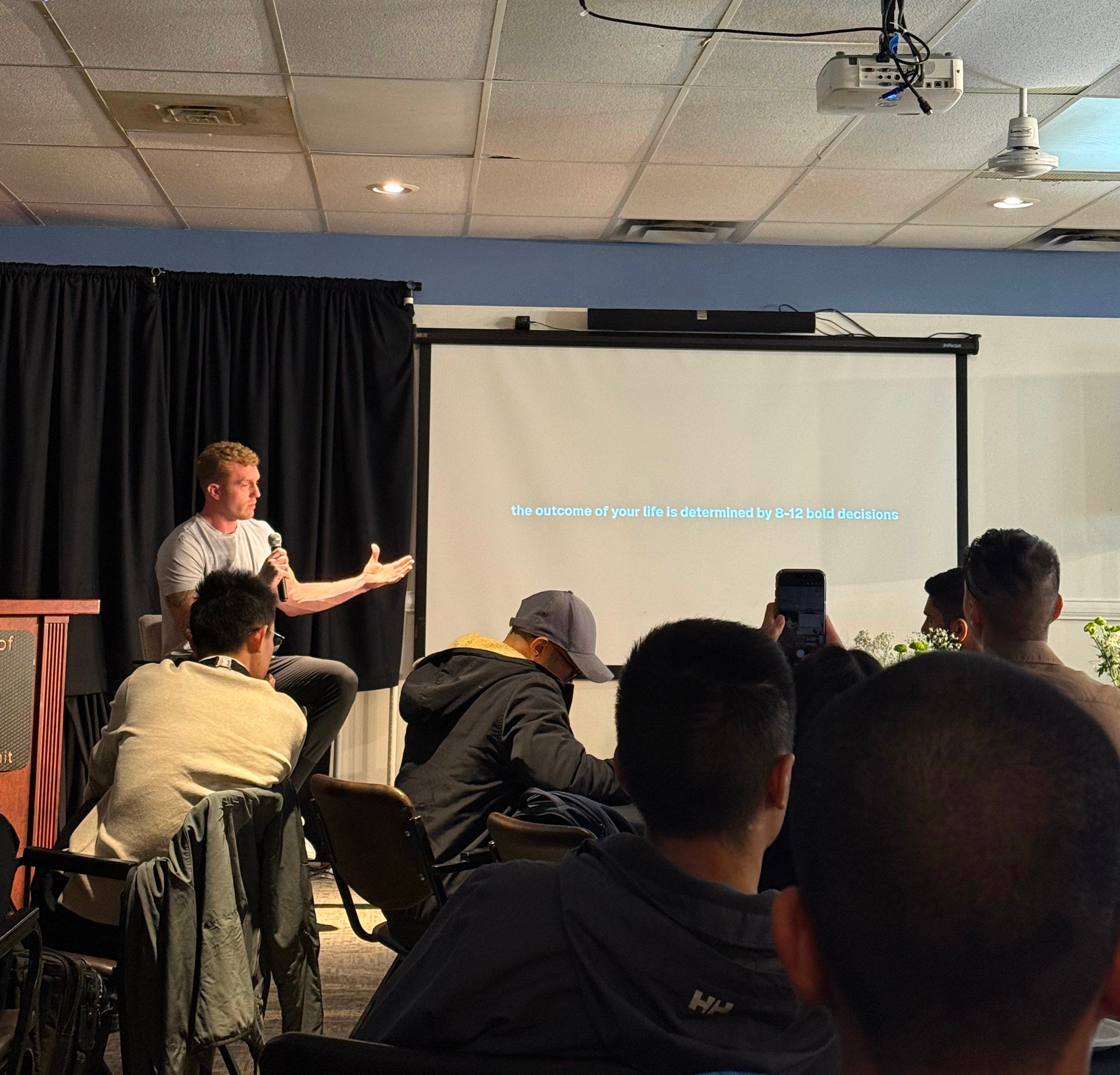
In fact, the only reason I started writing on Substack was because I took one of Dan’s courses — The Writer’s Bootcamp.
This process has led Dan to evolving his business into something very unique — he has now created a software tool called Eden that is specifically designed to help creators grow their audiences more effectively.
Dan’s entrepreneurial journey initiated a virtuous cycle of growth within a small corner of the internet.
This is what Spiritual Economics can look like on a small-scale.
Thousands of people are now creating meaning-driven businesses that help others heal their minds, bodies, and various other problems that would have likely gone unaddressed.
While I was sitting at the Future/Proof Creator Summit, surrounded by people approaching entrepreneurship in these ways, I wondered to myself “what would happen if this was what economics looked like on a mass-scale?”
This leads into the second way of thinking about Spiritual Economics — as a macro-economic theory for designing economic systems.
Spiritual Economics is as a way of intentionally designing economic systems, laws, policies, and practices with the explicit aim of optimizing for and promoting human flourishing, actualization, transcendence and spiritual states of consciousness.
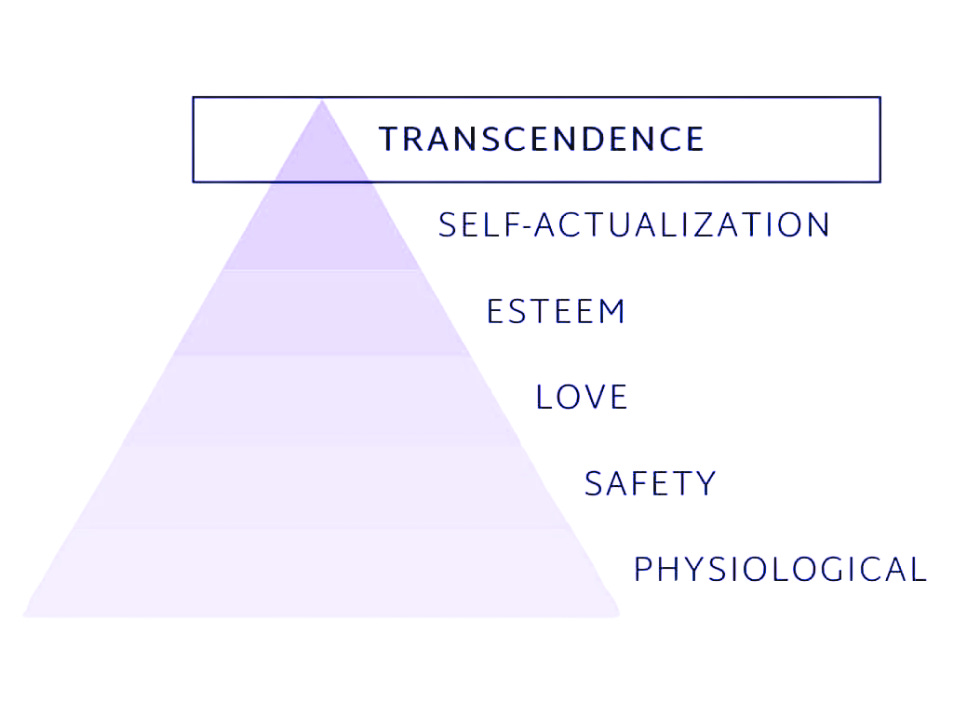
Traditional Economics is optimized for keeping people stuck at the bottom two levels of Maslow’s Hierarchy of Needs.
Everything is aimed at the bottom of the brain stem. It is meant to keep us upset, unsatisfied, angry, and divided so that we continue to buy things we don’t need.
But Spiritual Economics begins from Self-Actualization and Transcendence and reverse engineers society to optimize for promoting these states of personal development.
Ask any successful entrepreneur about the growth that was required to build their business and many of them will talk about how pursuing entrepreneurship was one of the best ways for them to self-actualize as a person.
Now ask yourself this:
What if that same developmental structure was mirrored in the economic system?
This way of thinking about the isomorphic relationship between the individual and society is inspired by one of Plato’s greatest ideas — the City-Soul Analogy.
In The Republic, Plato argued that the ideal city should be modeled on the ideal structure of the human soul.
In his view, the ideal human soul was one in which Reason or Rationality ruled over the lower human desires in order to promote virtuous states of character, such as Self-Control, Justice, Courage, and Wisdom. On this way of thinking, society is really just a generalization of what’s inside of us. So if we want to figure out what it means for society to be Healthy, Just, Virtuous, and so on, we should figure out what it means for a single individual to achieve these internal states and then build around that.
This line of thinking lead me to ask the following questions:
What if Maslow’s Hierarchy served as a template for the economic system itself and provided a structural guide both for society as a whole and the development of the individual businessperson, entrepreneur, or private citizen?
What if self-actualization was not a private choice, or an afterthought, but the result of intentional economic design?
What if the power of business, economics, money, were used to help individuals ascend through these states?
Most people I know think that the only alternative to Capitalism is Socialism. This leads to boring debates where everyone ends up saying the same talking points.
What we need is a fresh vision of what the future of economics could look like for humanity.
Not because it is likely or even possible, but because we need to think differently about the nature of business itself.
Why?
Because millions of people who have the capacity to actually make the world better and transform human lives through entrepreneurship are turned away from starting a business because of it’s toxic history of exploitation and competition.
Millions of people want to become creators, coaches, and entrepreneurs, but would rather be a starving artist or corporate employee because they believe that profiting from their unique talents is inherently evil and inauthentic.
The exchange of value is not inherently evil or fake.
It is possible to do business ethically even if the underlying economic system is a problem.
I have seen it firsthand.
And what’s the alternative?
To continue being a customer of mega-corporations while refusing to start your own business out of protest?
The Future Of The Creator Economy
Spiritual Economics is a long way off, but if entrepreneurs and creators approach their work with this ideal in mind, they can help move humanity closer towards it one email list or community at a time.
Modern technology has empowered solopreneurs, life-coaches, writers, artists, and anyone who has something to say, to make a genuine contribution to the future of humanity in some small corner of the internet.
This adds up over time.
Artists can get paid what they are worth by a loyal audience who find meaning and purpose in their work.
Coaches can find clients whose lives they can transform in the exact ways that fit their expertise and meet clients unique needs.
Writer’s can start intellectual and social movements through building a readership that rewards them for their valuable ideas.
Entrepreneurship and value creation does not have to be aimed at making money for its own sake, or winning status games.
It can have a spiritual aim.
For 99.9% of human history, the primary question was “How do we not starve or die?”.
Economics was a matter of survival.
In the 18th century, everything changed.
The Industrial Revolution initiated a new period of productivity, consumption and growth. For most of the world, basic survival was no longer a problem.
Prosperity became the goal.
But people have realized something fundamentally important — that prosperity not only fails to create meaning, but actively undermines it beyond a certain point.
In a world of excessive wealth and production, meaning becomes the new scarce resource.
Humanity doesn’t need more stuff, it needs more meaning.
More people pursuing entrepreneurship as a way to make life interesting again. To help people experience the miracle of existence in ways that they can’t do on their own.
The final stage of human economics is Spiritual Economics.
An economics no longer aimed at survival, or unlimited growth and prosperity, but self-actualization, awakening, wisdom, meaning, purpose, and transcendence.
These immaterial goods are infinite and what make life worth living.
-Paul
This article was inspired by everyone who attended the Future/Proof Creator Summit. It is my attempt to express the deep truth about entrepreneurship that I saw embedded in every presentation and side-conversation I was fortunate enough to experience.
Hi Paul just started listening to some of your work. I found this interesting as I started up a business mostly as a personal development exercise.
I think eventually out rulers will push for spiritual or some other growth rather than economic. But economic growth was the best way to capture the world. Spiritual (or whatever) is probably the best way to control it after the physical growth stage.
I often find people with good jobs in academia forget about the lower socio economic groups, their wants. and the easiest way to control them.
Good luck with your work, I think it is worth while. I might (will) look to do something similar but more focused to begin with on the level of growing the individuals internal and external power base and self control.
Thanks
*insert standing ovation* ... More of this. This is fantastic. Reminds me of the conclusion of Michael Sandel's book Justice: some of the last chapters was about Telos and asking if we should reframe society in order to maximize this in people and optimize for it. This feels like the evolution of the idea. Also, it seems to resonate with older philosophical "economic" ideas the west has mostly written off as not "progressive/modern enough".
I'm excited to see where this leads! (And I'm now wondering how more of us can jump onboard this growing movement out of business as usual...) TBD.