


This article provides a brief introduction to Nietzsche’s life and works for anyone who is curious about Nietzsche’s popularity and philosophy, but doesn’t know much about him. It will also be beneficial for individuals who have attempted to engage with his life and works to some extent, but struggle to grasp the big picture of Nietzsche’s significance.
I provide some comments in the second half that will be helpful for anyone considering where to begin studying Nietzsche’s philosophy and how to avoid adopting the wrong approach.
Finally, if you were interested in studying Nietzsche’s masterpiece Beyond Good & Evil with me, I will be reading through the entire book with my subscribers here on Substack starting this Saturday April 18th at 12pm EST.
There are only a few days left to sign up and spots are limited. You can read more about the course here.
Nietzsche’s Life: General Overview
Who was Friedrich Nietzsche?
Friedrich Nietzsche (1844–1900) was one of the major figures of 19th-century European philosophy.
Nietzsche’s influence on intellectuals, artists, and thinkers of all stripes has been immense.
Intellectual giants such as Freud, Jung, Hesse, Mann, Heidegger, and Foucault, as well as conflicting social and intellectual movements, such as Anarchism, Feminism, Nazism, Socialism, Marxism, Vegetarianism, and the “avant‐garde” art movement have claimed Nietzsche as a key influence.
Trained as a classical scholar of antiquity, he was forced by ill health into an early retirement from his academic career while still in his thirties.
Despite living with relentless mental and physical pain for years, Nietzsche transmuted his suffering into a powerful philosophical vision aimed at promoting human excellence and the affirmation of life.
No one took the philosophical stakes to be higher than Nietzsche, who was one of the first individuals to recognize and offer a solution to the impending threat of global nihilism.
Philosophically, Nietzsche was famous for his scathing attacks on traditional morality (especially Christian morality), his penetrating psychological insights into human behavior, and his startling views about the nature of truth and knowledge.
But Nietzsche was also famous for his achievements as a stylist.
According to Walter Kaufmann, who was a world-renowned Nietzsche scholar, Nietzsche was “one of the greatest German writers … and influential Europeans of the nineteenth century”.
He was most well-known for writing aphorisms, which are concise, but intellectually rich, sayings that often contain many layers of meaning.
It would be a mistake, however, to treat Nietzsche as merely a producer of great quotes.
Nietzsche has been interpreted by many to have developed a comprehensive philosophical worldview, or “system” (although this term is controversial because of Nietzsche’s was strong critiques of traditional philosophical systems).
Nietzsche’s philosophical ideas and style were instrumental to the new directions that philosophy would take in the 20th century in the form of existentialism, post-structuralism, post-modernism, to name a few.
Prior to his mental and physical collapse in early 1889, Nietzsche spent all of his time writing his most celebrated works (including Thus Spoke Zarathustra, Beyond Good and Evil, and On the Genealogy of Morality) while living in various inns in Italy, France, and Switzerland.
Despite receiving very little recognition for his writings during his life, by the time of his death in 1900, Nietzsche’s books sold like wildfire (and continue to sell to this day).
Nietzsche’s ideas are more relevant now than ever.
As traditional belief systems crumble around us, nihilism continues to rise as an existential threat to human flourishing.
The moral norms that once used to structure and ground our lives have been violated by reckless agents of greed.
What does the future of humanity have in store for us?
Nietzsche is one of the few philosophers who took this question seriously.
In this article, I provide a general overview of Nietzsche’s life and works in order to help anyone who is interested in learning more about why his ideas matter now more than ever.
Nietzsche’s Life
Nietzsche was born in Röcken, located in the Prussian province of Saxony, on October 15, 1844 (the year in which an assassination attempt was made on the life of the Prussian king, Friedrich Wilhelm IV, for whom Nietzsche was named and whose birthday, October 15, he shared. Also, the same year in which Marx and Engels met in Paris).
The modern state of Germany did not even exist when Nietzsche was born.
It was not until 1871, when he published his first book, The Birth Of Tragedy, that Germany was bound together by the militaristic rule of Bismarck.
According to Walter Kaufmann, despite significant tensions and divisions, Germans were:
“united linguistically and culturally, thanks to Martin Luther’s translation of the Bible (which played a major role in the standardization of modern German) and their deep appreciation for the accomplishments of German musicians (especially Bach, Haydn, Mozart, Beethoven, and Schubert), literary figures (such as Goethe, Schiller, and Hölderlin), and philosophers (such as Kant and Hegel).”
Kaufmann, Nietzsche: Philosopher, Psychologist, Anti-Christ
A dominant theme in Nietzsche’s writings is a consideration of what it means to be part of a nation and whether that supports or interferes with the ability to see oneself as connected with a culture.
Nietzsche’s father, Ludwig Nietzsche, was a Lutheran minister, and his mother, the daughter of a Lutheran minister.
Elisabeth, Nietzsche’s sister, was born less than 2 years after him.
By all accounts she adored her brother but was deeply envious of the attention he received. She was especially jealous of Nietzsche’s youthful relationship with the great composer Richard Wagner.
Elisabeth married a radical anti-Semite with whom she left Germany to found an Aryan colony in Paraguay. After her husband’s suicide following a financial scandal, Elisabeth returned home where she lived with her mother and later cared for her ailing brother.
Elisabeth is a notorious figure in Nietzsche scholarship because of what she did with Nietzsche’s ideas after he went mad.
Elisabeth carefully guarded her brother’s literary estate, and unscrupulously edited his notes for publication under the title The Will to Power.
The Will To Power is a book Nietzsche never wrote (although it contains plenty of fascinating and important material).
Elisabeth published The Will To Power in order to have Nietzsche recognized as the intellectual forbearer of what would become National Socialism (In 1885, his sister married to Bernhard Forster, a prominent leader of the German anti-Semitic movement which Nietzsche loathed).
Nietzsche’s Education
Nietzsche was educated at the famous Schulpforta on a full scholarship, where he helped to found a musical society and pursued his own compositions.
At the time, Nietzsche deeply admired Schumann (composer) and Hölderlin (poet).
He attended this famously strict boarding school for six years (the same school was attended by Navalis, Fichte, Ranke, as well as the brothers Schlegel), and did exceptionally good work in religion, German literature, and classics.
According to Kaufmann, Nietzsche was bad at math and drawing.
After Schulpforta, Nietzsche pursued university studies at Bonn where he initially pursued theology, but quickly changed to philology (classical studies/interpretation of ancient texts) after one semester.
Nietzsche was widely considered a prodigy in this field and became well-trained in foreign languages and ancient studies. This early work in history, interpretation, and ancient cultures would significantly influence his later philosophical work.
Nietzsche finished his studies in Leipzig, where by chance he came upon the works of Arthur Schopenhauer (1788–1860) in a second-hand bookshop.
He was deeply struck by Schopenhauer’s ideas in his magnum opus The World As Will And Representation that he read the entire (600+ page, two-volume) book straight through.
In particular, Nietzsche was gripped by Schopenhauer’s ideas about the nature of the Will, which Schopenhauer regarded as the driving force of reality.
Nietzsche was also impressed with Schopenhauer’s views on the aesthetics of music, according to which music is the highest form of art. Schopenhauer’s reasons for thinking this are idiosyncratic, but fascinating. Schopenhauer’s idea was that music is able to neutralize the raving desires of the will and thereby temporarily reduce our suffering.
Nietzsche was enamored with Schopenhauer’s idea of a ceaseless, blind, and passionately striving will at the foundation of life which signified, for him, the ecstatic abandonment of the ancient Dionysian cults.
At the same time, Nietzsche strongly rejected Schopenhauer’s pessimistic conclusions which, in Nietzsche’s estimation, undermined the human creative spirit.
At just twenty-four years old, Nietzsche became a professor — an incredible feat at the time (especially in Germany).
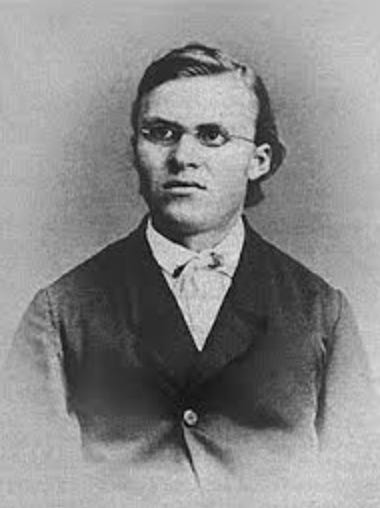
He taught for ten years at Basel (from 1869 till 1879) but was forced to retire early because of poor health.
Scholars have speculated about the source of Nietzsche’s poor health (a theme that would underwrite most of his philosophy).
According to Kaufmann, Nietzsche’s illness may have been connected with his brief military service in 1870, during the Franco-Prussian War.
In 1867, Nietzsche fell from a horse and had his initial military service cut short. In 1870, when the war broke out, Nietzsche volunteered for service as a medical orderly.
While attending to six men in a boxcar who were severely wounded and also sick with dysentery and diphtheria, Nietzsche is thought to have caught both diseases and, after delivering his patients to a field hospital, required medical attention himself.
The relation of a possibly incomplete recovery from his illness to the continued spells of migraine headaches and painful vomiting which made Nietzsche miserable during the next ten years has never been clarified conclusively.
Wagner And Anti-Semitism
In 1868, Nietzsche became personally acquainted with the great composer Richard Wagner (1813–1883) at a dinner party at the home of Wagner’s sister.
Nietzsche loved Wagner’s music (particularly Tristan and Isolde) and he considered the composer Germany’s greatest living creative genius. It was Wagner’s presence that convinced Nietzsche that greatness and genuine creation were still possible.
Nietzsche believed at the time that Schopenhauer and Wagner were the most important men in German arts and letters since Goethe’s death.
Eventually, Nietzsche became a regular guest at the Wagner’s home in Tribschen, spending numerous birthdays and holidays there, and he worked to raise funds for Wagner’s Bayreuth concert hall.
Years later, Nietzsche broke off the relationship and wrote sharp criticisms of his former mentor but retained admiration for him.
Nietzsche maintained ambivalent feelings towards many of his main influences.
It was not until he completely broke with Wagner that he would come fully into his own.
Why did Nietzsche eventually decide to “break” with Wagner?
Nietzsche was put off by the emerging culture of Bayreuth, the city where Wagner’s opera’s were performed, because it was becoming a culture in favor of the “German Reich” over the “German Spirit”.
In Kaufmann’s words, it had become the “holy city of anti-Semitic Christian chauvinism”.
Anti-Semitic Teutonism — or proto-Nazism — was one of the major issues in Nietzsche’s life. His sister and Wagner, two important figures in his development,
forced him to confront this ideology.
In his last letter to his friend Burckhardt, Nietzsche wrote:
“Abolished Kaiser Wilhelm, Bismarck, and all anti-Semites”.
And to another friend, Overbeck:
“Just now I am having all anti-Semites shot”.
Despite Nietzsche’s clear hatred of anti-semitism, after the Second World War, almost anything associated with German was viewed with suspicion in the United States and United Kingdom, including Nietzsche’s provocative remarks.
According to Kaufmann:
“Thinkers like Hegel, Nietzsche, and Heidegger (who became a party member) were listed as enemies of “the open society,” and Germany itself was thought to be haunted by a dark, romantic, irrationalist, counter-Enlightenment specter”.
In continental Europe, however, Nietzsche continued to be studied (especially by Heidegger), and inspired existentialism, phenomenology, critical theory, post‐structuralism, and deconstructionism.
When the latter two movements first gained a foothold in the United States, it was Nietzsche who once more was acknowledged as the major source of their inspiration.
In Kaufmann’s final assessment, Nietzsche would have
“looked with scorn on almost everything that has been written or done under his aegis, and the successful take‐over by the academic world, though it cannot compare in horror with some of the other appropriations he has suffered, would have seemed to him most like a final defeat, because he wanted at all costs not to be assimilated to the world of learning, where everything becomes a matter for discussion and nothing for action”
Kaufmann, Nietzsche: Philosopher, Psychologist, Anti-Christ
There is much more to be said about the details of Nietzsche’s life.
For anyone interested, I highly recommend the BBC documentary “Human, All Too Human” in addition to Kaufmann’s groundbreaking intellectual biography referenced above (Nietzsche: Philosopher, Psychologist, Anti-Christ).
In fact, Kaufmann’s book was one of the first philosophy books I ever read and was one of the primary reasons I ended up studying philosophy at all!
Nietzsche’s Works
Throughout his life, Nietzsche’s books sold poorly, and he often complained that readers were not prepared to receive his forward thinking ideas.
After Nietzsche went insane, ironically, he became world famous, and was celebrated as the originator of a kind of avant-garde philosophy.
Kaufmann writes:
“Those who found official bourgeois culture philistine, materialistic, small-minded, smug, self-satisfied, and conformist found a voice in Nietzsche, as did those who found it sexually repressive, timid, boring, and hostile to change”.
Kaufmann, Nietzsche: Philosopher, Psychologist, Anti-Christ
In his works, Nietzsche does not state positions and argue for them in the manner traditional in modern philosophy.
He did not write extended essays with chains of argument responding to the academic literature, and he was not very much interested in counter-argument (although he had a thorough knowledge of major figures and positions in the history of philosophy).
Many of his works are also quite different in style and tone both from themselves and from what other philosophers have produced. Nietzsche’s works continously make new demands on readers and tempt them into misunderstanding his ideas.
In fact, Nietzsche famously stated:
“Every deep thinker is more afraid of being understood than of being misunderstood”
Nietzsche, Beyond Good & Evil, 290
The dominant theme of Nietzsche’s work is a critical diagnosis of deep cultural and philosophical problems.
It would be a mistake, however, to reduce Nietzsche to a nay-sayer (or “hater” as we might say today).
Throughout his entire life, Nietzsche took Socrates’ question very seriously:
How should one live?
Nietzsche denies, unsurprisingly, that there is any “one size fits all” or pre-determined answer to this question.
This alone sets him apart from many pre-modern thinkers (both secular and religious).
Instead, Nietzsche encouraged human beings to live creatively, even dangerously, and continuously push the boundaries of human potential in order to promote new forms of human life.
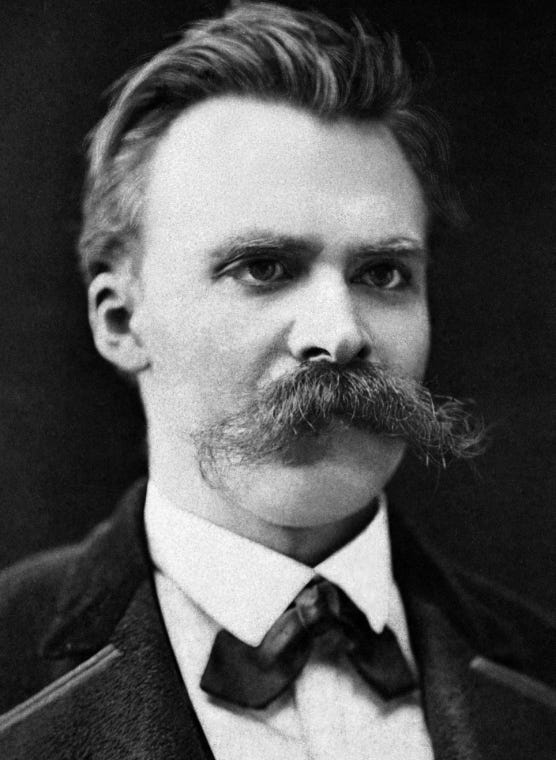
He certainly believed that some answers to Socrates’ question — any answers that place rigid constraints on human life — are most certainly “wrong”, or as he might put it harmful to life.
It is worth mentioning at this point that Nietzsche was not merely a talker or writer, he lived out his own philosophical ideas as much as he was able to, and treated philosophy as something that truly mattered (Nietzsche was famous for thinking and writing while hiking through the mountains of Europe).
Nietzsche’s ideas are developed in a collection of works that have self-important, dramatic, and often apocalyptic sounding titles.
Nietzsche’s titles (and subtitles) collectively suggest that some some great historical moment is imminent, and Nietzsche is it’s herald.
Nietzsche’s published titles are:
The Birth Of Tragedy
Untimely Meditations
Human, All Too Human
The Dawn
Thus Spake Zarathustra
Beyond Good And Evil
On The Genealogy Of Morality
The Gay Science
The Case Of Wagner
The Twilight Of The Idols
The Anti-Christ
Ecce Homo
Nietzsche Conta Wagner
The Will To Power (unpublished notes).
Some of these “books” are mostly collections of aphorisms, or short sayings.
Some resemble sociological or historical essays, while others read like prophecy.
Nietzsche’s works, like most “greats” in any field, are often divided into “early”, “middle” and “late”.
Nietzsche himself considered Thus Spake Zarathustra, published in 1885 to be a complete statement of his overarching philosophy and his magnum opus.
But since Zarathustra was written in a highly metaphorical and poetic style this made it difficult for readers to understand, and I do not recommend reading Zarathustra until one has read at least 5+ of Nietzsche’s other works.
Nietzsche followed Zarathustra with Beyond Good & Evil, published in 1886, and restated his philosophy in a more familiar essay-like style (although this work also contains many short aphorisms as well).
Beyond Good & Evil provides, in my judgment, the best starting point for those interested in Nietzsche because it touches upon all of his major themes and is written in a clear and accessible style.
I strongly recommend avoiding a “chronological” approach to reading Nietzsche’s complete works, as many are often tempted to do (I was tempted into starting this at one point many years ago).
Although The Birth of Tragedy is Nietzsche’s first book, it is a real stumbling block for beginners.
Nietzsche’s “middle period”, which includes Beyond Good & Evil, On The Genealogy Of Morals, and The Gay Science, serves as a much better starting point.
Nietzsche’s books can be somewhat easy to read (because they aren’t overly technical or academic), but are hard to truly understand. They contain multiple layers of meaning in addition genuinely challenging ideas that force the reader to ask themselves uncomfortable questions. They reward deep thought and multiple readings (especially at different stages of life).
Nietzsche’s writing style can be described as elusive, ironic, funny, crude, penetrating, profound, prophetic, subtle, unfair, and insightful.
Each seemingly isolated statement he makes both has a meaning of its own, but also acquires multiple new meanings when considered in relation to every other statement.
This rewards a “holistic” approach to his thought.
One should not try to read Nietzsche like a systematic philosopher who builds his philosophy brick by brick.
Crucially, Nietzsche consistently brings together multiple distant topics and themes into the smallest of spaces.
Nietzsche’s atomism should not be interpreted as trying to reduce complex topics to axioms or truths.
Nietzsche always tried to retain an open-minded experimentalism in his work, and encouraged philosophers to always be prepared, if necessary, to “boldly at any time to declare himself against his previous opinion,” as he did with Wagner.
Nietzsche wanted philosophy to become scientific.
But he did not think of “science” in the usual sense — a rigorous attempt at describing objective reality.
What Nietzsche had in mind was “joyous science” — something more akin to what the modern philosopher of science Paul Feyerabend called “epistemic anarchy”.
The spirit of science, for Nietzsche, was the spirit of fearless experimentation and willingness to shatter previous paradigms.
Nietzsche criticized philosophers of the past for having the delusion that they would be able to become the “unriddler of the universe” and solve the mysteries of life with “one stroke”:
“To solve all with one stroke .. . that was the secret wish .... The unlimited ambition ... to be the ‘unriddler of the universe’ made up the dream of the thinker ... many had the delusion, ... at last Schopenhauer, that they were this one being”.
The philosophers of the future, Nietzsche thought, would have no such delusions.
Nietzsche writes:
“A new species of philosophers is coming up … these philosophers of the future might require in justice, perhaps also in injustice, to be called attempters [Versucher). This name is… only an attempt and, if one prefers, a temptation [Versuchung]”.
Nietzsche took himself to be the pre-cursor to this philosophy of the future and dedicated his life and work to giving birth to these unknown thinkers.
Nietzsche hoped to show, by way of example, that it was possible to live with full confidence, boldness, and vigor, despite lacking any foundation or system to fall back on.
He was a philosopher walking a tightrope without a harness.
Eventually, Nietzsche fell.
The End Of Nietzsche’s Life And Work
In 1879, although Nietzsche was forced to resign from the university due to significant health problems, he did not stop living and producing his new kind of philosophy.
In fact, Nietzsche set out to overcome his illness through philosophy.
The result was that he produced an incredible series of books in a very short period.
In 1888, Nietzsche’s efforts produced a sense of euphoria — something that was unprecedented in his long experience of illness and recovery.
Kaufmann speculates that the rapid decline of Nietzsche’s health also led to a decline in his inhibitions, thereby allowing him to write and think more freely than ever before.
Working at an increasingly frantic pace, Nietzsche wrote The Case of Wagner, Twilight Of The Idols, Antichrist, Ecce Homo, and Nietzsche Contra Wagner within six months of each other.
The Case of Wagner was the last book which Nietzsche himself saw published.
According to Walter Kaufmann, although some dismiss these works as the ravings of a madman, they actually are “perhaps his most important”.
Nietzsche had a strong sense of purpose and little doubt concerning his own historical significance (it turns out he was right about this).
Kaufmann writes:
“Large parts of his last books are actually distinguished by a clarity and lucidity that are almost unequaled in German letters, and by a startling depth of insight.
Kaufmann, Nietzsche: Philosopher, Psychologist, Anti-Christ
In January of 1889, Nietzsche collapsed on the street in Turin, Italy.
As Nietzsche fell on the pavement, he threw his arms around the neck of a mare that had just been flogged by a coachman.
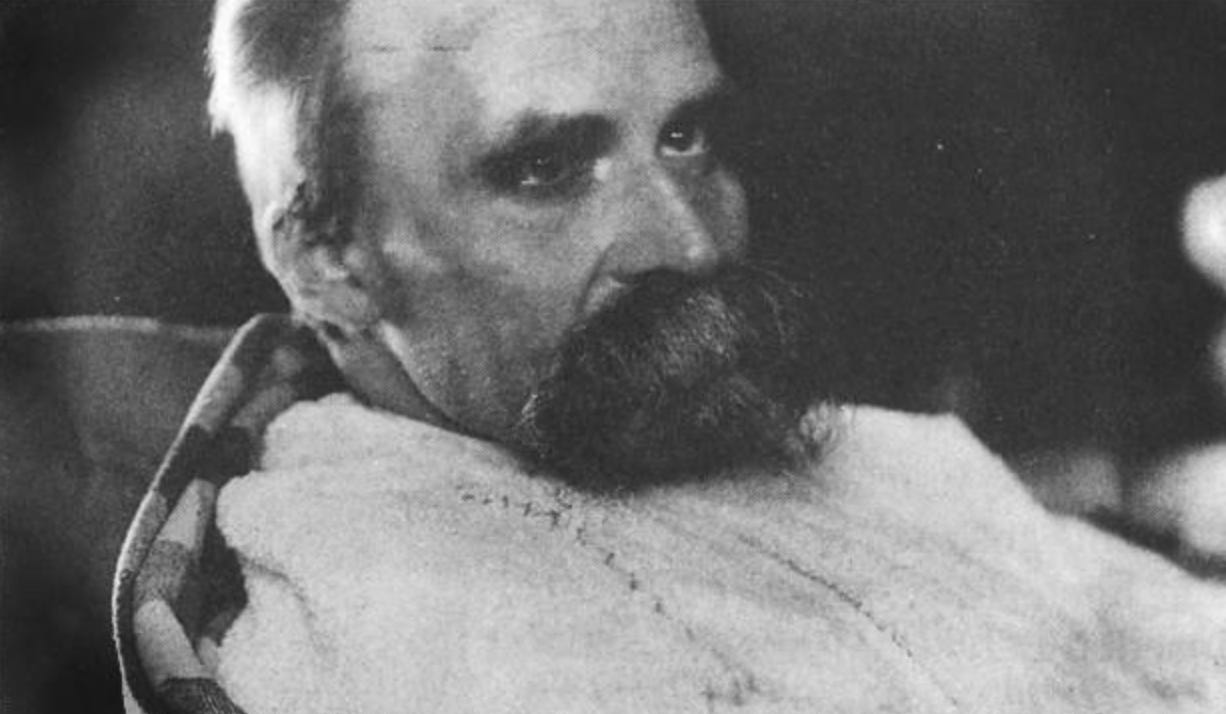
He had to be carried home.
Nietzsche would spend the final 10 years of his life completely helpless and having lost the ability to think philosophically forever.
This piece was written with the help of a handful of secondary sources:
Beyond Good And Evil: A Reader’s Guide (2011): Acampora, Christa; Ansell-Pearson, Keith.
Introductions To Nietzsche (2012): Pippin, Robert.
Nietzsche: Philosopher, Psychologist, Anti-christ (1962): Kaufmann, Walter.
You legend. Awesome work.
Thanks for this overview! I learned a few new things (and I've been reading Nietzsche for a few decades!). At some point, hope you'll consider a similar overview of Deleuze, including his reading of Nietzsche. You note Foucault as one of the intellectual giants who acknowledged his debt to Nietzsche, but Deleuze's "Nietzsche and Philosophy" (which was my first serious introduction to Nietzsche) is also worth mentioning (and since Deleuze and Foucault were in close conversation for many years, I'm sure they influenced each other's other's readings of Nietzsche). Anyhow, I realize this article would be endless if you explored every possible tangent. Just putting some ideas out there and also want to thank you again for publishing this piece.