


Most people I know love the idea of writing a book about their life someday, but never actually do it.
Years go by without even a single word being written.
The sad reality is that the average American will write more words in corporate emails than words about their own life.
Read that again…
Actually, I take it back.
Artificial Intelligence will write more words for the average American in corporate emails than the average American will write about their own lives.
But it doesn’t have to be this way.
It is easier than ever for human beings to write — and I hate to break it to you, but your life is worth writing about.
In this article, I explain why more people should start writing about their lives, destroy the harmful myths that are preventing you from doing it, and give you concrete advice for getting started.
I have to warn you that the next section is going to force you to confront uncomfortable truths that you may be avoiding, so if you want to skip to the “how to” section of the article where I give you practical steps for getting started, you should scroll down to the section titled “How To Get Started Writing About Your Life”.
Why You Should Write About Your Life
I want you to really think about the significance of this question:
How much do you really know about your great grandfather?
I don’t know anything.
Not even his name.
But even if I did, my guess is that, at some point, I would hit a wall.
My guess is that if I were to research who he was and what he did, I would learn a bit of biographical information, what kind of cancer I am pre-disposed to getting, and that’s it.
I would learn nothing of his wit, his charm, his quirks, his flaws, or his beliefs.
My guess is that his essence has been lost to oblivion, like an original manuscript destroyed in a war.
The harsh truth is that most human beings are completely forgotten shortly after they die.
Yes, their memory lives on in loved ones, children, and close friends.
At least for a little while…
Every year is getting shorter
Never seem to find the time
Plans that either come to naught
Or half a page of scribbled lines
Hanging on in quiet desperation
Is the English way
The time is gone, the song is over
Thought I’d something more to say
-Pink Floyd, “Time”
But I ask you again, “How much do you really know about your great grandfather?”
The irony is that I feel closer to Socrates (4th century BCE) than my own family member who I could have known had he lived long enough.
I know more about Socrates because he stood for something.
In fact, he died for it.
Socrates was willing to die for his belief that the philosophical life, understood as the questioning of oneself and others, was the only way to truly care for the human soul and prevent it from doing evil.
…[W]hile I have life and strength I will never stop doing philosophy. For my aim is to persuade you all, young and old alike, not to think about your lives or your properties, but first and foremost to care for your soul.
Socrates, The Apology
Did my great grandfather stand for something?
Probably.
The point is that I will never know.
I will never know what he stood for or, more importantly, how he fought for it.
Perhaps he fought for his family, showing up to a factory every day, silently doing his duty.
Perhaps he fought for his country, his life being cut short before he had a chance to make sense of it all.
What we need from the past is not simply the knowledge that someone stood for something.
We don’t need a voting record — a yay or nay.
What we need is the ability to understand the whole person behind the vote.
Was their vote an act of protest? Of cowardice? Of good judgment?
Knowing that someone stood for something doesn’t tell us much if we don’t know who was doing the standing and in what way.
The greatest gift that we can pass on to future generations is ourselves.
Our real selves.
Our perspectives, our thought process, our take, our prejudices, our rationalizations, our justifications, our admissions.
This is why the Humanities matter.
Humanists have become 21st century conservationists, tasked with protecting and preserving human authenticity for future generations.
The thoughts, feelings, and unique expressions as they actually existed in real people who were living through circumstances they couldn’t fully understand, but writing about them nonetheless.
Will you be able to pass anything on to your loved ones so that they can feel like they really know you?
There are really only two ways that you can capture a sense of your self to give to the future: writing and speaking.
Before the invention of writing, wisdom was passed down through oral traditions (spoken word) and relied upon memory and interpretation.
The oldest body of human knowledge that we are aware of is the Vedas (which comes from the Sanskrit root “vid-” which means “knowledge”), which are dated somewhere between 1500 and 1200 BCE.
Eventually, oral traditions were superseded by the power of complex written languages, which allowed for a more exact, individualized, and insightful preservation of the ideas from the original source.
Thousands of years later, the fact has not changed that, if you want to be remembered for who you were and, more importantly, how you were, you either need to write about your life, get other people to write about you, or record yourself speaking about your life.
Consider the example of Alan Watts.
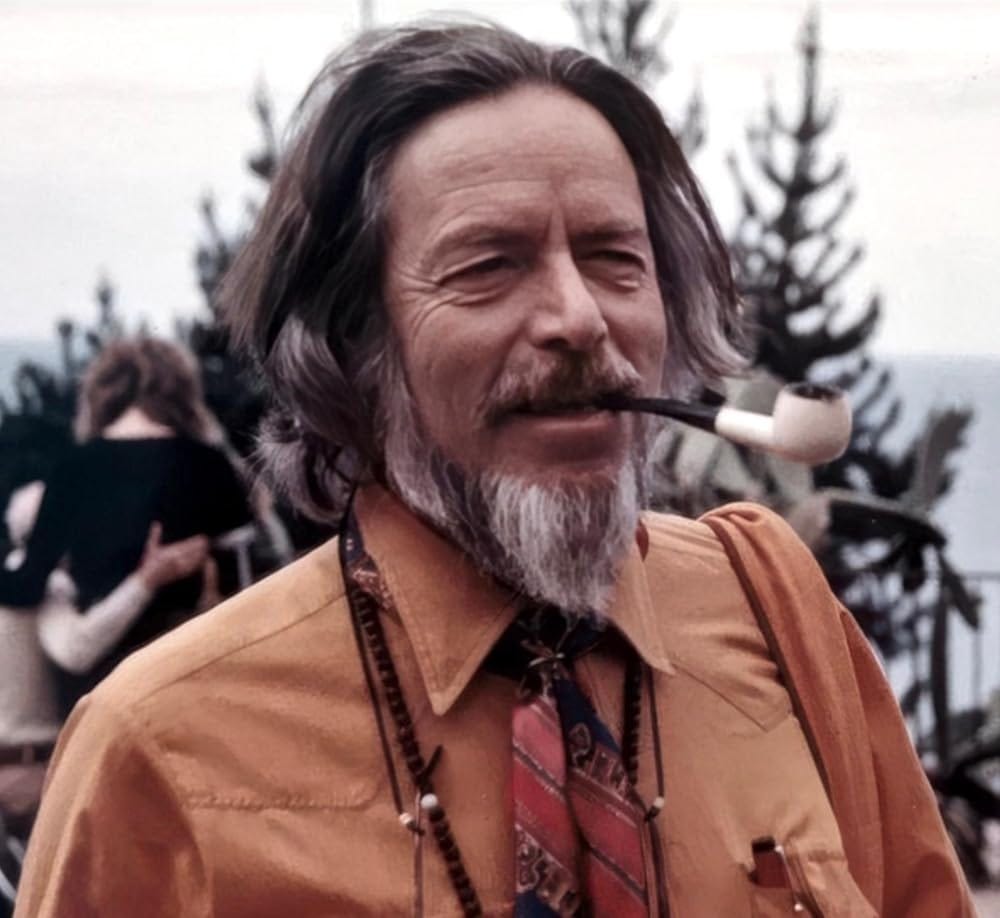
Alan Watts was a writer, speaker, and philosophical educator who has captured the attention of millions through his authenticity and eloquence.
He has probably been a more intimate mentor to many young people than their own parents in many ways, speaking to them on Youtube in the quiet hours of the night when they are looking for inspiration or guidance.
I do not know what Alan Watts was really like as a friend or family member, but when I listen to him speak, or read his writing, I feel connected to someone real and unique.
I feel like I know him.
At this point you might be thinking, “What if I don’t want to be remembered for who I was? What if I want to just disappear into oblivion?”
It’s worth mentioning that there is a strong philosophical argument for the position that human beings have a moral right for certain aspects of their lives to be forgotten or destroyed (especially in the information age). I also do not think that we are morally required to produce an account of our lives for ourselves or anyone else.
Everything I am saying here is optional, of course.
But it’s also important to remember that writing about your life is not just for the benefit of our loved ones, children, or future generations — it is primarily to benefit yourself.
I am absolutely convinced that:
Personal writing is the single greatest activity a human being can perform to improve their quality of life.
There are many reasons why writing about your life is beneficial, but I want to focus on a few here.
When done correctly, personal writing allows you to develop a deeper knowledge and awareness of yourself so that your current and future self can learn from the past. It allows you to reflect deeply on the underlying explanation or cause of your actions, such as your personal beliefs, your values, your assumptions, your desires, and your emotions.
It allows you to understand the deep relationship that exists between your worldview, psychology, and behaviors.
It allows you to see patterns that you might miss by only following the running narrative in your head.
In short, it allows you to see yourself differently.
Perspective.
Perspective allows an individual to imagine alternative versions of themselves and opens up space for personal growth and transformation.
Finally, writing about our lives allows us to go deeper into the things we are committed to.
It is not all about changing who you are or what you believe.
Questioning oneself can often lead an individual to understand their beliefs and how they shape one’s life more deeply without ever changing them.
The way in which you believe something is far more important than what you believe.
Two people can believe that God exists, but one of them has no idea what this even means to them, why they believe it, and how they should act in relation to their belief, and the other is St. Thomas Aquinas.
If you want to truly know yourself, you need to write or speak to yourself about yourself.
If you want to be remembered, you cannot rely on memory.
You need to write yourself into the world of the future, otherwise your memory will disappear within decades.
Individual human memory is the weakest it has ever been.
Long gone are the days of individuals memorizing three-hour speeches, lines of poetry, or the Bible.
Think about how poor your own memory has become in the digital age.
We hope that those who loved us and really knew us will remember our true selves.
But how many people is that really? And what happens when they forget? When they die?
We work so hard to learn, grow, and become wise, only to have everything we accomplish permanently disappear from existence once we are forgotten.
Deep down, everyone wants to know themselves and to be known by someone else.
There is nothing more lonely than a life in which no one really knew you.
But in order for you to know yourself, or for other people to really know you, you need to write about your life.
Even though most people want these things, very few people take the time out of their busy lives to write anything down, let alone write about themselves.
I think this is mostly due to 3 myths that need to be shattered.
3 Myths That Prevent Us From Writing About Our Lives (Even When We Want To)
Myth #1: “My Life Is Not Worth Writing About”
The most harmful myth that prevents people from writing about their lives is the idea that their life is not worth writing about in the first place.
If you believe this, you need to stop and seriously ask yourself the following question:
Do I honestly believe that my life is so worthless that it is not worth writing about?
Someone might say in response to this that “It’s not that I think my life is worthless, I just don’t think it is worthy enough to be written about (even by myself)”.
Well I would challenge this by asking:
What makes a life worth writing about?
I think a common mistake here is thinking that whether your life is worth writing about is determined by external factors, such as whether you are viewed as remarkable by society.
But who are you writing for?
If you are writing to an audience of strangers in order to sell millions of copies of a biography or memoir, then yes, you will probably need to live a pretty extraordinary life.
But what if you are writing for yourself? Or for your kids? Or for someone who you don’t know, but who might really benefit from your unique perspective?
The fact is that we rarely know who needs to hear what we have to say.
But there is at least one person who does.
You.
Myth #2: “Writing is only for really smart people, professionals, or creative types”
A lot of people don’t believe they can be a writer because they think that the only people allowed to write are professionals or creative deadbeats.
You don’t need to be a professional, or want to become a professional to do anything you want to do.
Do you avoid exercise because you are not a professional athlete?
Do you avoid dancing because you are not a professional dancer?
You don’t need to write a novel to be a writer.
And you don’t need to quit your job and live in a commune of starving artists to be creative.
There are more ways to be a writer than ever before thanks to the internet.
You don’t need permission.
Just write.
Myth #3: “It’s better to wait and see the big picture”
You can write at the end of your life, but it will not be the same as if you write now.
Personal writing is not merely a record of what’s happened, it is a way to fundamentally change your life while you live it.
You don’t need to know what it all means before you write.
You need to write to figure out what it all means before its too late.
The longer you wait, the more you risk losing the richness of your current experiences and insights to the failures of your own memory.
And you do have enough time.
If you write a single note per day about a fundamental belief you hold, or an insight you had, you will have over 1,000 notes after 3 years.
How To Get Started Writing About Your Life
There are many accessible ways to begin writing about your life, but I recommend starting with something you probably have never considered:
Write about your personal beliefs.
Most of writing advice online is aimed at teaching people how to take notes or journal. These are both great, but I never see anyone teaching people how to write about their deeply held personal or philosophical beliefs.
What are you big ideas?
What is your worldview?
What do you stand for? What kind of world do you try to create by showing up every day? What lessons have you learned about human nature, human psychology, philosophy, spirituality, love, relationship, parenting, work?
I trained for several years to become a professional philosopher, but I have to tell you, you do not need to be a professional philosopher to develop your own personal philosophy.
You can just write your own philosophy of life.
A few months ago, one of my readers (I can’t remember who but if you are reading this let me know!) commented that my idea of a micro-philosophy reminded them of the concept of a “Codex Vitae”, or a “Book Of Life”.
After reading this, I immediately looked up Codex Vitae on Google, and came across the work of a wonderful writer named Buster (Buster Benson). Benson wrote an essay on the concept after being inspired by Mr. Penumbra’s 24-Hour Bookstore, by Robin Sloan.
In the novel, a Codex Vitae is a book that someone writes which contains everything they have ever learned and been able to write down. The idea is that the book will be a record of their life and personal beliefs that lives on after their death. About this, Benson writes:
Such an interesting idea.
To pour everything you’ve learned into a book, to be made public upon your death. A sort of immortality, a summary of your life’s meaning and learning.
We should all do this.
-Buster Benson, “Codex Vitae”
Benson himself hosts a very public “Belief File” on Github.
I was shocked to find Benson’s personal writing on Github, since it is a website designed for coders to publish and update code, and is commonly used to host open source software development projects,
But what’s cool about Benson’s Github file is that it allows him to publicly “track changes” in his beliefs over time. According to Benson, Github works really well for this because you can comment on changes, and see how things evolve over time.
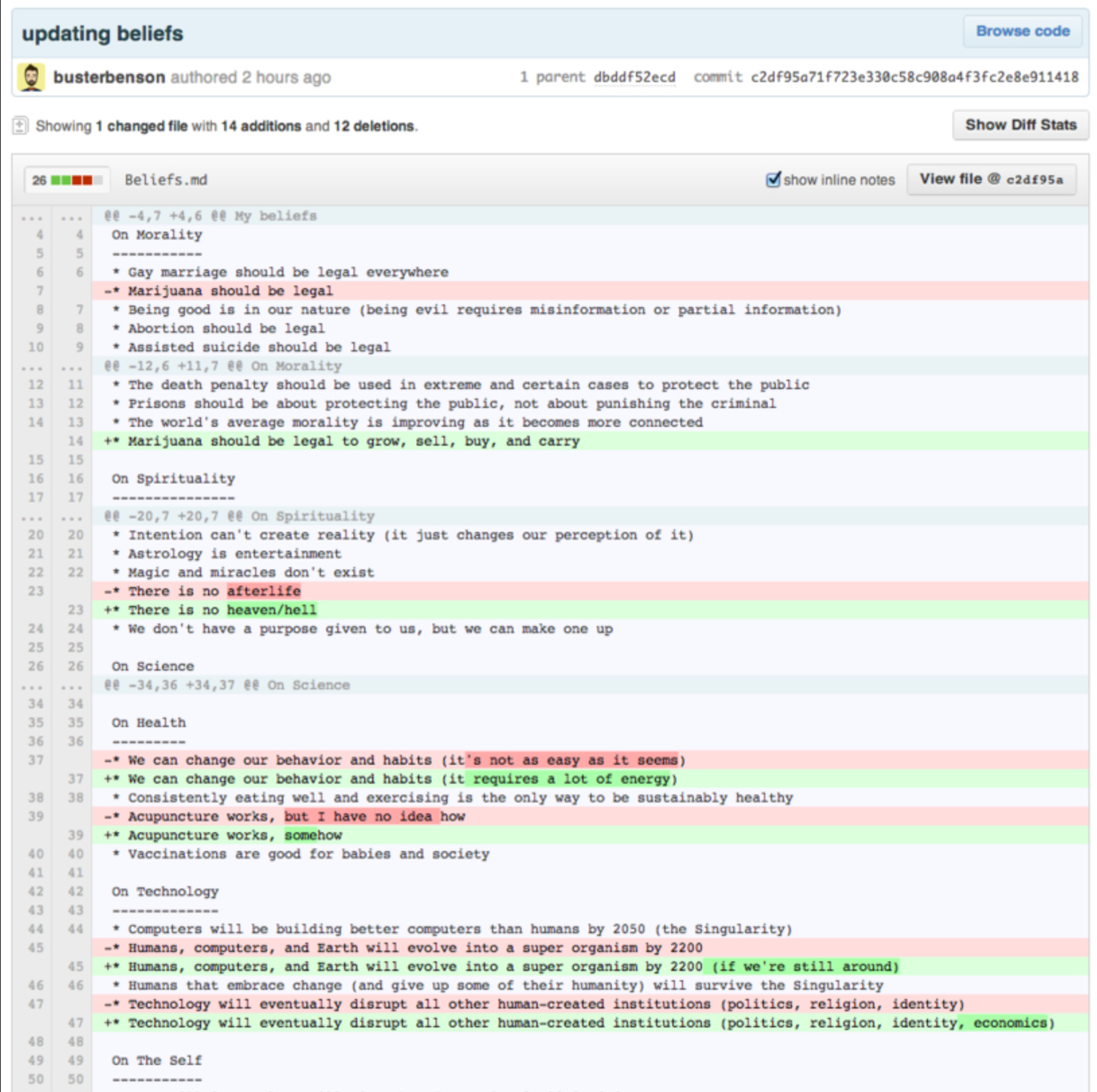
Benson writes:
There’s something magical about treating beliefs like code. It’s the code that runs our perspective of the world.
Last month, I wrote an article on exactly this point for anyone who is interested.

I think the belief/code analogy is one of the most powerful (and accurate) metacognitive analogies humans beings can use for personal growth and self-exploration. As Greg Clarke writes, “A Codex Vitae is an exercise in metacognition about one’s life”.
In his article, Benson points out that “very few human beings seem to ever do such a thing — summarize or store our most strongly held beliefs, or most painfully learned lessons, for posterity”.
Although I agree with Benson, I am happy to say that since I have become aware of this problem, I have dedicated my life to solving it through this publication and my Micro-Philosophy: Foundations course.
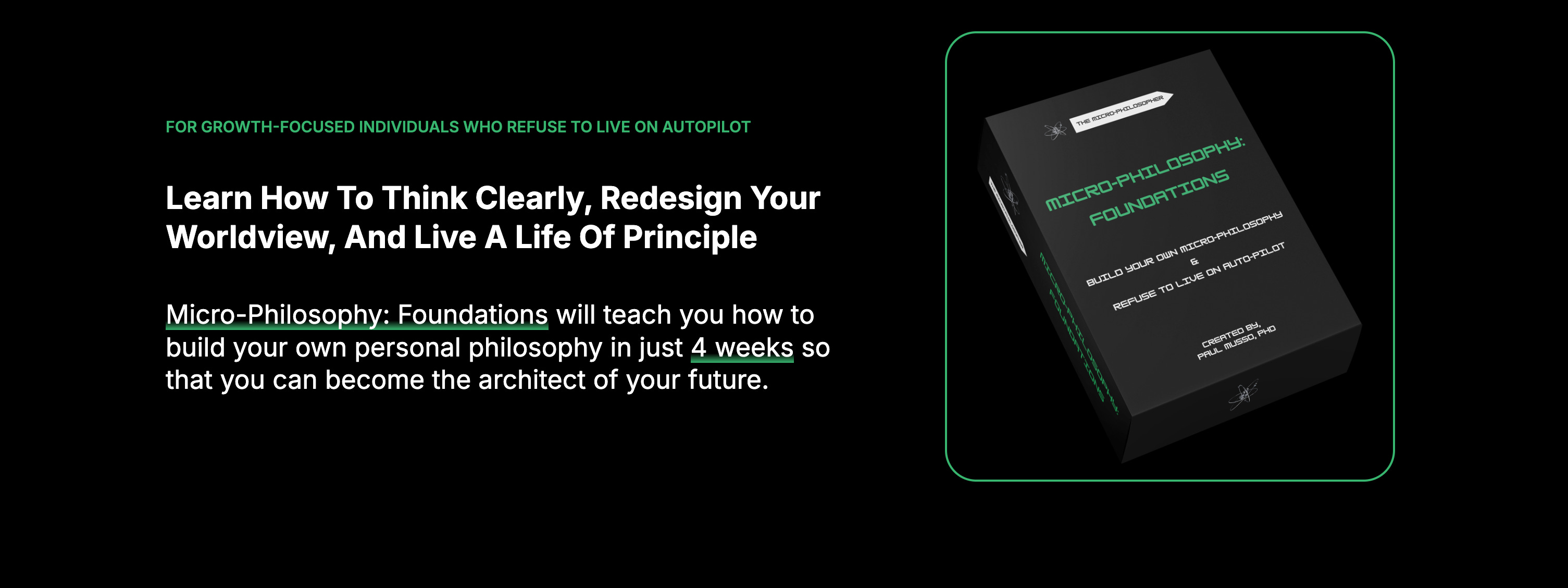
If you’re interested, you can read more about it here. My course (and Substack) is all about teaching people to build their own personal philosophy — what I call a micro-philosophy. I will be launching a new cohort in a few weeks where I lead weekly live calls with students.
Whether you want to build your own philosophy, or simply keep track of your beliefs in a Codex Vitae similar to Buster Benson’s, the key thing is to start writing about the things you are deeply committed to.
You can do this right now.
Here are two simple steps you can take to get started.
Step 1) Pick your preferred writing tool
The first choice you need to make is whether you want to write by hand, digitally, or some mixture of the two.
The key thing is that you want to pick something you can do consistently and seamlessly. This may even require combining together multiple apps. For example, I write some things by hand, some things in my Notes app on my phone, and some things on Obsidian.
Once you find a software that you like writing in, or taking notes in, create different categories of beliefs. For example, “Spirituality”, “Morality”, etc. I strongly recommend avoiding writing your political beliefs for now. This can be really distracting and block us from doing work on other areas of our lives.
If you are stuck about what categories to use, you can look at real examples of other people’s Codex Vitae to see what they did, or ask your favorite AI for help after you explain to them that you want to begin documenting your personal beliefs.
If you want a free 5 day course that gives you more detailed step by step instructions on how to build your own personal micro-philosophy, you can access that here. In this course I give you all the frameworks, questions, and exercises you need to get started.
Step 2) Write 5 Beliefs That Speak To You
One reason I created the micro-philosophy system is that a lot of people seem to think they can’t write about their own philosophy because they aren’t some genius who has a theory of everything.
But you don’t need a theory of everything to benefit from writing and thinking philosophically about your life.
The main benefit is going to be discovering what you actually believe.
On this point, Benson writes:
If you are interested in making one of your own, I recommend starting small and slowly building it up over time. Here’s the one I first came up with in 2012. Also, be patient with yourself as you slowly realize that you don’t even know what your beliefs are, and that they’re really difficult to pin down. That’s part of the fun!
The key thing here is that you don’t need to have everything figured out before you write.
You need to start viewing writing as the tool you use to figure out what you believe.
So in your chosen app, write down the first 5 personal beliefs that pop into your head, no matter how dumb you think they are.
Even if you can’t “prove” that they are true, it doesn’t matter.
The aim here is to become more aware of your own beliefs, not to defend them.
Conclusion
If you made it this far, you should congratulate yourself for taking action and writing down 5 personal beliefs you hold.
Let me know how that felt for you and what you ended up writing down in the comments.
You will be amazed at how powerful developing a consistent personal writing habit can be for personal growth.
When you combine this with a system that allows you to organize and learn from the things you write, the benefits are exponentially multiplied because you start to think about how these disparate beliefs connect together.
Ultimately, the goal here is to develop clarity and deep self-knowledge about who you fundamentally are and what you are aiming at in your life with your thoughts and actions. By defining your beliefs, values, principles, and worldview, you can begin to I can recognize where your actions misalign with what you want for yourself.
Never stop believing that your life is not worth writing about.
If not for someone else, then for yourself.
You are a human being!
Even a single second of human consciousness is a cosmic miracle.
You don’t need to write a 300 page novel to write.
Just write a little bit everyday.
Write about what you believe, write about your worldview, write about lessons you have learned, and insights you have gained.
Develop your perspective.
Own it.
-Paul Musso, The Micro-Philosopher
How To Make Life Interesting Again And Escape The Dopamine Economy
Recently I have felt a renewed zest for life.
Great article. Just a shout out that, in my own experience, writing FICTION can be better than writing about your own life because you can get closer to the truth or your greatest fears, than addressing them straight on.
E.g. I was able to understand a lot about my own fear of death (more my 2nd death of being erased) by writing a novel about characters enduring constant death in the apocalypse.
This essay will change lives. Beautiful.