


No one is born knowing how to live well.
There is no user’s manual.
Everyone must be taught, learn for themselves, or some combination of the two.
But how do you know if what you have been taught is helping or harming your life? How do you know whether the things you have “learned” are actually good for you and not merely responses to unresolved issues deep within your psyche?
Think about how many times people claim to have “learned” from a failed relationship only to repeat the same mistakes in a new way.
The truth is that before you were even old enough to realize it, other human beings implanted millions of lines of “code” and even complete “life-programs” into your mind.
At the time this was a good thing.
It was necessary for your survival.
While some of these programs, such as learning how to speak and be respectful, have made your life easier, others have made it more difficult.
Some of them have made it more difficult simply because your life has changed so dramatically that they no longer apply to your present circumstances.
Others have made it more difficult because they are inherently harmful and limiting.
Many of these programs are so deeply embedded in our self-conception and life experience that we are not even aware of their existence.
This means that we are not always aware of how they might be harming us.
Some are like a computer virus constantly draining a computer’s processing power by running in the background. Others are eventually going to crash your system if left unattended.
Bad mental programs can subsist in your mind for years without detection and prevent you from creating the life you truly want for yourself and others.
If you have ever wondered why you continue to repeat the same mistakes, even when you “really try”, it may be because there is something deeper at play which you aren’t fully aware of.
The harsh reality is that unless you do the deep self-work required to discover and rewrite these program, you risk being forced to live with them for the rest of your life.
Discover and rewrite.
The problem with most self-help is that it is aimed at rewriting alone.
It gives you a bunch of general answers.
This seems like a good thing on its surface, but answers are useless unless you know what questions to apply them to.
This is why so many people (myself included) try for years and years to change something about how they are living, only to realize that nothing seems to stick.
You need to discover which questions to ask.
You need to discover which problems need to be solved, and in which order.
But self-discovery is something that only you can do.
The bad mental programs that are holding you back (your “problems”) are so deeply personal, so thoroughly intertwined with your self-conception and unique life circumstances, that only you can truly understand them.
Trying to “apply” answers to your life will always fail.
It will always fail because it is the easy way out.
What is often sold is the hope that by consuming something (a magic pill, supplement, or concept), someone can change their life without having to do anything difficult or uncomfortable.
This never works.
Simply writing new lines of code over a bad source code does not make the underlying problems go away.
In fact, it may make it more difficult to identify the root cause when things inevitably go wrong.
The problems of the self are so deeply personal that they can only be truly solved from within.
In this essay, I explain why it harder than ever for human beings to do the deep self-work required to discover and rewrite the programs that are secretly holding us back, but also provide a source of hope for anyone who is brave enough to truly face themselves and become a self meta-programmer.
In other words, a truly autonomous being.
Why It Is More Difficult Than Ever To Reprogram The Human Biocomputer
John C. Lilly, the author of Programming and Meta-programming in the Human Biocomputer, begins his profound and eccentric book with the suggestion that we may all be nothing more than a complex collection of programs.
“All human beings, all persons who reach adulthood in the world today, are programmed biocomputers. No one of us can escape our own nature as programmable entities. Literally, each of us may be our programs, nothing more, nothing less.
I am not going to defend Lilly’s provocative suggestion here.
Although it is an interesting question whether or not Lilly’s suggestion has any truth to it, this is largely irrelevant to the fact that it provides an incredibly useful framework through which we can use to think about ourselves.
Thinking of ourselves as “programmed biocomputers” that are always capable of being reprogrammed, not only opens up vast pathways for personal growth but also makes us aware of significant vulnerabilities that may have been exploited throughout our lives.
One of the main points of Lilly’s book is to argue that we are not merely the passive inheritors of nature’s programming, nor the passive recipients of the programs of other human beings, but what he calls a “self meta-programmers”.
In other words, we not only have the capability of being programed, but the unique ability to program ourselves.
This fact explains both the great potential and great peril of the human predicament.
Lilly was especially interested in the potential of entheogens (psychedelics) for helping us both uncover and rewrite the programs that live deep inside of our human biocomputer.
In particular, Lilly was famous for the invention of the human flotation tank as part of his research into the ultimate nature of subjective experience.
Lilly’s basic thought was that by reducing the amount of processing power that is being expended on the construction of external reality, we are able to go deeper into the self and thereby uncover the hidden programs living inside of our biocomputers. This not only revealed what these programs are, but also made it possible to begin rewriting them.
By immersing oneself in a flotation tank that removed many of the sources of external stimulus which keep us in a perpetually distracted state, one is able to know the self more intimately, and thereby fundamentally change it.

Lilly’s approach to studying the self in depth was controversial to say the least.
Whatever one makes of his use of isolation, sensory deprivation, and psychedelics, the general lesson is that many of the problems we face as human beings have causes which are buried deeply inside of our own minds.
This is an important lesson to remember, since we live in a world that makes it harder than ever to truly know ourselves.
This is the case for two primary reasons.
First, human beings have become increasingly aware of the extent to which external systems of oppression and exploitation can cause problems on a mass scale.
Naturally, many humans are focused on fixing these external problems with the noble aim of making the world a better place.
We can and should strain ourselves to fix these problems.
But it is a fallacy to think that by fixing structural and social issues one will thereby have resolved the deep conflicts within the individual self.
Self-work, even in a fair and just world, is unavoidable.
Second, largely because of the systems mentioned above, we live in a world where it is the hardest it has ever been in human history for a human being to hold enough mental space and focus for self-work to even begin.
Most people cannot sit with themselves for more than five minutes without needing eternal stimulus.
Our minds, and our world, have become so noisy that most people have completely forgotten how quiet the world was for 99.9% of its history.
If sitting with ourselves for more than five minutes is difficult, then the chances that we will be able to sit with ourselves for extended periods while working through feelings of deep internal discomfort are practically zero.
There are few things that the overlords of The Dopamine Economy wish for more than the current state of human affairs.
Don’t click the link. It will redirect your attention to another article of mine.
A world in which human beings cannot sit with themselves long enough to reprogram their own biocomputer provides the perfect environment in which external programming campaigns can not only gain access to your mind, but actively reprogram it.
The difficulty of self-work is nothing new.
In the 8th century, the Buddhist monk Shantideva was well aware of this, writing:
“Those who wish to keep a practice
Must protect their minds.
Without protecting their minds,
No practice can be maintained”.
Shantideva, How To Lead An Awakened Life, 5.1
But the world has changed dramatically since Shantideva’s time.
In the 8th century, human beings were living in low-input environments in which it was far easier to listen to one’s soul amidst the natural silence of nature.
We now live in a world that is engineered to be high-input and perpetually distracting.
It is more important now than ever for human beings to actively develop consciousness defense systems that protect their minds from the gluttonous external inputs specifically engineered to collapse the subjective realm.
We must protect the only environment in which deep self-work can begin — your private conscious experience.
You need to develop and maintain a mental firewall.
A robust and complex defense system that will prevent unwanted external programs from penetrating your mental barrier.
You need to install and build your own mental cybersecurity software.
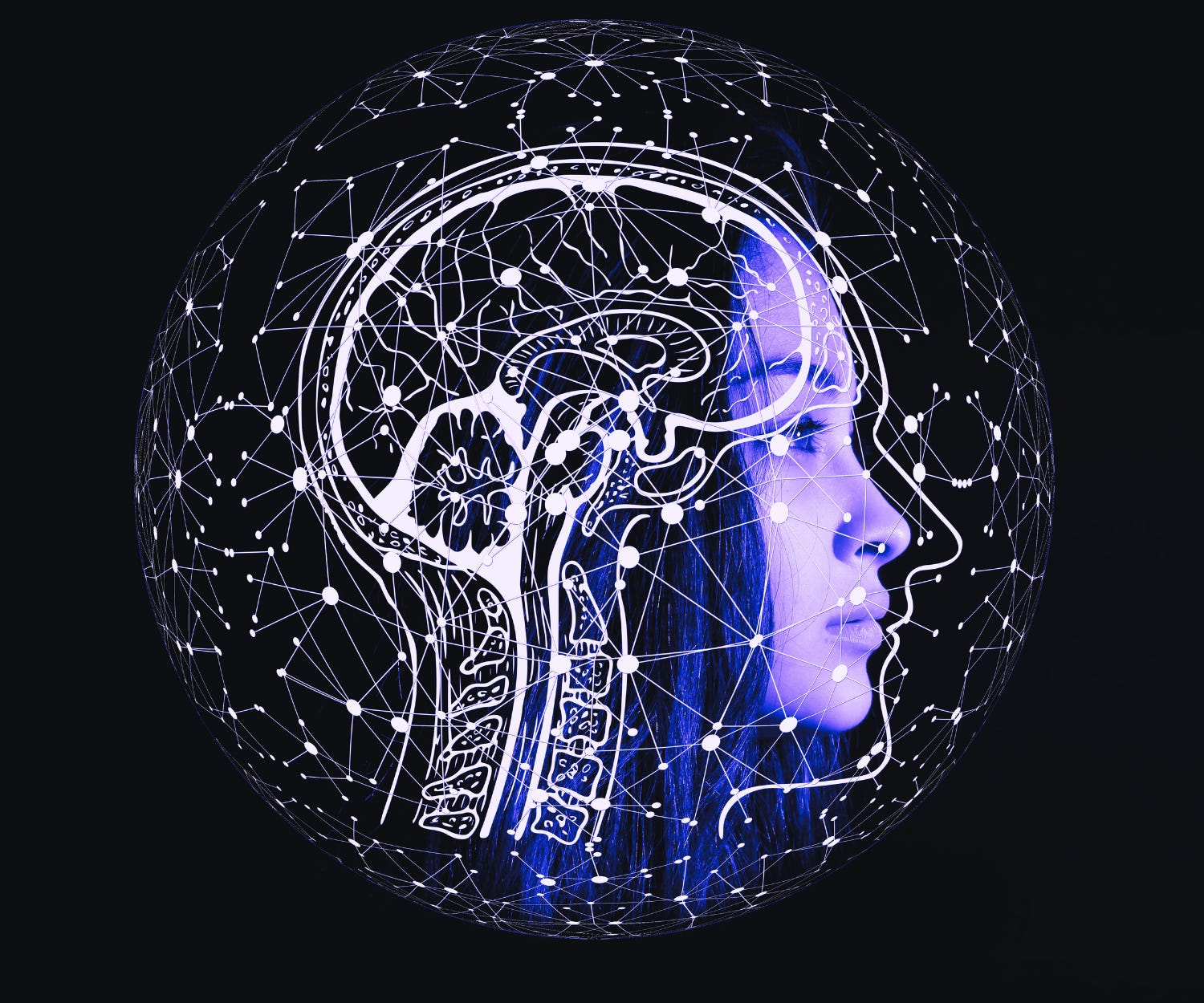
Only then is it possible for self-work to even begin.
Unfortunately, the difficulties of writing and rewriting our self meta-programs only continue to increase after self-work commences.
Overcoming distractions and external stimuli is, for many, hard enough on its own. But deep self-work also requires executing a cognitively demanding and potentially emotionally challenging search program within oneself.
Once self-work has commenced and sufficient space has been created, we need to begin searching ourselves in order identify the deep layers of code that are reprogrammable and the fundamental causes of our life problems.
“Ἐδιζησάμην ἐμεωυτόν”
“I searched myself”
Heraclitus, 6th Century BCE
These deep layers of code may often be difficult for us to access because of the powerful emotional defense systems that our ego has programmed to protect itself.
Self-programs are not only so deeply embedded into our self-conception that rewriting them raises the threat of killing or permanently damaging the self, but they also have their own highly sophisticated defense mechanisms, which may take years to learn how to penetrate.
The internal emotional barriers to self meta-programming are far more difficult to overcome than the external hindrances, and carry with them significant risks.
It is possible for one’s entire life-program to come crashing down once the underlying code is revealed.
The deeper we go, the more time, energy, and vigilance we need to maintain in order to make any progress into self reprogramming.
This is why self meta-programming is so incredibly difficult.
This is why billions of human beings will live their lives in a state of permanent susceptibility and suggestibility that ultimately undermines their agency.
That was the bad news.
Now that the difficulty of the task has been established, I want to turn to outlining some sources of hope for believing that we can all succeed in eventually becoming self meta-programmers who are capable of putting in place a life-program that truly serves them.
Sources Of Hope
In order to make any progress at all in personal development, we must first admit that there are no easy solutions to the problems of the self.
That was the point of the last few sections.
As much as we would like to be able to solve these problems by externalizing them — paying someone to “fix” them for us, taking a pill, or placing our hopes in a political leader — we will never be able to solve such problems in this way.
So how do we begin to solve them?
How do we identify and rewrite the harmful self-programs that have either been put into our minds without us realizing it, or consciously written into our souls?
There are several sources of hope that we can accomplish this difficult task.
Source #1: Other People
The best hope that we have, in my opinion, is each other.
As paradoxical as it may sound, the difficulties of self-work can be lessened by working with others in the right ways.
For example, by building community with people who are committed to the general goal of self-actualization and liberation from harmful external programs, we can find the support and accountability we may need to stay committed to difficult self-work.
In Buddhism, monastic communities of monks (Sangha) exist in order to make it possible to dedicate themselves completely to practicing Buddhist teachings. The communal life of the monks makes it possible for them to dedicate considerable time and focus to self-work.
For those not inclined to monastic life, there are online courses and communities, in-person classes, group retreats, group therapy, social clubs, and deep conversations with friends.
Doing emotionally draining self-work alone can be exhausting and unsustainable, making it far too easy to simply avoid it altogether.
Having additional perspectives also allows us to learn things about ourselves that could take years to discover on our own. This requires, of course, the willingness to be vulnerable and truly seen by others.
The irony is that it is often harder for many people to be truly vulnerable with themselves.
By joining forces, human beings can create environments that make it possible for individuals to achieve what they might not be able to do alone.
Source #2: Nature itself
Another source of hope is to be found in connecting or reconnecting with nature.
The grandeur and stillness of nature can often cause harmful and arbitrary internal programs to rise to the surface of our conscious awareness, giving us the opportunity to reconsider what truly matters to us in life.
By grounding ourselves in the permanent and immutable truths of nature, we can more easily expose the artificial, unnatural, and harmful within us.
This is especially true if we isolate ourselves in nature for a period of time.
While community and social relationship are incredibly beneficial for the reasons mentioned above, it is also necessary to occasionally spend time away from other humans in order to experience the amount of contrast necessary to allow for insights to emerge.
Nature also contains many beneficial psychoactive substances which can induce altered states of consciousness that allow us to suspend our default programming temporarily.
The research of neuroscientist and psychopharmacolgist Robin Carhart-Harris has delivered incredibly promising results on this front.

A multitude of rigorous studies have confirmed that compounds such as psilocybin, when engaged with safely and thoughtfully, possess great potential for helping human beings form new mental connections and discover deep insights, especially when dealing with traumatic self-programs.
Source #3: Micro-philosophy
This entire publication is dedicated to developing and teaching the concept of a micro-philosophy which was specifically designed to help deep thinkers develop their own personal philosophy for life.
One of the key steps in building your own micro-philosophy is to uncover what I call your birthview.
Your birthview is the worldview that you were born into, before you even had a choice.
It is one of the main sources of a human being’s default programming.
For example, in the Micro-Philosophy: Foundations course, many students came to realize that they were born into a Christian and/or Western Scientific worldview.
This meant that the vast majority of their beliefs and experiences in life were shaped by the deep assumptions of these globally dominant frameworks.
When you are raised within a powerful worldview such as these, it is often hard to even realize what its fundamental assumptions are and how they have influenced your life, because they themselves form the background conditions of your life.
This is why the first stage of building a micro-philosophy requires going backwards.
In order to truly understand and craft our own belief system, we need to understand where our pre-existing beliefs come from and how they could have been different.
Students are then asked to consider the significant number of alternative worldviews and how they interact with their birthview. Many of these worldviews are one’s that students had never even heard of, or have had very little exposure to.
How many people raised in the United States in the 20th century have ever heard of, or could think deeply about the Hindu concept of brahman?
One of the unfortunate effects of dominant worldviews is that they often get us to dismiss alternatives out of hand simply because they are perceived as incompatible with one’s own worldview.
Again, consider the number of Americans who would think that Hinduism can’t possibly be correct despite having little to no idea what its even about.
The problem is that the perceived incompatibility is often itself an unquestioned byproduct of one’s worldview.
Jim Palmer, whose publication Deconstructionology is dedicated to helping individuals reconstruct their lives after leaving organized religion, has said that we need to “deconstruct to reconstruct”.
Although it is possible to build a micro-philosophy that is simply a representation of what one already thinks, the real benefit comes from first deconstructing what one already thinks and then re-building from there.
The result may end up superficially being the same.
That is, you may perform a thorough deconstruction of your current beliefs only to end up believing the same things that you started with.
To end up with the same core beliefs after performing a deep self-examination is by no means a failure.
The goal of a micro-philosophy is not to make you change what you believe, as if change is somehow intrinsically valuable.
The goal is to help put you in a position to truly choose your own personal philosophy of life, rather than inherit it.
To help you feel like you are choosing your beliefs for the first time and for yourself/because of yourself.
Building a micro-philosophy is meant to help you understand your beliefs more deeply so that you can live with confidence and act in alignment with your values and worldview.
Someone who ends up believing the same thing after going through a process of deconstruction and reconstruction will have a much deeper appreciation and understanding of their own beliefs than someone who is content to not question what they currently think.
Having a deeper understanding of one’s personal values and beliefs makes it possible to act with conviction and purpose.
I want to teach people how to use philosophy in a way that is not about participating in abstract mental gymnastics, or becoming some kind of genius who has a “theory of everything”, but living philosophically.
To live philosophically is to actually make self-examination, deep thinking, and philosophical questioning an integral part of who you are and how you live.
It is to live skillfully.
The skills of the philosophical life, when used correctly, hold great promise for helping teach ordinary people how to avoid wasting their lives on bullshit, develop self-knowledge, and live a deeper more meaningful life on their own terms.
To build a micro-philosophy is to become a self meta-programmer.
A truly autonomous being.
-Paul
The Micro-Philosopher
If You Don't Understand Anyone Else's Worldview, Then You Don't Understand Your Own

“For any of us to be fully conscious intellectually we should not only be able to detect the worldviews of others but be aware of our own — why it is ours and why in light of so many options we think it is true”
Why You Need A Micro-Philosophy (If You Want To Become An Independent Thinker)

The Importance Of Independent Thinking
Quick question for you. I wonder if, in your view, there are any other prerequisites to beginning (not getting thru, just even starting) this deep self work besides mental space and focus? Is there a certain level of basic education or skill necessary, awareness of the brain or maybe the skill of critical thinking? That question has me really fascinated right now. If you have another article on that I’d be so grateful if you’d point me to it!!
Thank you Paul, loved where this made my mind go. Such a deeply interesting and important topic.
I am so glad to be aware of you and your writing.